Did you know the average electric car battery holds enough energy to power a typical British household for two to three days? This surprising fact highlights a massive, untapped resource sitting on our driveways.
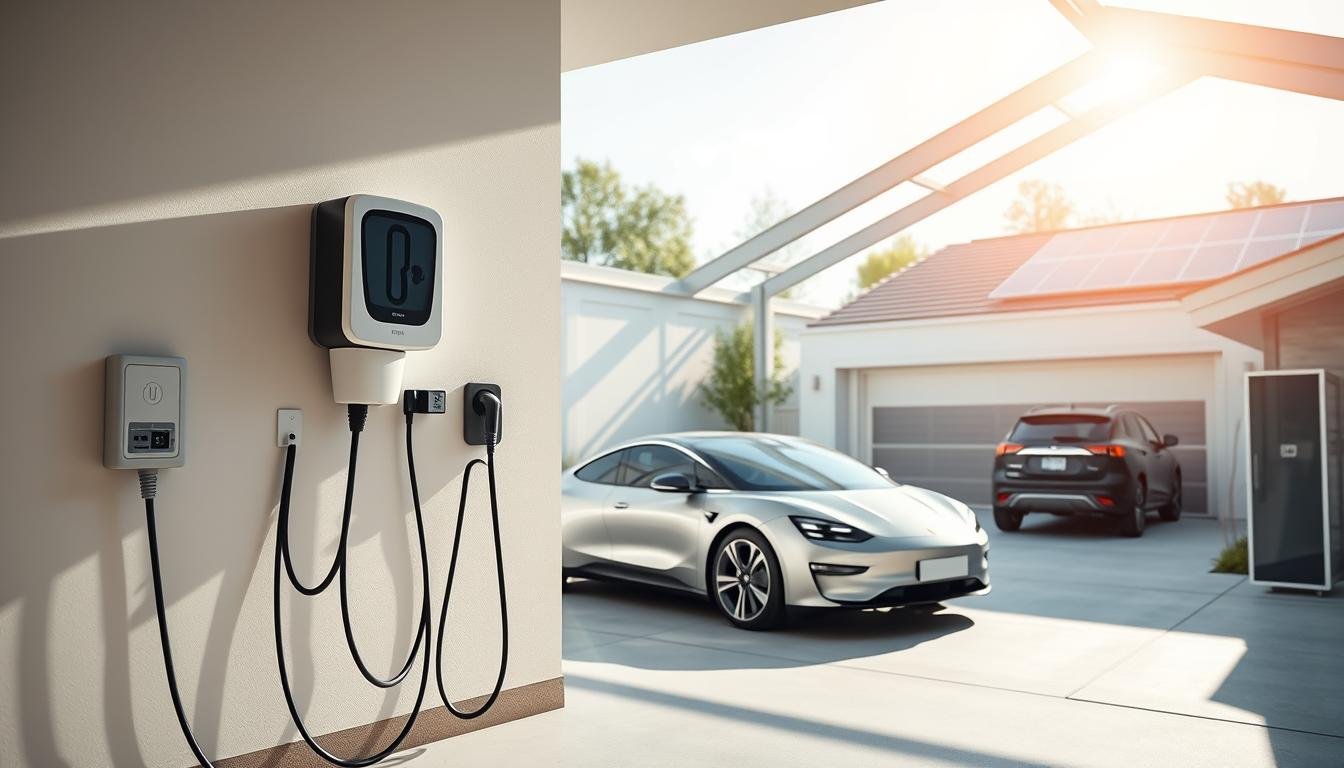
I believe we are moving beyond simply plugging in our vehicles. Modern technology transforms your motor into a smart energy storage unit. This shift turns a simple charging point into a dynamic power hub for your property.
Pioneered by models like the Nissan Leaf, this innovation lets your vehicle's battery do much more. It can supply electricity back to your house during a power cut, keeping essential lighting and appliances running.
For homeowners, this means maximising the use of surplus energy, perhaps from solar panels. You can also support the national grid during periods of high demand. It represents a fundamental upgrade in how we think about power.
My old wallbox only pulled energy in one direction. Today's advanced systems offer a two-way street, creating a resilient and efficient energy system. This guide explores why making the switch is a smart move for the future.
Key Takeaways
- Your electric vehicle's battery has the capacity to act as a substantial backup power source for your residence.
- Advanced charging technology enables a two-way flow of electricity, not just one-way charging.
- This system can provide crucial energy during a power cut, keeping your lights and devices on.
- Homeowners can utilise surplus energy stored in their car, potentially improving their vehicle's effective range.
- Integrating this technology supports the wider electricity grid by balancing supply and demand.
- It represents a significant modernisation of your domestic energy setup compared to older equipment.
Understanding Bidirectional Charging Technology
Pioneered by specific models, this capability transforms a parked vehicle from an energy consumer into a versatile power source. It's a fundamental shift from simple plug-in refuelling.
Modern systems establish a dynamic, two-way energy exchange. Your property and your motor can now share electricity intelligently.
Explaining the Concept and Mechanism
Your electric car stores energy as direct current (DC). Our houses, however, run on alternating current (AC).
A standard wallbox only converts AC to DC for charging. A bidirectional charger performs this conversion in both directions.
This allows the DC from your car battery to be converted back to AC. The energy can then power your household devices or even feed back to the wider network.
The Nissan Leaf, using the CHAdeMO connector, demonstrated this potential years ago. It showed a car could be much more than transport.
Overview of V2G, V2H, and V2L Applications
This two-way flow enables three primary applications. Each serves a distinct and valuable purpose for owners and the community.
| Application | Primary Function | Key Benefit |
|---|---|---|
| V2G (Vehicle-to-Grid) | Feeds energy back to the public electricity network. | Supports grid stability during peak demand. |
| V2H (Vehicle-to-Home) | Powers a residence during an outage or high-tariff periods. | Provides backup power and manages energy costs. |
| V2L (Vehicle-to-Load) | Powers devices directly via sockets on the car. | Enables mobile power for tools or camping. |
This technology turns every compatible vehicle into a smart energy asset. It's a powerful evolution in how we use our cars.
Identifying Outdated Wallboxes and When to Upgrade
The rapid evolution of electric vehicle tech means that charging equipment from just a few years ago may already be limiting. I've seen many early installations that simply cannot interact with today's smarter, two-way energy systems.
Recognising the Limitations of Older Systems
A primary issue is communication. Many older units lack the necessary protocols to talk to your car's battery management system. This prevents the two-way flow essential for V2G or V2H applications.
If you have solar panels, an outdated point may not manage surplus energy stored in your motor. You miss the chance to power your residence during peak hours or a blackout.
Furthermore, the widespread CCS standard in Europe is still catching up. Asian manufacturers have offered this capability for years via CHAdeMO. Modern chargers support this feature, turning your vehicle into a reliable backup.
Upgrading becomes essential if you want to use your electric car as a power source. It transforms your setup from a simple refuelling point into an active energy asset.
Implementing Your bidirectional home charger upgrade UK
Moving from a standard setup to one that allows your vehicle to supply power involves several key steps. I find that proper planning ensures a smooth transition to a more resilient energy system for your property.
The Zaptec Go 2, for instance, is the first domestic EV unit in Britain to support V2G technology. Its 22kW capacity and ability to switch between 1 and 3-phase charging make it a strong candidate for integration with solar panels.
Planning and Preparation for the Upgrade
Begin by evaluating your current electrical configuration. You must check if it can handle the advanced communication protocols required for two-way flow.
Consider how you'll use the energy stored in your car battery. Will you primarily support the grid during peak times, or power your house during an outage? This decision influences the unit you select.
I recommend looking at models that offer both V2G and V2H functions. This gives you flexibility to use surplus electricity wisely.
Installation Considerations and Safety Checks
Professional installation is non-negotiable. A certified electrician must ensure your property's system can safely manage the voltage and current exchange.
Safety checks are vital. They confirm the equipment correctly interfaces with your car's battery management system. This prevents any risk to your devices or the wider network.
Once installed, your new setup transforms your motor into a dynamic power source. It's a significant step towards a smarter energy future.
Leveraging Technology and Manufacturer Support
The true strength of a modern charging system lies not just in its hardware, but in the smart software that manages it. This digital layer provides precise control and seamlessly integrates the unit into your wider energy strategy.
Smart Features and App Control for Remote Management
Manufacturer apps turn your smartphone into a command centre. The Wallbox app, for example, lets you schedule charging sessions and monitor status remotely via Wi-Fi or locally with Bluetooth.
With the Zaptec App for the Go 2 model, users gain even more control. Key features include:
- Remote cable locking for added security.
- Family access management for shared use.
- An Eco Mode to optimise power consumption.
Integration with Modern Home Energy Systems
This technology allows you to plan your car's charging during periods of low energy costs. It's a significant advantage for managing household bills.
I find using the manufacturer's specific app is the best way to oversee the integration of your charger with your home energy management system. These smart features ensure your electric car is always ready.
You maintain full control over how and when you use your energy. This intelligent approach is a core part of the bidirectional upgrade, making your vehicle a responsive asset.
Integrating Renewable Energy and Managing Peak Times
Our vehicles spend most of their time stationary, creating a perfect opportunity for smart energy management. This idle period lets your car battery act as a dynamic storage unit for your property.
You can sync your charging schedule with renewable generation. Fill your battery when the sun shines or the wind blows.
Utilising Solar Integration and Battery Storage
Connecting your setup to solar panels is straightforward. Excess solar energy charges your vehicle during the day.
Later, you can use that stored electricity to power your residence during expensive peak hours. This turns your motor into a personal power bank.
Cornwall Insight research suggests V2G could earn EV drivers an average of £320 per year by 2030 by supporting the grid.
Reducing Costs and Enhancing Sustainability
This approach slashes your electricity bills. You avoid buying costly power from the grid during high-demand periods.
Your electric car becomes a core part of a sustainable home system. It utilises clean energy that would otherwise go to waste.
| Strategy | How It Works | Primary Benefit |
|---|---|---|
| Solar Charging | Store surplus solar energy in your car battery during daylight. | Uses free, renewable power for later home use. |
| Peak Shaving | Use stored car energy during expensive peak times instead of grid power. | Lowers your energy costs significantly. |
| V2G Support | Feed energy back to the grid when renewable supply is low. | Earns money and stabilises the national network. |
Exploring Bidirectional Charging for the Future
A quiet revolution is underway, turning millions of parked cars into a vast, distributed energy resource. I see two main forces driving this change: supportive government policy and rapid innovation from equipment makers.
Government Initiatives and Regulatory Support
Authorities in Britain are keen to encourage this two-way technology. They recognise the stability it can offer the national grid.
A practical example is Octopus Energy. They launched the nation's first dedicated V2G tariff for consumers. This allows vehicle owners to be paid for supplying power back to the network.
Innovations from Leading Manufacturers
Leading manufacturers are releasing advanced hardware to make this future a reality. These chargers are designed for seamless integration.
| Model | Key Feature | Primary Use Case |
|---|---|---|
| Wallbox Quasar 2 | Compact design for domestic installation | Vehicle-to-Home (V2H) backup power |
| Fermata Energy FE-20 | UL-certified for safety standards | Commercial fleet V2G services |
| Highbury | High-power 22kW capability | Fast two-way charging for larger batteries |
| Ambicharge | Modular, scalable system | Integrating multiple cars and renewables |
| Sigenergy Sigenstor | All-in-one energy storage solution | Combining solar, battery, and EV storage |
These innovations mean your car can provide essential electricity during a power cut. The future energy landscape will rely on this way of using our vehicles.
Conclusion
The ability to use your car's battery for more than just driving unlocks a new level of energy independence. This technology turns your parked vehicle into a vital asset for your property.
You gain clear benefits. These include lowering your energy bills, supporting the national grid, and having backup power during an outage. Your electric car becomes a battery on wheels.
Leading manufacturers and energy providers now offer the tools and tariffs to make this a reality. The system is ready for homeowners today.
I encourage you to assess your current setup. Consider how a modern bidirectional charger can help you take control of your energy future.