Did you know the government's latest electric vehicle initiative is set to put over £150 million directly into the pockets of motorists this year alone? This substantial investment signifies a committed push towards sustainable transport.
In July 2025, the new Electric Car Grant was introduced. Its goal is to assist with the transition to zero-emission vehicles. This financial support makes switching more accessible than ever.
Eligible new electric cars, priced at £37,000 or under, can receive between £1,500 and £3,750. The discount is applied automatically by the manufacturer or leasing provider. This applies to all orders placed from 16th July 2025 onwards.
My goal is to help you understand how these incentives work. I want to make your shift to an electric vehicle more affordable. This overview provides a comprehensive look at the current support landscape.
It is designed for residents and businesses across the country looking to adopt electric transport. Navigating the new process is simpler than you might think.
Key Takeaways
- A new government financial incentive for electric cars launched in July 2025.
- Support of £1,500 to £3,750 is available for eligible vehicles.
- Cars must have a purchase price of £37,000 or less to qualify.
- The discount is applied automatically at the point of sale or lease.
- The scheme is active for orders placed from 16th July 2025.
- This overview aims to clarify the process and maximise your savings.
- Both private individuals and businesses can benefit from the programme.
Overview of the New EV Application Process
The process for obtaining funding to install a charger is governed by a streamlined set of rules and authorised partners. This structure is designed to make support accessible while maintaining high standards.
What the New Grant Process Entails
The Office for Zero Emission Vehicles (OZEV) oversees the primary funding mechanisms. Most applications require you to use an OZEV-authorised installer.
This ensures all safety and technical standards are met during the installation process. The current scheme focuses on reducing the upfront cost of installing chargers.
This applies to both residential and commercial property owners looking to support their electric vehicle.
My Initial Impressions and Insights
I have observed that the application process is designed to be efficient. This is true provided that all documentation is prepared before the work begins.
My experience suggests checking your eligibility against the official government criteria is the most critical first step. Getting this right from the start can make securing the grant much smoother.
Understanding these core elements of the grant and charging support framework is essential for a successful application.
Introduction to the "find a grant EV UK platform guide"
You might be surprised by the range of subsidies designed to lower the cost of going electric. This resource acts as your central hub for understanding the complex landscape of financial support. It covers everything from home installations to commercial charging points.
I have organised this material to help you pinpoint the specific scheme that fits your circumstances. Whether you own a house, rent a flat, or run a business, the right incentive exists. My structure makes comparison straightforward.
Grasping the details of the charging ecosystem is crucial for maximising your benefit. Government programmes offer significant reductions in upfront costs. Knowing how to access them is the key.
My goal is to demystify the entire application procedure. I break down the official requirements from the Office for Zero Emission Vehicles. This makes the steps clear and manageable.
Following this manual prepares you to submit a strong request for equipment. You will understand the documentation needed and how to present your case. This leads to a smoother, more successful outcome.
Understanding the Government EV Grants
A clear grasp of available government incentives is crucial for making an informed decision about switching to electric. This range of grants help to reduce the financial burden for individuals and organisations.
My analysis shows the support is designed to make the transition practical and affordable.
Key Eligibility Criteria
Your ability to secure funding hinges on several specific conditions. The type of property you own is a primary factor.
Access to private, off-street parking is almost always a mandatory requirement. Your chosen model must also be on the official OZEV-approved list.
Authorities typically require the vehicle to have been in regular use for a minimum of six months. This table summarises the core eligibility factors:
| Eligibility Factor | Typical Requirement | Important Note |
|---|---|---|
| Property Type | Owner-occupied home, rental property, or business premises | Scheme rules differ for each category. |
| Parking Access | Dedicated, private off-street space | Essential for safe charger installation. |
| Vehicle Status | Listed on the OZEV-approved register | Check the list before you apply. |
| Usage Period | At least six months of regular use | Proves the vehicle is your primary transport. |
Always verify your vehicle's approval status with the latest OZEV list before beginning an application.
How Grant Amounts are Determined
The final sum you receive is not a fixed figure. It is dictated by the specific scheme you apply under.
Many programmes are calculated to cover up to 75% of the total installation cost. This substantial contribution significantly lowers your upfront expenditure.
I recommend reviewing the latest guidance from the Office for Zero Emission Vehicles. Ensuring your chosen vehicle meets all current requirements is the best first step.
This range of grants provides tailored support, making cleaner vehicles a realistic option for more people.
Navigating Home and On-Street Charging Grants
The government recognises that not every driver has a driveway, offering specific grants for alternative charging installations. This support addresses the crucial link between where you live and how you power your vehicle.
My analysis shows these programmes are designed for those without standard installation options. They turn challenging parking situations into viable ones.
Grant Options for Renters and Flat Owners
If you live in a flat or rent your home, a dedicated chargepoint grant is available. It covers 75% of the purchase and installation cost, up to £350.
This support increases to £500 from 1 April 2026. It specifically assists flat owners and tenants in properties without private off-street parking.
This initiative makes owning an electric car practical for more people.
The Cross-Pavement Charging Solution Explained
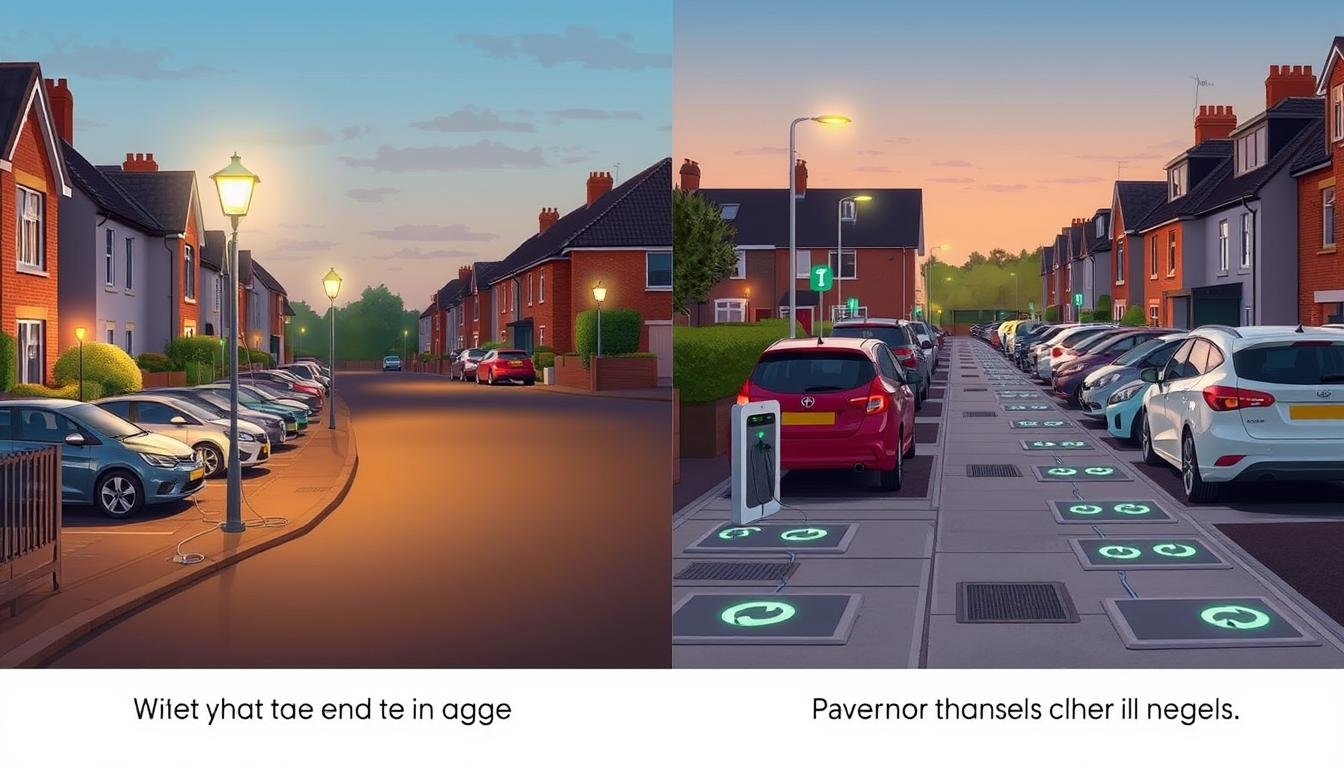
For residences with no off-street parking, a cross-pavement charging solution is vital. It allows a safe cable run from your home to your car parked on the street.
You must obtain permission from your local highways authority before any work begins. The funding for this cross-pavement charging infrastructure is now extended until 31 March 2027.
| Grant Type | Key Benefit | Maximum Support | Important Note |
|---|---|---|---|
| Chargepoint Grant for Renters/Flats | Makes charging accessible without a driveway | £350 (rising to £500 in April 2026) | Designed for properties lacking dedicated parking. |
| Cross-Pavement Charging Grant | Solves the parking limitation for on-street users | Covers approved installation costs | Local council approval is a mandatory first step. |
Securing local authority permission is the non-negotiable foundation for any cross-pavement project.
Exploring the Workplace Charging Scheme
Businesses and charities can now access dedicated financial support for installing electric vehicle charging points. This initiative helps organisations provide essential infrastructure for staff and visitors. It significantly reduces the upfront cost of transitioning to cleaner transport.
The Workplace Charging Scheme (WCS) is a government-backed programme. It allows eligible entities to claim up to £350 per socket. Each organisation can apply for support on up to 40 sockets.
How the Scheme Benefits Businesses and Charities
This charging scheme offers tangible advantages for commercial operations and non-profits. It directly lowers the expense of setting up workplace charging infrastructure. From 1 April 2026, the support increases to £500 per socket.
This enhanced incentive aims to accelerate commercial installations. Both businesses and charities can use it to install multiple chargepoints. The result is a more convenient and sustainable environment for everyone.
Insights into Chargepoint Funding and Installations
Beyond the core workplace charging support, additional funding streams exist. The infrastructure grant for staff provides up to £15,000 for small and medium-sized enterprises. It covers 75% of the total cost to prepare sites for multiple chargers.
State-funded schools can access a separate education charging scheme. This offers up to £2,500 per socket to support their shift. My partnership with Blink ensures companies get expert advice on system design.
| Scheme | Key Benefit | Maximum Support | Note |
|---|---|---|---|
| Workplace Charging Scheme (WCS) | Reduces cost per socket for businesses & charities | £350 per socket (rising to £500 in April 2026) | Cap of 40 sockets per organisation. |
| Infrastructure Grant for Staff | Helps SMEs prepare sites for multiple chargepoints | Up to £15,000 | Covers 75% of eligible costs. |
| Education Charging Scheme | Supports state-funded schools' transition | Up to £2,500 per socket | Available for qualified educational institutions. |
Expert guidance on system design and maintenance is crucial for long-term reliability when utilising these government schemes.
EV Grants in Scotland and Regional Differences
Residents north of the border can access unique support programmes not available elsewhere in the UK. These regional initiatives complement the national framework.
The Energy Saving Trust Scotland administers additional assistance. This includes interest-free loans for purchasing an electric vehicle.
Specific funding is also available for rural or off-grid households. These schemes are separate from UK-wide government grants.
They are subject to change based on local policy priorities. I advise checking the latest guidance from the Energy Saving Trust Scotland.
Their offerings can differ significantly from the national programmes. My research indicates the Scottish government is committed to extra help.
Additional Support from Energy Saving Trust Scotland
You should verify eligibility for both national and regional grants. This maximises your total financial savings.
The goal is to ensure equitable access to charging infrastructure. Their support system is designed to fill specific gaps.
| Scheme Type | Key Feature | Maximum Support | Important Note |
|---|---|---|---|
| Scottish Interest-Free Loan | Reduces upfront cost of a new car | Typically up to £28,000 | Separate from the purchase price grant. |
| Rural/Off-Grid Funding | Targets remote households | Varies by specific project | Addresses unique infrastructure challenges. |
| UK-Wide Chargepoint Grant | Standard installation support | Up to £350 | Runs concurrently with Scottish schemes. |
Always consult the Energy Saving Trust Scotland website for the most current programme details.
Step-by-Step Application Process for EV Grants
Navigating the official application for funding requires careful attention to a few key stages. The procedure is designed to be logical and user-friendly when you know what to expect.
Following this sequence helps avoid common pitfalls. It ensures your request for support is processed smoothly.
- Confirm Your Eligibility: Check you meet the core criteria for the specific scheme. This includes your property type, parking space, and eligible vehicle.
- Select an Authorised Installer: You must use an OZEV-authorised partner for the installation. They understand the technical and administrative standards.
- Obtain a Detailed Quote: Get a clear, itemised estimate for all costs. This is crucial for understanding your final financial commitment.
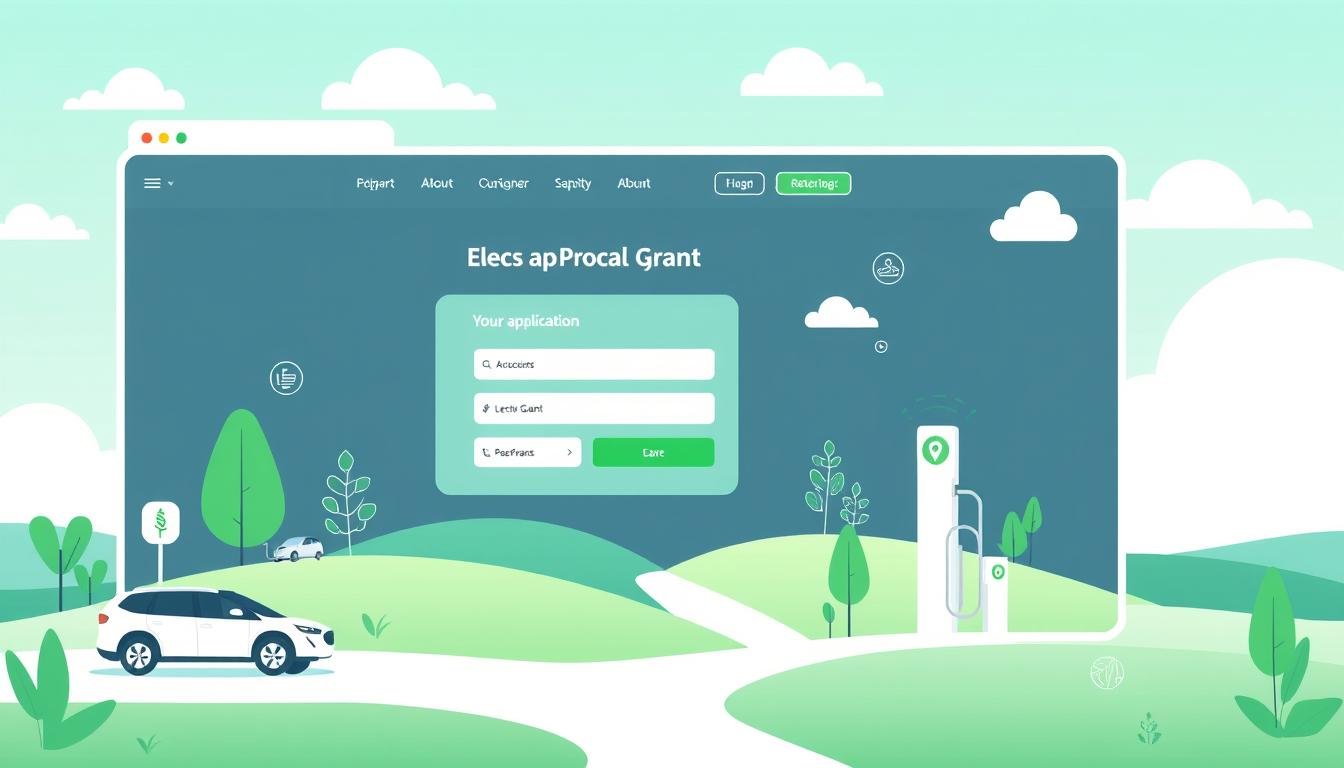
- Submit Your Application: This is done either directly through the official government portal or via your installer. Many owners find their installer handles the claim on their behalf.
- Receive Approval Before Work Begins: You must secure your funding approval before any installation starts. Applications cannot be backdated.
Preparing Your Documentation and Eligibility
Having the correct paperwork ready is the foundation of a strong submission. I recommend gathering these documents early.
You will typically need proof of vehicle ownership or a lease agreement. Evidence of your dedicated off-street parking space is also mandatory.
For vehicles, ensure your model is on the latest OZEV-approved list. This verification step is non-negotiable for most grants.
Tips for a Successful Grant Application
My experience shows that preparation prevents delay. Keep all your vehicle and property documentation in one folder.
Communicate clearly with your chosen installer from the first touchpoint. They can advise on the specific requirements for your system.
Submitting a complete application with all supporting evidence is the single most effective way to avoid unnecessary hold-ups.
Finally, apply as soon as your plans are firm. This secures your place in the funding queue and allows time for any queries.
Impact of Grants on Installation Costs and Overall Savings
The real-world effect of available subsidies on upfront installation expenses is more significant than many realise. For property owners, these financial supports directly reduce the capital required to set up a workable charging system.
Evaluating Cost Reductions and Financial Benefits
Landlords can benefit from specific programmes like the EV Chargepoint Grant. This offers up to £350 per socket for residential and commercial properties.
It dramatically lowers the initial outlay for a new charger. The separate Infrastructure Grant for landlords provides up to £30,000 for site preparation.
This funding covers essential work like cabling and enabling parking space infrastructure. Utilising these grants makes the transition to electric vehicles far more viable for managed properties.
My evaluation shows the long-term savings from lower running costs often outweigh the initial investment. This is especially true when grant funding is applied.
Future-proofing your home or rental units with chargepoints is a smart move. It attracts tenants who own an electric car and adds tangible value.
Personal Experiences and Real-Life Case Studies
Real-world examples can turn complex rules into clear, actionable steps. My own story highlights how the support framework works in practice.
My Journey Through the Application Process
Selecting an OZEV-authorised installer was my first smart move. Their expertise made the entire grant application smoother and faster. They handled the technical checks I might have missed.
I successfully claimed the home chargepoint grant by verifying my private off-street parking. Meeting the official criteria upfront prevented delays. This step is crucial for a successful claim.
Using a salary sacrifice scheme to lease my new electric car delivered significant savings. I reduced my income tax and National Insurance contributions. This made the monthly payments much more affordable.
For daily charging, I chose the monthly Intelligent EV package from Octopus Energy. It offers a simple, all-in-one approach to powering my vehicle. Managing my home charging needs became effortless.
My experience proves the transition to an electric car is manageable with the right support. Careful planning and using available schemes turn ambition into reality. The installation was straightforward once the groundwork was done.
Conclusion
Your journey towards cleaner transport doesn't have to be expensive, with substantial financial support available for both homes and workplaces.
The government continues to offer robust grants for various properties. These grants and the specific grant programmes cover everything from residential chargers to commercial installations.
I encourage you to review the eligibility criteria carefully. Consulting an OZEV-authorised installer is a smart first step for your application process.
Using these incentives can significantly reduce the costs of installing modern charging infrastructure. This makes owning an electric vehicle more accessible for many.
Stay informed about the latest updates from the Office for Zero Emission Vehicles. This ensures you don't miss out on valuable funding for your properties.
Taking advantage of this support makes your transition smoother. It turns the ambition of cleaner charging into a practical reality.