Did you know that in 2025, battery-electric vehicles made up nearly a quarter of all new car registrations in Britain? This rapid shift means over 1.1 million electric cars are now on our roads.
For new owners, this presents a practical challenge. Understanding the right plug for your vehicle is essential for convenient and efficient power.
Michael Hobson from Third Rock Energy notes that selecting the correct cable is vital for efficient home charging. A mismatched setup can lead to frustration and slower refuelling.
This comprehensive guide analyses the main connector varieties you will encounter. We focus on helping you choose the perfect domestic charger for your needs.
Our goal is to demystify the technology. We want your vehicle to be ready for daily use without complication.
Key Takeaways
- This guide provides a clear analysis of the primary electric vehicle plug varieties available in the UK.
- Choosing the correct charging cable is crucial for safe and efficient domestic power supply.
- With over a million electric cars now in use, understanding your specific charger requirements is more important than ever.
- We offer detailed advice on selecting a home charging unit that matches your vehicle and lifestyle.
- The information here is designed to help you navigate the evolving public and private charging infrastructure.
- Proper planning ensures your electric car remains a practical and reliable choice for daily travel.
Introduction to EV Connector Types in the UK 2026
With plug-in cars now holding over a third of the new car market, selecting the right home charging equipment is critical. As of October 2025, they accounted for 37.6% of all new registrations. This shift makes understanding current power delivery standards essential for every owner.
Every modern battery-powered car needs specific hardware to connect safely to the mains supply. Your choice of domestic charger is therefore a primary concern. Homeowners must evaluate their specific vehicle needs to ensure reliable and consistent energy delivery.
We examine the current state of the market to help you identify the most suitable equipment for your property. Proper selection of your home charging hardware ensures your car remains fully operational throughout 2026. The table below outlines common domestic charging options.
| Power Rating | Typical Full Charge Time | Best For | Key Consideration |
|---|---|---|---|
| 3.7 kW | Overnight (8-12 hours) | Lower-mileage drivers, older vehicles | Uses a standard 3-pin socket; slowest option. |
| 7 kW | Overnight (6-8 hours) | Most households, modern electric cars | Requires a dedicated home charging unit; ideal for nightly use. |
| 22 kW | 3-4 hours | Homes with three-phase supply, faster needs | Much quicker but needs specialist electrical installation. |
Choosing the correct solution provides peace of mind. It guarantees your vehicle is ready when you are, supporting the growing electric mobility landscape.
The Evolution of EV Charging Standards
Early adopters of electric mobility faced a fragmented array of plug designs and power protocols. The industry's journey towards unified solutions is a fascinating story of technological convergence.
This progression directly influences the equipment you need for your domestic setup today.
Historical Overview of Type 1 and Type 2 Connectors
Initially, the market lacked a common plug. Older Japanese imports and early models like the Nissan Leaf used the 5-pin Type 1 design.
This was soon superseded by the more capable 7-pin Type 2 interface. The Type 2 connector became the universal standard across Britain and Europe.
Specialists at Third Rock Energy confirm that cars sold here after 2018 almost exclusively require this standard. This shift ensures compatibility for both public and private power delivery.
Emergence of CCS and CHAdeMO in the UK
Demand for faster refuelling led to new standards for rapid DC charging. CCS and CHAdeMO emerged to meet this need.
They provide high-power options for drivers on longer journeys. Understanding this history clarifies why your modern home charger must support the 7-pin Type 2 socket.
It is the foundation for safe and efficient domestic charging.
Understanding Type 2: The UK Standard
Across Britain's driveways, a single plug design dominates the landscape of home vehicle charging. This seven-pin interface is the established UK standard for a reason. It provides a safe, reliable connection for powering your car overnight.
Its design supports both common domestic power levels seamlessly.
Key Features of Type 2 Connectors
A key strength is its robust 32-amp rating. This allows it to handle both 7kW and 22kW charging without compromise. The internal components are crucial for performance.
Modern cables use high-purity copper cores. This ensures efficient power transfer and minimises energy loss. Build quality directly impacts longevity.
Reinforced strain relief and weather-resistant materials protect the assembly. These features are vital for withstanding typical British conditions. Your domestic setup deserves this durability.
Compatibility with Modern EVs
Virtually every new electric car sold here uses this socket. Major brands like Tesla, BMW, and Hyundai have adopted it universally. This widespread adoption simplifies your choice.
Always verify compatibility for your specific model. Check the label inside your car's charging flap or consult the manual. This simple step confirms the correct charger for your home.
Investing in a high-quality Type 2 cable guarantees safety and reliability. It is the fundamental link for consistent, worry-free charging at your home.
Comparing CCS and CHAdeMO: Technical Differences
Understanding the distinct roles of rapid charging systems helps avoid confusion with domestic setups. While your home unit uses AC, these public standards deliver DC power directly to the battery.
This direct current method enables much faster refuelling stops. It is a key technology for longer journeys across the UK.
Charging Speeds and Power Ratings
Both systems are designed for high-output public stations. They far exceed the capability of a typical 22kW AC charger.
Such an AC unit might add 60 to 90 miles of range per hour. In contrast, a rapid DC charger can deliver over 100 miles in just 15 minutes.
Power ratings for CCS and CHAdeMO now commonly reach 150 kW or more. This makes them essential for quick top-ups.
Connector Design and Safety Aspects
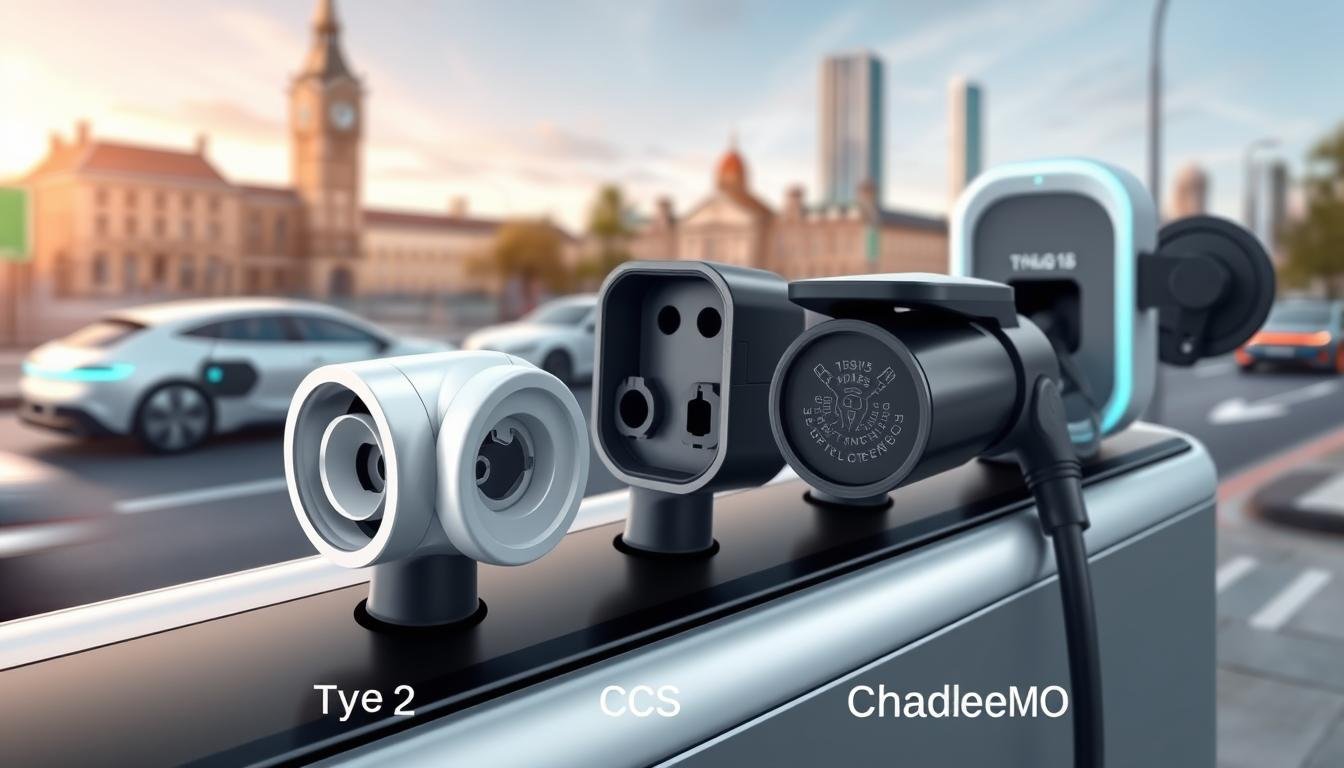
The physical connector designs are very different. CCS builds upon the familiar Type 2 shape with extra pins for DC.
CHAdeMO uses a unique circular plug. Both incorporate sophisticated safety protocols.
These protocols ensure communication between car and station happens before any power flows. This prevents arcing and guarantees a secure link every time.
| Technical Aspect | CCS (Combined Charging System) | CHAdeMO |
|---|---|---|
| Primary Use | Rapid DC public charging | Rapid DC public charging |
| Max Power Rating | Up to 350 kW | Up to 400 kW |
| Connector Design | Type 2 base with two DC pins | Unique circular plug |
| Key Safety Feature | PLC communication protocol | CAN bus communication |
| Typical Charge Time (10-80%) | 20-40 minutes | 20-40 minutes |
Why EV Connector Types UK 2026 Matter for Home Charging
A simple mismatch between your cable and car can turn a routine overnight charge into a source of daily frustration.
Using the wrong plug often leads to painfully slow speeds. At worst, the power transfer may not start at all.
The issue is deeper than physical fit. Your home charger must communicate perfectly with your car's onboard computer.
This handshake ensures safe, efficient energy delivery. Michael Hobson advises drivers to stop guessing and select the perfect cable for their specific model.
Proper selection protects your car's charging port from damage. It also guarantees the long-term performance of your home equipment.
| Choosing the Correct Cable | Using an Incorrect Cable |
|---|---|
| Enables full, advertised charging speed. | Results in significantly slower power delivery. |
| Ensures safe communication with vehicle systems. | May cause failed charge initiation or errors. |
| Protects your car's port and internal electronics. | Risks potential damage over time. |
| Provides a reliable, set-and-forget home charging experience. | Leads to inconsistent results and owner frustration. |
This foundational choice is crucial for a dependable setup.
UKCA & CE Certification: Ensuring Safety and Reliability
Official safety marks on your charging hardware are not mere stickers. They represent rigorous testing and compliance with national standards.
For any charger sold in Britain, UKCA and CE certification is mandatory. This guarantees the equipment meets strict electrical safety and performance rules.
Uncertified cables often cut corners. They may use thinner copper cores or inferior insulation materials.
This poses a direct risk to your home electrical system. It can lead to overheating and unstable charging performance.
Specialists like Third Rock Energy build all cables to these strict compliance standards. This proactive approach prevents potential hazards before they occur.
Always check your charging cable for the appropriate certification marks. This verification ensures full alignment with current wiring regulations.
Investing in properly certified charger equipment provides peace of mind. You know your home setup is protected against electrical faults.
It is the foundation for a truly reliable and safe power delivery experience.
7kW vs 22kW Charging Cables: What You Should Know
For most households, a 7kW charger represents the sweet spot between cost, installation simplicity, and daily utility. Understanding the difference between these two common power ratings is essential for planning your home setup effectively.
Impact on Charging Speed and Efficiency
A 7kW unit typically adds around 30 miles of range per hour on a standard single-phase supply. This is perfectly adequate for overnight charging for the majority of drivers.
Efficiency is maximised when your cable's rating matches or exceeds the maximum output of your wallbox. Using an under-rated cable can lead to energy loss and potential overheating.
Optimal Use Cases for Each Rating
The 7kW option is the standard for most UK homes with a single-phase electrical supply. It provides a reliable and cost-effective solution for daily use.
A 22kW charger requires a three-phase supply, which is less common in domestic properties. However, investing in a 22kW-rated cable is a smart move.
This higher-rated cable works perfectly with a 7kW unit today. It future-proofs your investment, allowing you to upgrade your home charger later without replacing the cable.
Choosing the Right Cable Length for Your Home Setup
The distance from your wallbox to your car's charging port is a key factor often overlooked during setup. Selecting the correct cable length ensures a smooth, hassle-free experience every time you plug in.
It directly affects convenience, safety, and the long-term care of your equipment. A poorly chosen length can lead to daily frustration.
Benefits of an 8-Metre Cable
An 8-metre cable is the most popular choice for a reason. It provides ample reach for most UK driveways without creating excessive slack.
This length allows you to park your vehicle comfortably, even if the wallbox is not directly adjacent. It balances flexibility with easy storage and handling.
Specialists confirm this is the optimal length for the majority of domestic installations. It offers a perfect blend of practicality and neatness.
Other Length Options Explained
For compact garages or tight spaces, a 5-metre cable is an ideal lightweight solution. It reduces clutter and is very easy to manage.
Large properties or awkward parking spots may require a 10-metre or even 15-metre cable. This ensures the connector always reaches your car's port.
Proper cable management is essential regardless of length. It prevents trip hazards and protects the cable from damage over time.
Third Rock Energy recommends choosing a length that allows a comfortable connection without leaving lots of loose cable on your driveway.
| Cable Length | Ideal For | Key Consideration |
|---|---|---|
| 5 metres | Compact garages and tight parking spaces | Lightweight and minimises clutter; may lack reach for some driveways. |
| 8 metres | Most standard UK driveways | Offers the best balance of reach and easy storage; the most popular choice. |
| 10 metres | Large driveways or offset wallbox positions | Provides extra flexibility; requires more careful coiling to avoid tangles. |
| 15 metres | Very large properties or complex parking layouts | Ensures connection is always possible; storage and handling become more important. |
Think about your specific parking situation before you buy. The right cable length makes your home charging routine simple and reliable.
It is a small detail that has a big impact on daily convenience.
Navigating Home Charger Options in the UK
Investing in a quality home charger is a decision that balances upfront cost with long-term convenience and savings. The market offers a wide range of units, with prices for a complete smart system typically between £800 and £1,500. This figure usually includes professional installation and all necessary safety certifications.
Modern home chargers are defined by their intelligent features. They allow you to schedule your charging sessions automatically during off-peak electricity tariff hours. This smart capability can lead to significant reductions on your energy bills over time.
While the initial price may seem substantial, it represents a worthwhile financial move. The efficiency gains and tariff optimisation provided by a smart charger often pay back the investment. You are not just buying hardware; you are purchasing ongoing control and economy.
Homeowners should carefully compare different home chargers available. Look for a balance between advanced functionality, robust build quality, and overall cost. Reputable brands provide units that integrate seamlessly with smartphone apps.
This app connectivity grants real-time monitoring and remote control of your charging. It turns a simple home charger into a central part of your household's energy management. Choosing the right unit makes your daily routine simpler and more cost-effective.
Installation and Electrical Considerations for EV Chargers
The physical setup of your home charging point is governed by strict national safety regulations. Professional installation is mandatory to ensure full compliance with the UK's BS 7671 wiring regulations.
A qualified installer will first assess your property's electrical supply. They check if your main fuse box can handle the extra demand from a dedicated charger.
This assessment may reveal a need for an upgrade before work begins. Proper earthing and RCD protection are critical components verified during this process.
The installation itself involves mounting the wall unit near your parking area. A dedicated cable is then run back to your main electrical panel.
Always request an Electrical Installation Certificate upon completion. This document guarantees the safety of your home charging system for years to come.
Smart Charging Solutions for Modern Homes
The latest generation of domestic power units goes beyond simple refuelling. It offers sophisticated control over your energy usage.
These intelligent features transform a basic task into an efficient, cost-saving routine. Your home setup becomes a central part of your household's energy management.
Integrated Features and App Connectivity
Modern charger units connect directly to your smartphone. Apps like the CITA EV App provide real-time consumption insights.
You can schedule charging sessions remotely. This allows seamless integration with smart energy tariffs like Octopus Go.
Such connectivity helps reduce your overall power costs significantly. It turns your system into a smart, responsive asset.
Load Sharing and Energy Optimisation
Load balancing is a crucial feature for many households. It prevents overloading your main electrical supply.
This technology is essential for homes with multiple electric vehicles. It intelligently divides available power between connected units.
Your home charger adapts to your energy goals automatically. This ensures efficient, grid-friendly charging every time.
The Importance of Cable Build Quality and Durability
Daily exposure to the elements demands a charging cable built with superior materials and construction. Its physical robustness is your first defence against weather and wear.
Premium cables feature UV-resistant TPU sheathing. This special material prevents cracking in cold weather and stops degradation from sunlight.
High-purity copper cores inside ensure efficient power transfer. This quality protects your vehicle and home charger from electrical loads over many hours.
Reinforced strain relief at the connector ends significantly extends lifespan. A high-quality cable should last three to five years with regular use.
A dependable manufacturer will typically offer a minimum two-year warranty. This guarantee reflects the durability and quality of their charging cable.
| Feature | Standard Cable | Premium Cable |
|---|---|---|
| Outer Sheathing | Basic PVC | UV-resistant TPU |
| Conductor Material | Standard copper | High-purity copper |
| Strain Relief | Basic moulding | Reinforced design |
| Typical Lifespan | 1-3 years | 3-5 years |
| Manufacturer Warranty | 1 year or less | 2 years or more |
Investing in a robust cable prevents common issues. These include inconsistent charging or damage to your vehicle's port.
It safeguards your entire home setup. A strong warranty offers added peace of mind for your investment.
EV connector types UK 2026: Comprehensive Buyer’s Guide
For homeowners seeking a future-proof solution, a 32A Type 2 to Type 2 cable represents the most versatile and recommended choice.
This specification forms the gold standard for domestic power delivery. It ensures full compatibility with all modern electric vehicles and home wallboxes.
Our guide stresses the importance of certified products. Always select cables bearing the UKCA and CE marks for guaranteed safety.
Build quality is paramount for the British climate. Prioritise designs with waterproof and weather-resistant sheathing.
Consider your charging options carefully. Investing in a 22kW-rated cable is a smart move, even if your current home charger operates at 7kW.
This approach future-proofs your setup for potential upgrades. It ensures efficient, safe power delivery for years to come.
Following these recommendations provides peace of mind. Your domestic charging routine will be reliable and ready for whatever comes next.
Planning Your Future EV Charging Setup
Before you finalise your charger purchase, take a moment to strategically plan its physical location. This decision impacts long-term ease of use and installation costs.
Start by evaluating your regular parking spot. The distance from your main power supply to this point is crucial.
A shorter cable run minimises installation complexity and expense. It also helps maximise charging efficiency for your home.
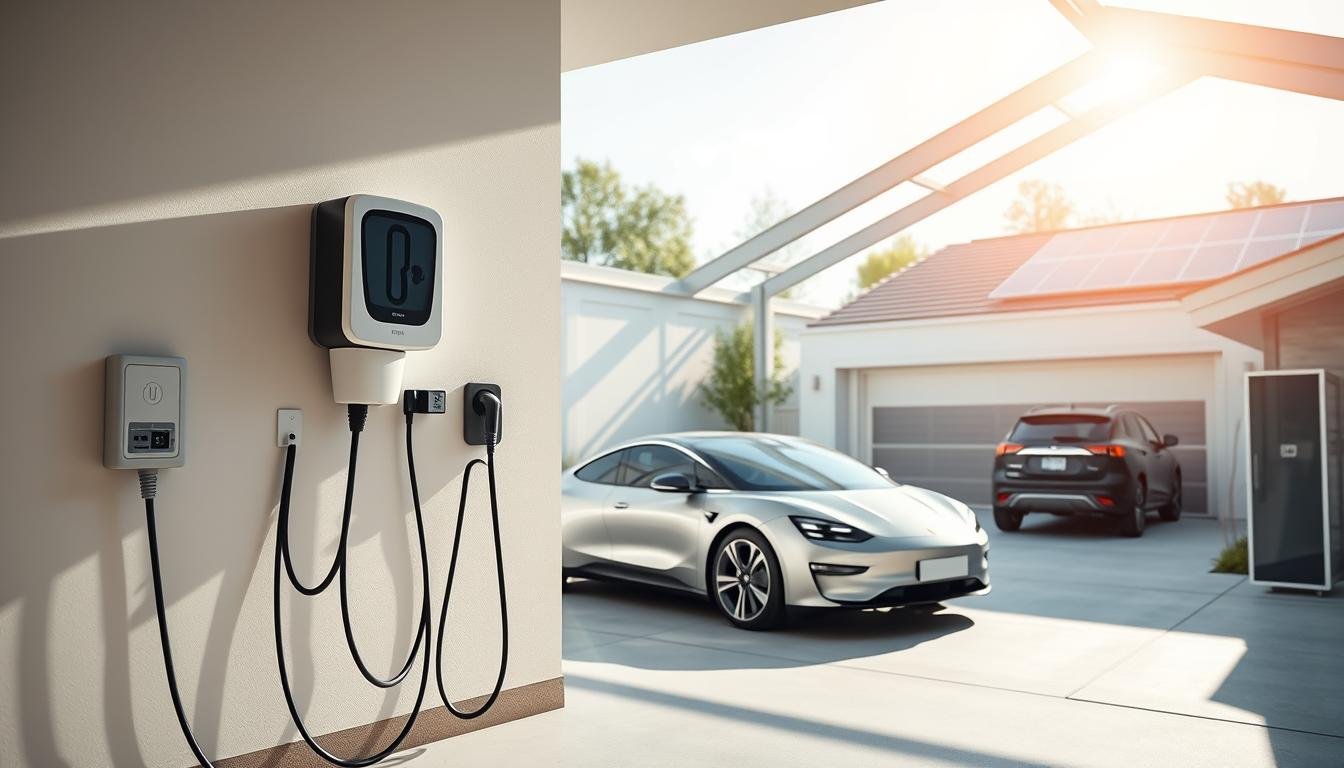
You have several mounting options for your wallbox. Each suits different property layouts and vehicle needs.
A standalone charger pillar is ideal for homes with multiple cars. It allows flexible parking and offers a professional look on your driveway.
Carport installations provide excellent shelter from British weather. They balance convenience with reliable protection for your equipment.
| Mounting Option | Best For | Key Advantage | Consideration |
|---|---|---|---|
| Garage Wall | Single vehicle, enclosed parking | Full protection from all weather conditions | Requires parking inside the garage |
| Driveway Wall | Quick access, most standard homes | Simple installation and easy daily use | Unit is exposed to rain and sun |
| Standalone Pillar | Multiple vehicles, large driveways | Flexible parking and clean aesthetics | Higher initial cost and more complex install |
A well-planned setup ensures your experience remains seamless. It adapts as your household's needs evolve over time.
Conclusion
Securing the best home charging experience rests on selecting equipment that balances performance, safety, and value. A 32A Type 2 cable, ideally eight metres long and rated for 22kW, forms the cornerstone of a reliable domestic setup.
Choosing the right charger guarantees maximum compatibility and faster charging for your car today. This choice also safeguards your vehicle's battery over the long term.
Homeowners should always prioritise products with UKCA and CE certification. This confirms full compliance with national safety standards and system integrity.
Integrating smart features with off-peak tariffs makes overnight charging highly cost-effective. It helps you save money while maintaining your car's range between journeys.
Investing in high-quality hardware from a reputable supplier provides peace of mind. It future-proofs your investment for years of dependable service and convenience.
By following this guide, you are well-prepared to navigate the evolving landscape. Your home will support efficient, convenient power delivery every day, adding miles of range per session.
FAQ
What is the most common plug for home charging in Britain?
The Type 2 connector is the standard for home charging in the UK. Most domestic wallbox units and all new electric vehicles use this socket for convenient overnight charging on your driveway.
How do I know which charging cable is compatible with my car?
Check your vehicle’s manual for its socket type. For home charging, you will need a cable with a Type 2 plug for your car and a matching Type 2 or 3-pin plug for the charging unit. Compatibility is key for a safe and reliable power supply.
Is a longer charging cable better for home use?
An 8-metre cable often provides the best balance. It offers enough length to reach your car’s port comfortably, even if parked awkwardly, without creating excessive storage issues or tripping hazards on your property.
What does the kW rating mean for my home charger?
The kilowatt (kW) rating indicates power output. A 7kW unit is common, adding about 30 miles of range per hour of charging. A faster 22kW option requires a specific electrical supply but can significantly reduce charging time.
Why are safety certifications like UKCA important for a charger?
UKCA marking confirms the product meets strict British safety and performance standards. It ensures your home charging setup is reliable, protects your vehicle’s battery, and complies with national regulations for electrical goods.
Can I use a three-pin plug socket to charge my electric car?
Yes, but it is only suitable for occasional use. A dedicated home charging unit is safer, much faster, and includes smart features to optimise energy use and cost, making it the recommended long-term solution.
What should I look for in a durable charging cable?
A> Seek out robust build quality with features like a durable outer jacket, high-quality internal wiring, and a weatherproof rating. A good warranty from the manufacturer also indicates confidence in the product's longevity for daily use.