On a single day in spring 2026, the government's financial support for domestic charging installations jumped by a staggering 43%. This sudden increase marked a pivotal moment for the UK's transition to cleaner transport.
The Office for Zero Emission Vehicles has officially extended its crucial support schemes. This vital assistance will now run until at least 31 March 2027.
This move provides much-needed certainty for residents and landlords across the country. It signals a long-term commitment to building the necessary infrastructure for electric vehicles.
Our complete guide breaks down these important updates. We analyse the latest policy shifts and what they mean for you.
Understanding these changes is essential for anyone looking to optimise their domestic energy setup. The increased support makes installing a dedicated point more accessible than ever.
Key Takeaways
- The government's key support schemes for domestic charge points are now confirmed until March 2027.
- From April 2026, the maximum available contribution rose to £500 per eligible socket installed.
- This enhanced financial support is designed to accelerate the widespread adoption of electric vehicles.
- Navigating the updated regulations is crucial for both homeowners and property landlords.
- Securing this assistance can significantly reduce the upfront cost of a professional installation.
- Acting before programme deadlines ensures you do not miss out on this vital support.
Eligibility for the OZEV grant 2026 home charger
The core requirements for securing funding focus on two main pillars: your electric car and your parking situation. Understanding these fundamental rules is the essential first step. This ensures you can proceed confidently with an application.
Grant Eligibility Basics
To meet the eligibility criteria, you must reside in a flat or rented residence. You also need to own a qualifying electric car. The process requires verification of your ownership and your location within the UK mainland.
Locations in the Channel Islands or the Isle of Man do not qualify. Your application must confirm you live in England, Wales, Scotland, or Northern Ireland. Ensuring your specific situation matches these criteria is crucial before beginning.
Vehicle and Property Requirements
You must possess an eligible car and a private off-street parking space. This dedicated parking area is a core requirement set by the authorities. It ensures safe and practical installation of charging infrastructure.
Your residence needs to have this dedicated space, such as a driveway or private car park. Without it, you cannot satisfy the basic conditions. Confirming both your vehicle and parking details early avoids disappointment.
Overview of Home and Workplace Grant Schemes
The landscape of financial assistance for electric vehicle infrastructure is divided into distinct streams for domestic and commercial use. This structured approach ensures targeted support for different needs across the United Kingdom.
Home Grants Details
Specific programmes exist for residents without traditional driveways. Funding for flats, renters, and residential landlords remains accessible until 31 March 2027.
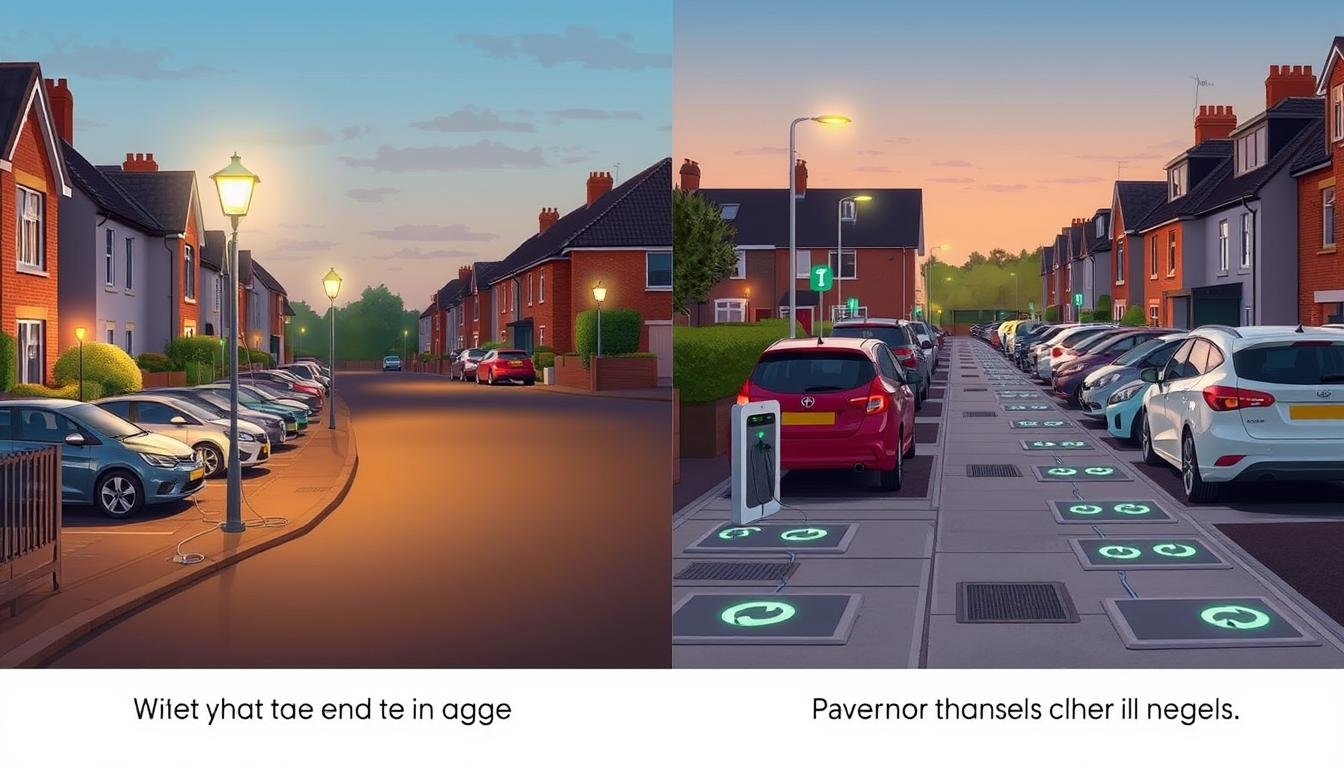
This includes provisions for on-street parking solutions. Updated regulatory standards allow access to increased financial support for this infrastructure.
Workplace Charging Scheme Overview
For businesses, the Workplace Charging Scheme (WCS) is a vital tool. It supports corporate fleet electrification by allowing applications for up to 40 sockets across various sites.
This scheme is designed to cater for staff vehicles and is confirmed until the same March 2027 deadline. The authorities have streamlined their portfolio to maintain this consistent commercial support.
Key Changes from 1 April 2026
The transition into the 2026/27 period was defined by key modifications to the existing financial assistance schemes. These adjustments signalled a refined approach to supporting the nation's electric vehicle infrastructure rollout.
New Grant Rates and Application Deadlines
From 1 April, the maximum available contribution for a socket under the Workplace Charging Scheme rose to £500. This represented a substantial increase from the previous £350 limit.
Concurrently, three specific support programmes closed to new applicants on 31 March. This included the dedicated staff and fleets scheme.
However, the government reaffirmed its commitment to expanding charging access. Several core programmes remain active and funded until at least March 2027.
Installers and applicants must note a crucial deadline. All claims via the old application portal must be submitted by 26 May 2026.
This suite of changes illustrates a strategic shift. The focus is now on streamlined, higher-value support to accelerate adoption across the UK.
Application Process and New Platform Transition
A significant shift occurred in how financial support for electric vehicle infrastructure is accessed. This change centred on the introduction of a new digital application system. The updated platform launched on 1 April 2026, completely replacing the previous grant management portal.
This modernised system is designed to streamline the process for customers. It provides a more direct route to request the available financial contribution.
Steps to Register and Apply
Beginning your request requires a simple initial step. You must first register for a personal account on the new platform.
Only after creating this account can you submit your formal request for the increased funding. Once submitted, the assessing body estimates a review period of up to 10 working days.
It is absolutely essential to wait for their official notification of eligibility. You should not proceed with any physical installation work until you receive this confirmation.
Re-applying for the Higher Grant Rate
If you submitted a request before 1 April 2026, a specific option is available. You may be eligible to re-apply for the higher £500 rate.
This applies if your chargepoint has not yet been fitted. To do this, you must first cancel your previous submission on the old portal.
You can then begin a fresh application through the new system. For professionals, status updates will be communicated via email, as the new platform does not include a dedicated tracker for installers.
Documenting and Photographing Your Installation
From April 2026, strict new evidence rules require installers to submit specific photos with every claim. This documentation is a mandatory part of the process. Getting it right ensures your request for support is processed smoothly.
Accurate visual records prove the work was completed to standard. They also verify the site meets all necessary conditions.
Photographic Evidence Requirements
You must provide four distinct types of image. These visual checks confirm the installation and its location.
The evidence must be clear and high-quality. Blurry or incomplete photos can cause significant delays.
| Evidence Type | Description | Verification Purpose |
|---|---|---|
| Close-up Detail | A clear image of the installed chargepoint, showing its model and serial number. | Identifies the exact hardware unit used. |
| Wide Field View | A photo showing the full parking space and the associated building. | Confirms the site meets location criteria. |
| Electrical Connection | A shot of the unit's connection to the property's consumer unit or supply. | Demonstrates a safe and professional installation. |
| Overall Context | An image showing the chargepoint's position relative to the parking bay. | Verifies practical access and positioning. |
Tips for Accurate Documentation
Always take photos in good daylight. Ensure all labels and numbers are legible.
Capture images from multiple angles. This provides a complete picture of the work.
Submit the photos immediately after the installation is finished. Do not wait, as this can hold up your claim. Following these steps keeps your application compliant with the latest government standards.
Eligibility Criteria and Requirements
Eligibility for infrastructure funding hinges on clear criteria related to your premises and electric car. These rules ensure support reaches the intended recipients. Understanding them is essential before you apply.
Property and Vehicle Eligibility
Every parking space must be off-street, private, and clearly defined. This applies whether you own the space or hold a legal right to use it.
Vehicle eligibility is strictly enforced. Only qualifying electric models are supported under current government programmes.
Special Considerations for Commercial Applicants
For businesses, the staff and fleets scheme requires the company to have fewer than 250 employees.
Commercial landlords must lease their property to a tenant that pays business rates. This is a fundamental requirement for accessing the chargepoint grant.
| Applicant Type | Key Eligibility Criteria | Additional Notes |
|---|---|---|
| Residential Applicant | Private off-street parking; qualifying electric vehicle. | For flats or estates with shared car parks. |
| Commercial Business | Fewer than 250 staff members. | Applies to staff and fleets funding. |
| Commercial Landlord | Tenant must pay business rates. | Lease agreement must be in place. |
Verifying your eligibility upfront saves time and avoids application delays.
Funding Amounts and Rate Adjustments
The revised funding structure introduced higher per-unit contributions and expanded eligibility limits. This strategic move is designed to directly address the financial barriers to installing electric vehicle infrastructure.
For both residential and commercial projects, the maximum available contribution was standardised. The cap is now set at £500 for each eligible socket installed.
Residential and Business Rate Changes
A major change benefits residential landlords significantly. They can now request financial assistance for a substantial portfolio of up to 200 sockets across their properties.
This shift enables large-scale deployment, making it feasible to equip entire estates or blocks of flats. For commercial entities, the support is equally robust.
The dedicated scheme for staff and company fleets covers a notable 75% of the total project costs. This substantial backing is capped at a maximum of £15,000 for every single installation.
These adjusted amounts aim to incentivise rapid network expansion. The clear funding pathways help ensure the overall expense remains manageable for eligible applicants.
Guidance for Landlords, Renters and Flats Owners
Property owners and tenants each face unique considerations when seeking financial assistance for electric vehicle infrastructure. Specific programmes are tailored to different living situations.
For residents, the flats and renters scheme offers substantial support. It provides 75% towards the cost of purchasing and fitting a socket. This is available to individuals who own and occupy a flat or lease any residential property.
For property owners who are landlords, the residential landlord infrastructure scheme supports larger deployments. Those managing apartment blocks or estates can access funding for multiple sockets across their properties.
Landlords must note this rule excludes holiday rentals, focusing solely on long-term residential properties. This ensures the support targets permanent housing needs.
Understanding Re-application Options
If you submitted a request before April 2026, understanding your re-application options is vital. You may cancel and re-apply to benefit from the increased £500 rate, provided installation hasn't commenced.
Specific guidance also exists for residents in shared ownership schemes. This ensures all occupants have a fair opportunity to install charging infrastructure.
Insights into EV Charging Solutions for UK Homes
The UK market offers a diverse range of charging solutions. Each is designed to meet different driver needs and property types.
Comparing Top EV Charger Brands
Choosing the right unit involves smart features and solar integration. You must also consider the specific needs of your electric car.
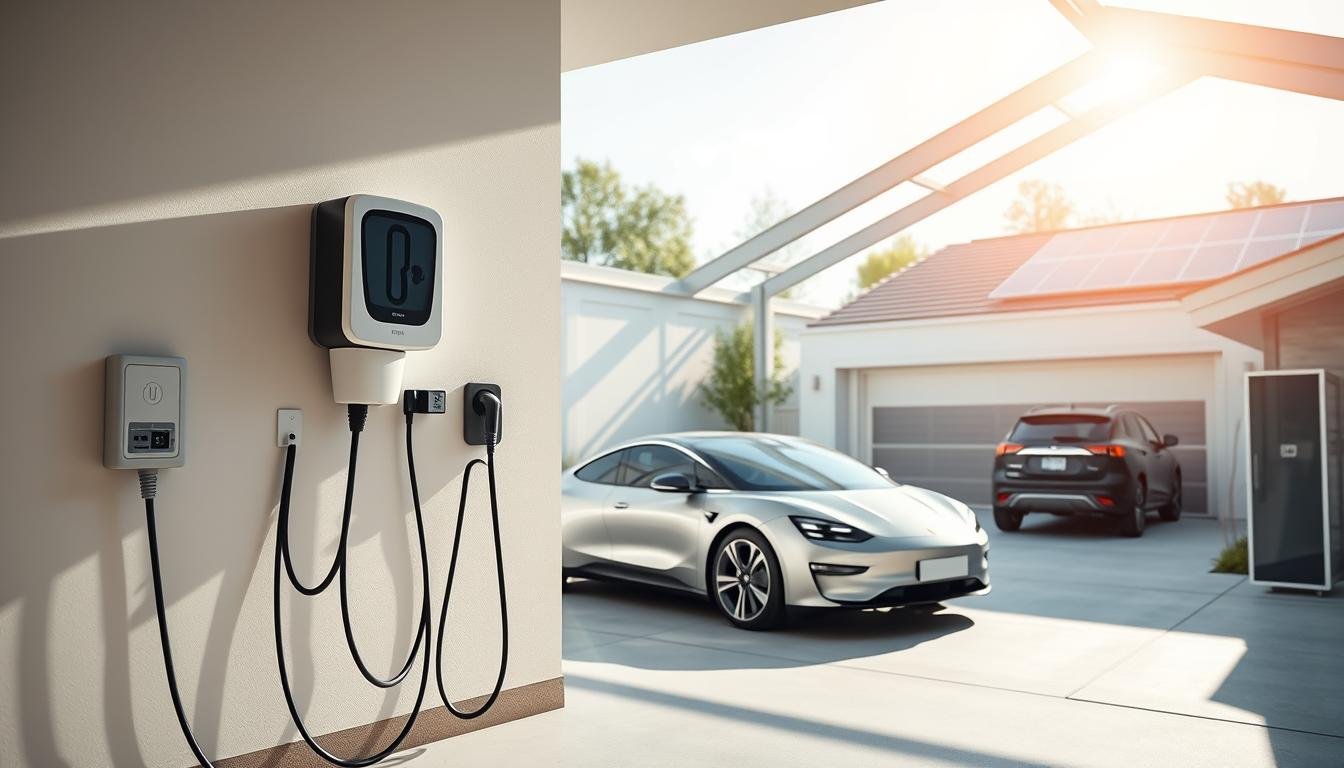
Zappi remains a popular choice for solar-integrated charging. It can divert surplus solar energy directly into your vehicle's battery. This is ideal for a sustainable home setup.
For those who prioritise aesthetics, Andersen offers a premium design. Its hidden cable complements both modern and traditional properties.
The Tesla Wall Connector provides seamless integration for Tesla cars. It ensures a reliable and fast charging experience at your property.
Pod Point and Rolec provide alternative options. They focus on simplicity or budget-friendly solutions for daily use.
| Brand | Key Feature | Ideal For |
|---|---|---|
| Zappi | Solar energy diversion | Eco-conscious households |
| Andersen | Premium, discreet design | Design-focused homeowners |
| Tesla Wall Connector | Seamless Tesla integration | Tesla car owners |
| Pod Point | User-friendly simplicity | Those seeking straightforward operation |
| Rolec | Cost-effective reliability | Budget-aware motorists |
Smart EV Charger Features and Solar Integration
Modern electric vehicle chargepoints are evolving beyond simple power delivery. They now serve as intelligent hubs for domestic energy management.
These smart units integrate directly with solar photovoltaic (PV) systems and battery storage. This allows homeowners to utilise excess solar energy for their vehicles.
Future-Proof Technology Trends
Future-proofing your charging infrastructure is essential. Key features include Open Charge Point Protocol (OCPP) compliance.
This ensures compatibility with various energy management systems. Over-the-air software updates keep your unit current with new standards.
Load balancing and smart scheduling are becoming standard across new installations. These technologies prevent household electrical overloads.
Advanced models offer compatibility with dynamic time-of-use tariffs. You can programme charging sessions for off-peak, low-cost periods.
Investing in this smart technology supports the transition to zero emission vehicles. It creates an efficient, scalable system for future energy needs.
Professional Installation: Importance and Best Practices
Hiring a skilled professional for your chargepoint installation safeguards your property, your vehicle, and your eligibility for financial support. This work is far more complex than fitting a standard plug socket.
Expertise is required to navigate the latest wiring regulations and specific scheme conditions. A certified technician ensures your entire setup is safe, legal, and fully functional from day one.
Ensuring Compliance and Safety Standards
Meeting official safety standards involves a series of critical technical checks. These are mandatory for any claim under the chargepoint grant.
The following table outlines the key areas a professional installer must address.
| Critical Safety Standard | Professional Requirement | Purpose |
|---|---|---|
| Load Assessment | Evaluate your property's main fuse and existing electrical demand. | Prevents circuit overloads when charging your electric vehicle. |
| PEN Fault Protection | Install a dedicated device to detect and isolate dangerous faults. | Protects against electric shock in the event of a network fault. |
| Safe Earthing | Establish a robust and permanent earth connection for the unit. | Ensures dangerous current has a safe path to ground. |
| Smart Configuration | Correctly set charging modes, schedules, and power limits. | Optimises performance and integrates with your energy supply. |
| Final Testing & Certification | Perform rigorous tests and issue an Electrical Installation Certificate. | Provides legal proof the work complies with BS 7671 regulations. |
This rigorous process is why a professional installation is non-negotiable. It protects your investment and is a core condition of the chargepoint grant for your electric vehicle homecharge system.
Smart Infrastructure: Safety and Future-Proofing
The foundation of any reliable electric vehicle charging system lies in its intelligent design and robust safety protocols. This approach ensures your setup is not only secure today but also adaptable for tomorrow's needs.
A safe, future-proof infrastructure requires careful planning from the start. It must integrate seamlessly with your property's existing electrical systems.
Load Assessment and Smart Configurations
A detailed load assessment is a mandatory first step. This process evaluates your property's main fuse and total electrical demand.
It confirms the system can safely support the new chargepoint hardware. This protects against circuit overloads when you power your car.
Modern units feature dynamic load balancing through smart configurations. This vital technology prevents the electric vehicle chargepoint from exceeding your home's capacity.
These settings allow the unit to communicate with your energy management system. They can adjust charging power in real-time based on overall household use.
The Office for Zero Emission Vehicles emphasises the importance of this scalable approach. Safe infrastructure must evolve as your energy needs grow.
Proper installation includes testing all smart features thoroughly. This ensures your chargepoint operates reliably within a well-designed infrastructure.
By prioritising safety and smart technology, you build a resilient charging environment. It will be ready for the next generation of electric vehicles.
Tips for Selecting Qualified Installers
Your choice of installation partner directly influences the efficiency of your claim under the vehicle homecharge scheme. A reputable professional ensures the process aligns with all official requirements.
This selection is crucial for navigating the updated chargepoint grant system. It also safeguards your investment in new infrastructure.
Choosing Experienced Installers
Look for installers with a proven track record in the vehicle homecharge scheme. They should understand the latest chargepoint grant conditions intimately.
Experienced installers will guide you through the entire documentation process. They ensure your chargepoint grant application is accurate and submitted promptly.
This support is vital given strict deadlines. For example, installers have until 6 July 2026 to resubmit claims if authorities request more information.
Evaluating Installer Support and Credentials
Always assess the ongoing support offered by your chosen installer. They are responsible for providing the photographic evidence required for the chargepoint grant claim.
Qualified installers must be familiar with guidelines from the Office for Zero Emission Vehicles. This knowledge helps you transition to zero emission vehicles successfully.
By selecting reputable installers, you ensure your claim is processed efficiently. The table below outlines key credentials to verify.
| Credential to Verify | What to Look For | Why It Matters |
|---|---|---|
| Scheme Accreditation | Official approval under the current chargepoint grant programme. | Confirms they are authorised to perform eligible installations. |
| Evidence Portfolio | Examples of past, successful grant claims with correct photo evidence. | Demonstrates practical experience with the submission process. |
| Technical Certifications | Up-to-date electrical qualifications (e.g., NICEIC, ECA). | Ensures work complies with all safety and wiring regulations. |
| Customer Support Process | A clear plan for assisting with your grant application from start to finish. | Guarantees you have guidance through complex paperwork. |
Conclusion
Securing your contribution towards a new chargepoint is the final, crucial phase in preparing for electric motoring. This process unlocks the practical benefits and environmental advantages of modern electric vehicle ownership.
Success hinges on understanding the updated rules and application schemes. Partnering with a qualified, accredited installer is non-negotiable for ensuring safety, compliance, and a valid grant claim.
With support levels at their peak, now is an optimal time to invest in this smart infrastructure. We strongly encourage all eligible applicants to review the latest government guidance and take the next step.
FAQ
What are the basic eligibility criteria for the chargepoint funding?
To qualify, you must own, lease, or be the primary user of an eligible electric vehicle. You also need dedicated off-street parking at your property, like a driveway. The installation must be carried out by an Office for Zero Emission Vehicles (OZEV) authorised installer.
How does the application process work for homeowners?
Homeowners do not apply directly. Instead, you choose an approved installer who will handle the entire claim on your behalf. They will verify your eligibility, complete the installation, and then claim the grant amount from the government, deducting it from your final invoice.
What are the key changes to the schemes from April 2026?
From 1st April 2026, the grant amount for most residential installations will increase. A new digital application platform will also be launched. Installers will use this system to manage claims, and there will be new deadlines for submitting evidence after the installation is complete.
Can landlords or people living in flats apply for this funding?
Yes, the scheme includes provisions for landlords, both for private rentals and social housing. Residents of flats with dedicated parking spaces may also be eligible. Specific criteria around property ownership and tenancy agreements apply, so consulting with a qualified installer is the best first step.
What evidence do I need to provide for the installation?
Your installer will take several photographs as proof. These typically include images of the electric vehicle on the driveway, the installed chargepoint unit, and the property's main electricity meter and consumer unit. Clear photos are crucial for a successful grant claim.
Is the workplace charging scheme different from the domestic one?
Yes, the Workplace Charging Scheme (WCS) is a separate government initiative. It provides funding for businesses, charities, and public sector organisations to install charging infrastructure for staff and fleet use. The eligibility, grant amounts, and application process differ from the domestic chargepoint grant.