From 1 April 2026, the average cost to power an electric car in the UK shifted significantly. Ofgem set a new benchmark unit rate of 24.67p per kWh for the second quarter of the year.
This change makes understanding the latest market shifts essential for every driver. Navigating electric vehicle energy costs now requires a clear strategy.
I have analysed the current landscape to determine if public top-ups remain a cost-effective choice for your car. Comparing the expense of a home charger with the convenience of using a public point while you shop is crucial.
This guide will break down standing charge and off-peak rate structures. My goal is to ensure you can make an informed choice for your household energy needs.
Whether you are new to electric motoring or a veteran, grasping these costs is the best way to save on your annual mileage. Let's explore which options still offer real value.
Key Takeaways
- A new electricity unit rate of 24.67p/kWh took effect from 1 April 2026.
- Understanding current tariffs is vital for managing your electric vehicle's running costs.
- Comparing the price of home charging against public network fees is more important than ever.
- Tariff structures, including the standing charge and off-peak rate, directly impact your final bill.
- Regular analysis of energy costs can lead to significant savings for drivers.
- Choosing the right charging solution depends on your personal mileage and shopping habits.
Introduction: Navigating EV Charging in 2026
Recent shifts in energy pricing have fundamentally altered how drivers manage their motoring costs. Information from just a year ago is often no longer relevant.
This makes finding current advice essential for anyone running an electric car. The market evolves rapidly.
The Growing Importance of Electric Vehicle Tariffs
I believe selecting the correct energy tariff is the most effective method to reduce your total running costs. Suppliers have adjusted their off-peak rates to accommodate more electric vehicle drivers.
These changes mean you can power your car for less during specific hours. A tailored plan can make a significant difference to your annual mileage expense.
Changing Landscapes in the UK Market
Understanding how your home charger interacts with the national grid is now vital. It helps manage overall electricity consumption and lowers monthly bills.
Many households now prioritise a smart tariff. This ensures their vehicle is ready while keeping the cost per kwh low.
I will examine how these evolving landscapes affect your ability to top up efficiently. The goal is to avoid unnecessary standing charge expenses during daytime hours.
Understanding EV Charging Tariffs and Technologies
To truly optimise costs, drivers must understand the interplay between hardware, software, and their energy supplier's pricing model. This knowledge transforms how you power your vehicle, moving from a simple plug-in habit to a strategic financial decision.
Tariff Structures Explained
Not all electricity plans are created equal. A standard single-rate tariff applies one cost per kwh all day. In contrast, a time-of-use plan offers a cheaper off-peak rate for specific night-time hours.
You will also encounter a fixed daily standing charge. This fee is separate from the energy you use. I always check this detail, as it can significantly affect the final bill for your car.
Smart Charging and Hardware Requirements
Accessing the best tariffs typically requires a smart meter. This device allows your supplier to apply different rates automatically. It's the gateway to automated smart charging.
For your home setup, a dedicated 7.4kW wallbox charger is ideal. It safely delivers power faster than a three-pin plug. When paired with an app, your car can be scheduled to charge only during the cheapest time windows, maximising savings on your electricity use.
Supermarket EV Charging in the Contemporary UK
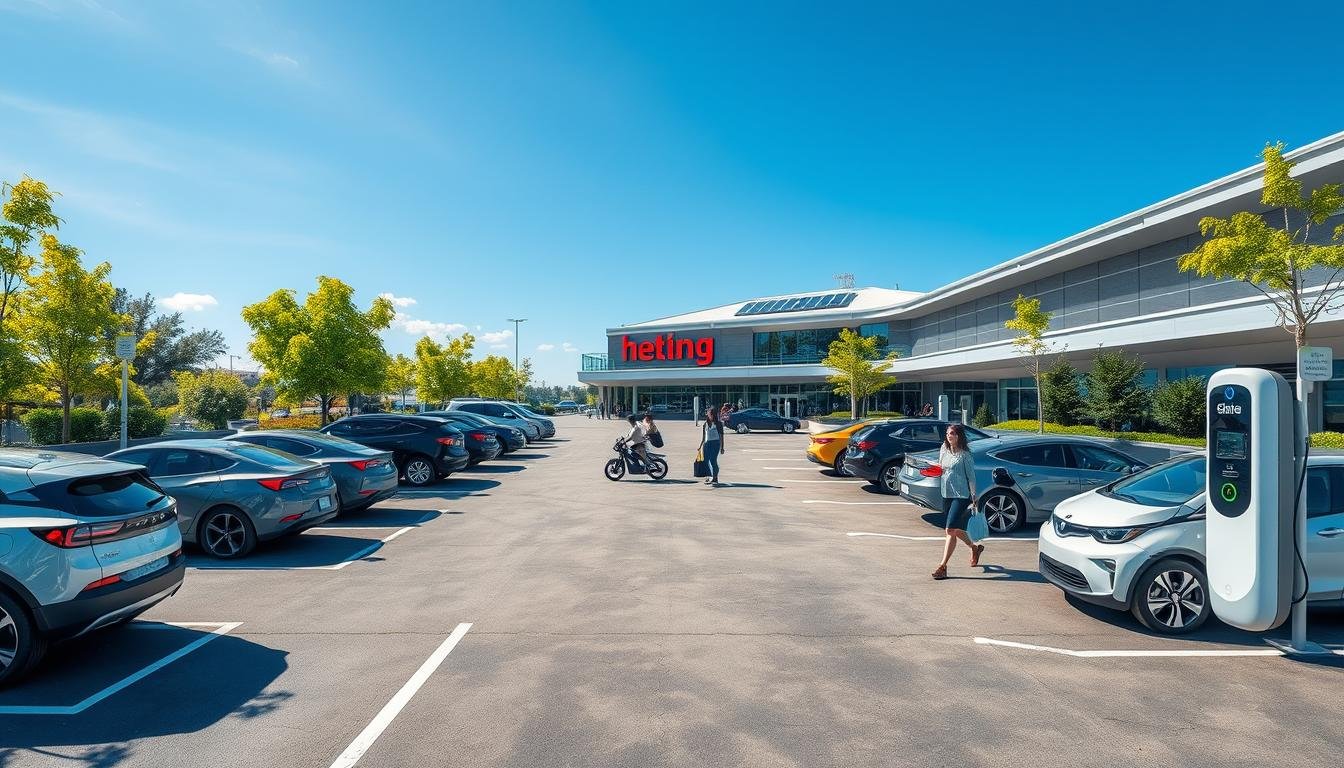
The landscape for topping up your vehicle while shopping has matured considerably. Most major retail chains now offer this service, integrating it into the customer experience.
This creates a convenient way to manage your motoring needs. However, the value proposition has shifted from free top-ups to paid, on-demand services.
Retailer Charging Networks Overview
Two prominent examples illustrate the current model. Tesco works with Pod Point to run a pay-as-you-go network across its locations.
ASDA frequently partners with GeniePoint. This focuses on delivering rapid and ultra-rapid power for drivers in a hurry.
The table below summarises key details of these retailer partnerships.
| Retailer | Network Partner | Payment Model | Typical Charger Speed |
|---|---|---|---|
| Tesco | Pod Point | Pay-as-you-go | Fast (7-22kW) |
| ASDA | GeniePoint | Pay-as-you-go | Rapid (50kW+) |
These networks require a dedicated app or contactless payment. The cost per kwh is clearly displayed before you start.
Benefits of Charging Whilst Shopping
Using a public point during your shop is efficient. It turns idle hours into productive miles for your car.
Many retailers provide apps to check charger availability live. This prevents wasted trips and helps plan your visit.
However, the rate for this public charging is rarely as low as a home off-peak rate. It should complement, not replace, your primary home routine.
Always check for a specific standing charge or connection fee at the location. This avoids surprise costs on your bill.
For most households, a smart home tariff and charger deliver the lowest overall electricity cost. Retail points offer top-up convenience when needed.
Comparing Supermarket and Home Charging Options
A direct comparison between domestic and retail top-up points reveals a clear cost hierarchy. For most motorists, the choice fundamentally impacts their annual motoring budget.
I always advise analysing your regular habits first. This determines which solution offers the best long-term value for your vehicle.
Cost Benefits of Time-of-Use Tariffs
Powering your car at home using a dedicated tariff is consistently the cheapest method. Specialised time-of-use plans offer a very low off-peak rate, often between 7p and 9p per kwh.
This requires a smart meter and scheduling your wallbox charger. The savings compared to even the fastest public charging stations are substantial.
My calculations show public points can be over three times more expensive. The fixed daily standing charge on your home electricity bill is usually far lower than connection fees on the road.
Convenience Versus Speed
Retail locations excel at providing a quick top-up while you shop. They are ideal for topping up a battery during a longer visit.
However, they are not designed for a full, cost-effective charge. That task is always better suited to your domestic setup.
Evaluate your typical daily mileage. For many drivers, the convenience of a public point rarely justifies its higher cost compared to a home tariff.
A smart energy plan provides the flexibility to manage costs without sacrificing readiness. Your car can be full each morning for a fraction of the price.
supermarket EV charging 2026 UK best rates
Understanding what shapes the cost per kilowatt-hour at public points is crucial for budget-conscious motorists. The final price you see is rarely a simple figure.
It results from several commercial and technical factors. I have analysed these to help you find value.
Key Factors Influencing Charging Rates
Local competition plays a major role. In areas with many retail sites, you may find more attractive prices.
The specific network provider operating the unit also sets the rate. Some focus on fast chargers, while others offer rapid options.
I have noted that ultra-rapid units typically cost more per kwh than standard fast ones. This is due to higher infrastructure costs.
For comparison, a dedicated home tariff like E.ON Next Drive Smart offers an 8p/kWh rate for off-peak hours between 12am and 6am.
Always consider the standing charge on your energy bill too. This fixed daily fee impacts the overall value for your car.
Impact of Bundling Services With Utilities
Bundling your domestic energy services can unlock savings. Providers like Utility Warehouse sometimes offer a lower cost per kwh for your home needs.
This approach integrates your car's electricity use with household consumption. It simplifies billing and can reduce overall costs.
I believe drivers who compare these tariffs and factors will find significant savings on their annual bills. A strategic choice here makes a real difference.
Deep Dive: Smart Tariffs versus Overnight Tariffs
Two primary domestic energy plans dominate for electric car owners: intelligent dynamic rates and fixed overnight windows. Each offers a distinct approach to managing your vehicle's power use.
Advantages of Smart Charging
A smart tariff, such as E.ON Next Drive, uses an app to automatically schedule your car. It ensures you only power up during the cheapest possible times.
The core benefit of a smart meter is real-time tracking. This guarantees you always benefit from the correct off-peak rate for your electricity.
This automated smart charging provides maximum flexibility. It saves you time by automating the process.
Many modern cars are compatible with such apps. I recommend checking this before committing to a plan.
Simple Overnight Charging Benefits
Many drivers prefer the straightforward nature of a basic overnight plan. British Gas EV Power, for instance, offers a 9p/kWh rate between 12am and 5am.
This plan provides a fixed window of cheap energy for specific hours. It works with any compatible wallbox charger without a complex app.
I find this an excellent option for those who value simplicity. You get a low rate without managing schedules, keeping domestic power expenses predictable.
Remember to consider the standing charge on your bill too. By choosing the right tariff, you maintain flexibility while controlling overall costs.
Review of Top EV Tariff Providers for Home Charging
Several leading energy suppliers now offer specialised plans designed for motorists. Comparing these tariffs is key to finding the lowest cost for your car.
I have analysed the latest offers to highlight the most compelling deals. Your choice depends on your mileage and how you use your home charger.
Standout Offers from Octopus, E.ON, and British Gas
Octopus Intelligent Go provides an 8p per kwh rate. Its off-peak window runs from 11:30pm to 5:30am.
E.ON Next offers competitive rates for drivers who want to charge off-peak. This plan requires a reliable smart meter.
British Gas keeps things simple with a 9p per kwh rate. It works with any vehicle or charger.
| Supplier | Plan Name | Rate (p/kWh) | Off-Peak Window | Key Feature |
|---|---|---|---|---|
| Octopus | Intelligent Go | 8p | 11:30pm - 5:30am | Low rate, smart integration |
| E.ON | Next Drive | Competitive | Varies | Smart meter required |
| British Gas | EV Power | 9p | 12am - 5am | Simple, works with any charger |
OVO Charge Anytime’s Monthly Plan Model
OVO Charge Anytime uses a different model. It is a monthly plan starting at £27.50.
This fee helps you manage your home charging costs. It also includes vouchers for public charging networks.
I find this a flexible option for varied driving habits. It bundles your domestic electricity supply with on-the-road top-ups.
The variety of tariffs available means every driver can find a suitable plan. Consider your typical hours and energy use before choosing.
Evaluating Home Charging Against Public Charging
Analysing the real-world performance of different charging solutions reveals stark contrasts in value and convenience. I believe every driver should weigh these factors carefully to optimise their routine.
Cost Comparisons and Efficiency
Powering your car at home is almost always cheaper. This is due to the low off-peak rate available on dedicated tariffs.
I have found public points can cost over three times more per kwh. The efficiency of a domestic wallbox charger ensures you get more energy for your money.
Calculating your annual miles shows how much you could save. A smart tariff like those from E.ON Next or British Gas makes a significant difference.
User Experience and Reliability
Many drivers report superior reliability with their home setup. Public stations can be unpredictable, causing frustration.
Using a smart meter allows you to track electricity use precisely. This helps manage costs and make informed decisions.
For long trips, public charging is essential. However, it should not be your primary method to power your car.
Spotlight on Supermarket Retailers Offering EV Charging
When you need a top-up during your weekly shop, several prominent stores now provide this facility. I will focus on four major retail chains that have integrated this service into their customer offering.
This integration makes managing your vehicle's power more convenient than ever.
Tesco, Lidl, Sainsbury's, and ASDA in Focus
Sainsbury's operates its own Smart Charge network. It offers a flat-rate pay-as-you-go model that is straightforward for drivers to understand.
Lidl continues its partnership with Pod Point. This provides reliable charging options at many of its locations.
Tesco remains a leader with a wide range of chargers. These cater to different car models and power speeds.
ASDA provides various options for a quick charge. I suggest using their dedicated app to check live prices and availability before you use a point.
Variations in Charger Types and Payment Models
The hardware available differs between sites. You might find standard 7kW units or much faster 50kW+ chargers.
Payment models also vary. Some networks use a simple contactless card payment, while others require an app account.
Many retailers now integrate their loyalty schemes. This allows you to earn points while you power your vehicle at their store.
I believe this variety gives motorists more choice. It supports different needs when a home tariff isn't an option.
Always check the specific rate per kwh and any connection fee. This helps you avoid unexpected costs for your car.
Impact of Smart Meters and Charger Compatibility
The synergy between your meter, your wallbox, and your vehicle dictates both efficiency and expense. Getting this technical foundation right is crucial for a seamless experience.
It transforms a simple plug-in habit into a finely tuned system. This setup maximises the value of your chosen energy plan.
Technical Requirements for Optimal Performance
A smart meter is the non-negotiable gateway. It enables your supplier to apply the correct tariff, ensuring you benefit from the cheapest rate at the right times.
Compatibility between your car and your charger is equally vital. I have found this dictates the speed and safety of each charge.
Consulting a professional installer guarantees your home setup meets all safety standards. This investment ensures reliable charging performance for years.
| Component | Its Role | Compatibility Check | Why It Matters |
|---|---|---|---|
| Smart Meter | Communicates usage data to your supplier in real-time. | Mandatory for most intelligent tariffs. | Unlocks access to low off-peak rates. |
| Wallbox Charger | Safely delivers high-power electricity to your vehicle. | Must match your car's onboard AC charger capacity. | Determines maximum charging speed at home. |
| Vehicle Software | Manages the battery charging process. | Should support scheduled smart charging via an app. | Allows automated charging during cheapest periods. |
Integration with Home Energy Systems
Modern systems allow integration with renewable sources. Connecting solar panels to your charger can significantly reduce the cost per kwh for your vehicle.
Using a monitoring app provides valuable insight. It helps you see how powering your car impacts your total energy use throughout the day.
This holistic view is powerful for drivers. It solidifies the home as the most intelligent and economical base for your needs.
How to Choose the Right EV Tariff for Your Needs
Finding the right plan isn't about the cheapest advertised rate; it's about matching the tariff structure to your specific habits. I always begin with a personal audit.
Assessing Your Personal Charging Habits
Start by tracking your daily miles. This reveals how much energy your car truly consumes.
Knowing when you typically charge at home is key. It helps you avoid peak electricity times when the cost per kwh is highest.
Comparing Standing Charges and Off-Peak Windows
Do not focus solely on the off-peak rate. The fixed daily standing charges on your bill can alter a plan's true value.
Compare the length of off-peak hours and the off-peak rates offered. Suppliers like British Gas structure their tariffs differently.
For some drivers, a service like Charge Anytime from OVO simplifies costs. I believe comparing these factors leads to significant savings.
Future Trends in EV Tariffs and Charging Technology
The next few years will bring profound changes to the relationship between your motor and your household electricity. Staying informed about these developments is crucial for managing your transport expenses effectively.
I believe the coming evolution will focus on deeper integration and smarter grid management.
Innovations on the Horizon
Vehicle-to-grid technology is a major innovation. It could let your car send power back to your home during peak times.
This would turn your vehicle into a mobile battery. It helps balance the national energy supply and lowers your costs.
More intelligent charging systems will also emerge. They will automatically find the cheapest rate per kwh without manual input.
Market Shift Predictions for 2026 and Beyond
By late 2026, I predict more innovative tariff options. These plans will reward drivers for powering up during high grid supply hours.
The market will shift towards flexible models, similar to OVO Charge Anytime. This gives motorists more choice over their electricity use.
As more cars arrive, demand for reliable public chargers will grow. Retailers must improve their infrastructure to compete.
Your domestic setup will remain the most efficient choice. Keeping your home charger updated ensures it stays cost-effective.
Conclusion
Conclusively, the path to reducing your transport expenses lies in aligning your charging behaviour with efficient domestic energy use. I have shown that your tariff is the cornerstone for low costs.
Using a smart meter with a dedicated plan slashes your electricity bill. It ensures your car powers up during the cheapest rate hours.
While public points offer convenience, they rarely match the value of a home charger. Your annual miles and vehicle type should guide your final choice.
I encourage you to review your current energy supply. A specialised plan could transform your running cost per kwh.
Ultimately, the right balance between domestic and on-the-go top-ups keeps your vehicle ready without overspending.