Selecting the wrong platform for public charging could add over £250 a year to an average UK driver's motoring costs. That's a significant sum, simply for using a less optimised service.
I often find myself weighing up roaming aggregators against direct provider programmes. The right choice depends entirely on your individual habits and locations.
For instance, Octopus Energy customers get a notable 10% discount on public charging through their dedicated platform. Such perks can dramatically alter the maths for frequent users.
In this analysis, I investigate which approach truly saves you money. My goal is to cut through the complexity and give you a clear, personalised cost comparison.
Key Takeaways
- Roaming services grant convenient access to a wide variety of charge point operators.
- Direct network memberships frequently provide exclusive rates for loyal users.
- Your specific charging routine is the biggest factor in determining potential savings.
- Some platforms offer discounts tied to your domestic energy tariff.
- Always compare the final pence per kilowatt-hour price at locations you use most.
- Weigh any monthly subscription fee against the per-session savings it unlocks.
- The market evolves quickly, so it pays to review your choice regularly.
Introduction to EV Charging and App Solutions
The expansion of infrastructure is a global trend, as seen in the US where over 204,000 public chargers were reported by the end of 2024. This growth is mirrored here in the UK. Our charging networks are rapidly expanding, creating a diverse and sometimes confusing landscape for drivers.
Understanding this digital world of support tools is the first step to mastering your energy use. I find that without a clear strategy, costs can quickly spiral when you're away from home.
Context of the growing EV charging network in the UK
More charge points offer greater convenience, but they also bring complexity. Different operators have unique tariffs and access methods. Navigating this requires a modern approach.
To illustrate the main ways to access public charging, consider this comparison:
| Solution Type | Primary Benefit | Key Consideration |
|---|---|---|
| Roaming Aggregator | Single access to multiple networks | May have a monthly subscription fee |
| Direct Network Membership | Often offers member-exclusive rates | Limited to one operator's charge points |
| Pay-As-You-Go | No ongoing commitment | Typically the most expensive per session |
Why app-based tariff comparisons can save money
Using dedicated software allows you to compare live tariffs effectively. This prevents overspending during long trips. I always check prices before I plug my car in.
The global surge in infrastructure means pricing varies wildly. A quick check on your phone can reveal significant differences at nearby locations. This simple habit protects your monthly budget.
Finding the right tool is about more than just cost. It's about convenience, reliability, and ensuring your vehicle is always ready to go.
Understanding Charging Costs in the UK
Understanding the variables that affect your charging bill is the first step towards significant long-term savings. The location and speed of your charge point are the two biggest factors.
Home charging versus public charging cost differences
Charging at home remains the most cost-effective method. A smart domestic tariff can power your vehicle for as little as 3p per mile.
In contrast, using an ultra-rapid public charger can cost around 20p per mile. This difference quickly adds up on your monthly energy statement.
Recent data illustrates this gap. One 2025 study showed residential electricity averaging 16.3 cents per kWh, while public charging averaged 34.2 cents.
Impact of charger type and charging speed on your bill
The type of public chargers you use also matters greatly. According to an October 2025 price index, slow or fast units average 53p per kWh.
Rapid or ultra-rapid chargers, however, average 76p per kWh. That's a substantial increase for a quicker top-up.
I always check the price per kWh before I plug in. Knowing these rates helps me manage my overall charging cost effectively.
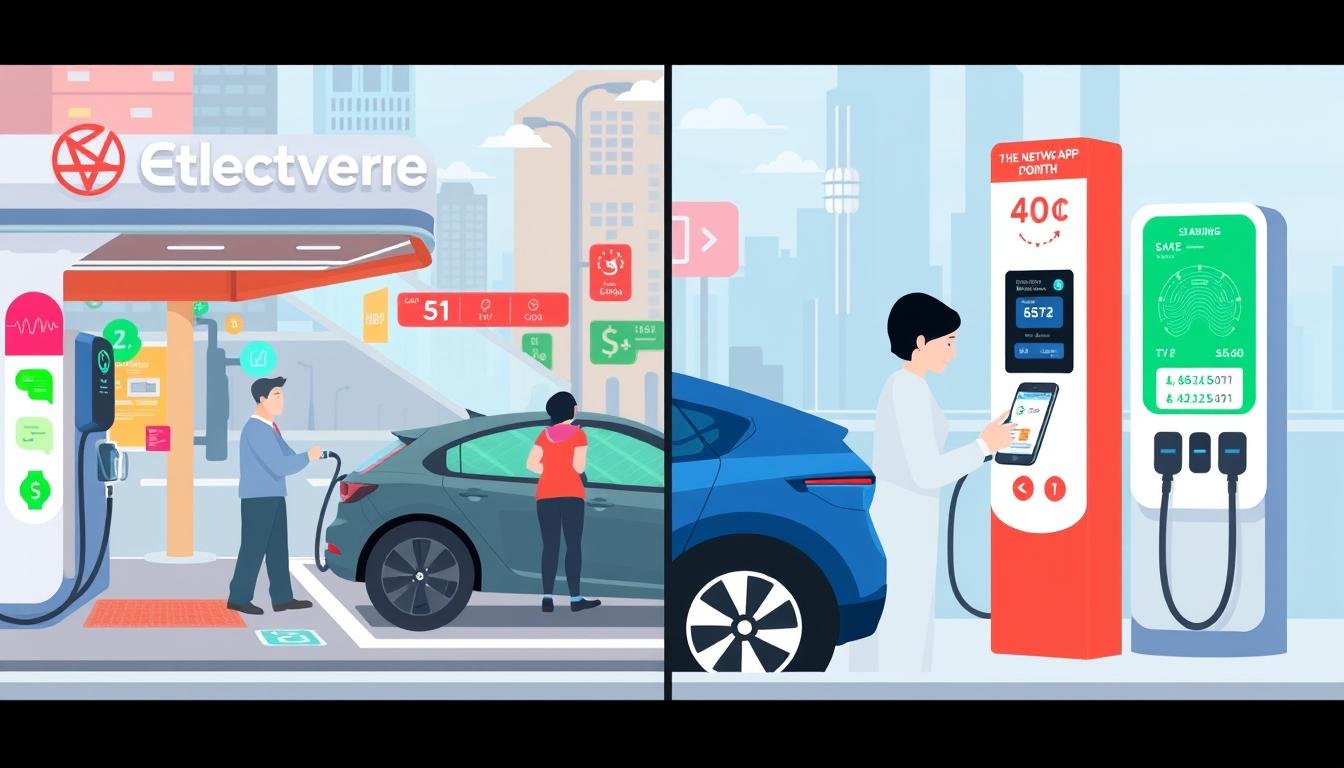
Octopus Electroverse vs network app cheaper: Key Features Compared
Savvy EV drivers know that the right digital tool does more than unlock a charger—it unlocks better value.
Let's compare the core features that influence both your wallet and your experience on the road.
Exclusive discounts and integration with Octopus services
The Octopus Electroverse platform is praised for its transparent pricing. A key benefit is the automatic 10% discount for every verified Octopus customer.
This integration with your home energy account simplifies billing. Other services, like Chargeprice, take a different approach.
They aggregate live tariffs from hundreds of operators across various networks to find the lowest rate. This can be a powerful alternative to a single-provider discount.
Usability, route planning, and tariffs in real-time
Effective journey planning is crucial. The best apps let you filter charging stations by your vehicle's range and connector type.
I find that using a single roaming card or app for multiple networks is a smart choice for nationwide travel. It cuts down on clutter.
Real-time pricing updates are non-negotiable. You should always see the exact session cost before you commit.
Reviewing User Experiences and Real-World Savings
Beyond the advertised tariffs, it's the shared wisdom within driver communities that often leads to the most substantial savings. Platforms like PlugShare, recognised as the world's largest EV community, are invaluable. Drivers post real-time updates on whether a charger is working or blocked, saving others time and frustration.
Personal insights on cost-saving successes
My own experience underscores this. Using a subscription like Chargemap Boost, which removes a 10% commission, made a clear difference to my monthly bill. The key is filtering for specific charger types.
Why pay for ultra-rapid speed when a fast unit will do? This simple habit avoids unnecessary costs. I also plan my route to include cheaper stations, significantly reducing the expense of keeping my car battery full.
Testimonials and case studies from fellow EV drivers
Fellow motorists report similar tactics. One driver told me, "I often find free charging while out shopping or taking the kids to the cinema. It turns a necessary stop into a saving."
The community aspect solves a major problem: finding reliable stations on long trips. With extensive coverage across Europe, these apps let you compare networks and payment cards to find the best price.
Whether you're at the end of a journey or running errands, these tools make managing your charging time efficient. They turn collective knowledge into personal savings.
Navigating Tariffs and Charging Networks
With so many different charging networks and pricing structures, finding the best deal requires a strategic approach. The final price on your monthly bill hinges on the stations you choose.
Your specific route and habits make a huge difference. I always check live rates before I plug in.
Tips for selecting affordable charging options
I recommend keeping a few different apps and payment cards ready. This ensures you have coverage at most public chargers.
Services like Zapmap offer useful discounts. Their Premium tier gives a 5% discount on the first 50 kWh each month.
When your car shows a low battery, it's tempting to use the first unit you see. Taking a moment to compare the price is vital.
Many charging networks offer free charging for short periods. You might find 15 minutes while you're shopping.
These small savings add up over time. Selecting the right tariff for your habits is the best way to control costs.
By comparing stations, you can avoid the most expensive charging networks. This simple habit keeps more money in your pocket.
Choosing the Right App for Your EV Charging Needs
My selection process for a charging platform hinges on two pillars: crystal-clear costs and effortless daily use. A recent JD Power report confirmed that consumer education is the biggest hurdle for drivers. This makes tools that demystify public charging absolutely vital.
Considerations based on price transparency and convenience
I always look for upfront price details before I plug in. Seeing the final session bill in advance prevents nasty surprises. Real-time data on charger status is just as crucial when you're away from home.
Convenience means accessing multiple networks with one login or card. I avoid juggling a dozen different accounts. Good coverage and seamless payment cards are non-negotiable for me.
How I evaluate apps to match my charging habits and savings goals
I test how each platform handles route planning. Can it filter stations by tariff to highlight affordable spots? This focus directly supports my savings goals.
I value community reviews within these tools. They warn me about broken units or locations with free charging limits. This collective insight saves money and stops a low battery from becoming a major problem.
Ultimately, the right choice aligns with your specific habits. Whether you seek speed or the best discounts, a tailored approach controls your long-term charging expenses.
Conclusion
The journey to affordable EV ownership is paved with smart digital choices made before you plug in. In the end, the most effective habit is to always check the final price at any public charging point. This simple step protects your money.
Using a combination of reliable apps lets you navigate different charging networks seamlessly. Whether you're away from home for a weekend or a quick trip, these tools make a significant difference.
I have found that consistent use helps you avoid premium rates. By staying informed and comparing options, you ensure your motoring remains convenient and highly affordable for years to come.