In the past year, the number of public charging points across the UK grew by over 40%, yet a significant number of drivers still find planning a long-distance trip needlessly complex. This gap between infrastructure and convenience is where the right technology makes all the difference.
I have analysed the current landscape of tools designed for electric vehicles. My aim is to help you find a solution that removes the guesswork from your travel. The best systems do more than just map a course; they become a seamless part of your drive.
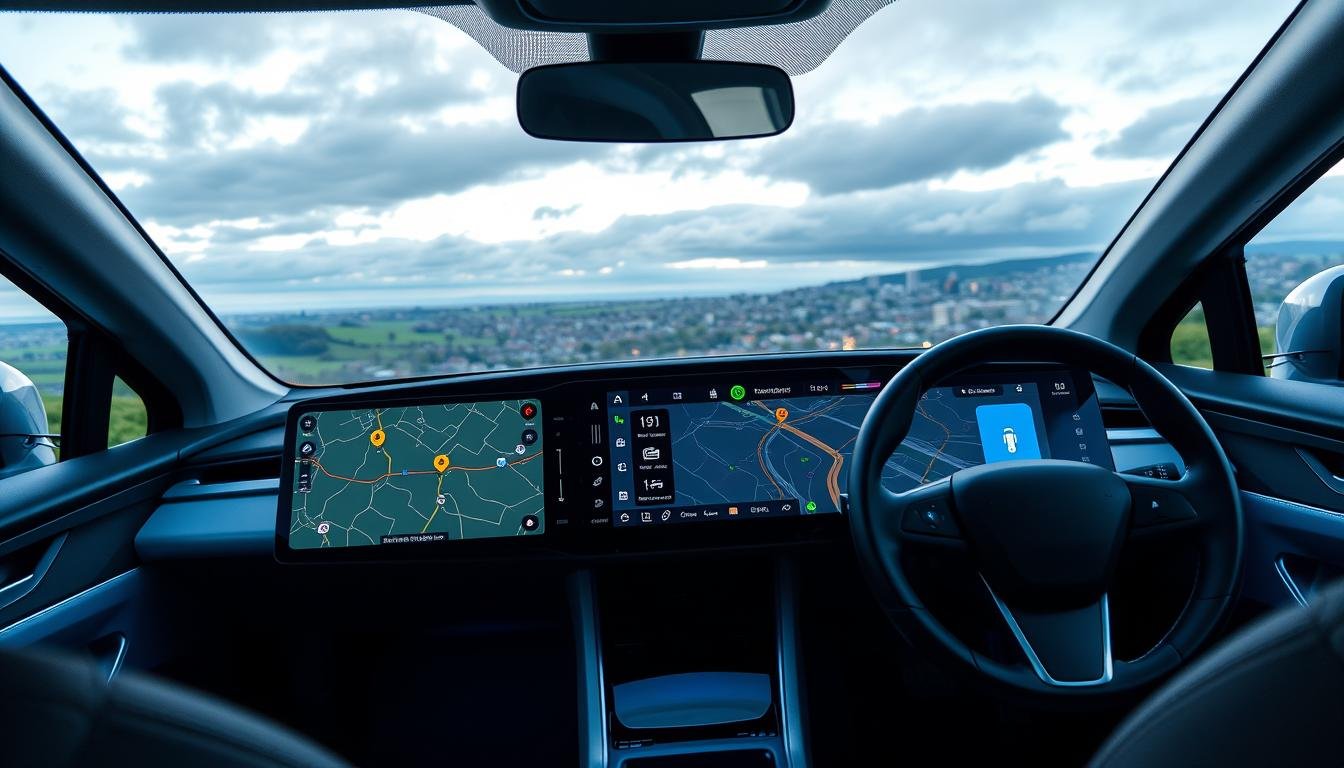
Take the Kia system as an example. It integrates live data on battery consumption and traffic updates directly onto the vehicle's main screen. This kind of direct integration is the future, turning a simple route into a smart, managed journey.
By centralising all your charging and navigation data, these modern planners ensure every trip remains efficient. You can say goodbye to range anxiety and the stress of searching for a compatible point at the last minute.
My goal here is to provide you with the insights needed to select a tool that genuinely transforms how you manage your vehicle's energy. The right choice doesn't just plan your trip—it enhances your entire driving experience.
Key Takeaways
- Modern navigation systems integrate battery and traffic data directly into your car's display.
- Syncing your planned trip to the dashboard simplifies long-distance travel considerably.
- Centralised charging information is key to reducing stress on any journey.
- Real-time updates are the most critical advancement for daily commuting efficiency.
- Selecting the right tool can transform how you manage your electric vehicle's energy consumption.
- The best planners are tailored to your specific vehicle's capabilities and needs.
Understanding the Evolution of EV Route Planners
Not long ago, planning a drive in an electric vehicle was a disjointed and manual process. The technology has since matured at a remarkable pace. Today's systems represent a fundamental shift towards simplicity and intelligence.
Historical Overview and Modern Requirements
In the early days, I remember drivers relying on separate mobile devices and paper maps. This approach often led to fragmented information, especially on long journeys. You had to manually check your battery and search for points independently.
Modern requirements are far more sophisticated. A high-level system must now automatically calculate the best path. It does this based on your current charge and real-time energy consumption. This removes the guesswork and creates a truly optimised route.
Benefits of Integrated In-Car Systems
The greatest advancement I've seen is the integration of all data onto one screen. These in-car systems provide a superior level of convenience. They automatically detect necessary charging stops along your chosen path.
This integration allows you to plan your trips with far more confidence. Your vehicle is always prepared for the demands of the journey. By consolidating information, these platforms help you manage multiple journeys effectively. The anxiety of finding power on the road becomes a thing of the past.
EV route planner dashboard sync UK 2026: Features and Benefits
The true power of a modern navigation system lies in its ability to merge seamlessly with your vehicle's own technology. To unlock this potential, you typically need an active connected services subscription, such as Kia Connect. This access is the key that activates the most advanced features.
Seamless Dashboard Integration
Once connected, a stream of live data appears directly on your main screen. You see real-time battery consumption, traffic conditions, and the current status of nearby charging points. Recent industry news confirms this live integration is a major step forward for driver convenience.
The system doesn't just show you a route. It intelligently manages your journey. It automatically adds necessary stops for power as waypoints along your path. This ensures you always have a clear plan to reach your destination.
User Experience and Safety Enhancements
From my experience, this setup offers a significant safety boost. Having all vital information on your dashboard reduces the dangerous distraction of checking a mobile app. Your eyes stay on the road where they belong.
Furthermore, the technology provides precise arrival time calculations. It factors in every required stop, so your estimated time of arrival and travel date remain accurate and reliable. This takes the guesswork out of planning for you and your passengers.
Exploring Leading EV Route Planning Tools
Several prominent platforms now dominate the landscape, each bringing unique strengths to trip organisation. I have evaluated three major solutions to highlight their distinct approaches.
Kia EV Route Planner Insights
Kia's system provides direct access to an extensive network. Its service supports over 30,200 public points in the UK and 435,000 across Europe.
This vast coverage ensures you are always near a recommended charging point during your journey.
Zapmap’s Customised Routing Options
Zapmap excels with tailored routing. It covers over 95% of charging stations across the country.
With its app, Premium subscribers receive a 5% discount on monthly costs. This makes long-distance journeys more affordable.
Innovations from IONITY Charging Solutions
IONITY focuses on high-power solutions. Its stations enable faster travel across Europe.
This allows you to maintain a high level of efficiency, even during winter driving.
| Tool | Network Coverage | Key Feature | Primary Benefit |
|---|---|---|---|
| Kia Charge | 30,200+ points (UK), 435,000+ (Europe) | Integrated vehicle system | Proximity to recommended charging stops |
| Zapmap | >95% of UK stations | Customised routing & premium app | Cost savings and tailored route planning |
| IONITY | High-power network across Europe | Ultra-rapid charging | Sustained efficiency for long travels |
Optimising Your Journey with Integrated Charging Solutions
To truly optimise every journey, leveraging real-time information from your vehicle's connected systems is essential. This approach transforms how you interact with the charging network, turning potential stress into confident travel.
Access to Comprehensive Charging Station Data
Having complete, accurate data at your fingertips is crucial. It allows you to maintain a high level of performance, particularly when driving in winter.
Simple preparations like preheating your car and checking tyre pressure make a significant difference. They help your battery operate efficiently from the very start of your day.
Leveraging Connected Apps for Real-Time Updates
A connected mobile app is your window to live network status. I recommend using one that provides instant updates on point availability.
This ensures your planned charging stops are ready when you arrive. Services like IONITY excel here, offering clear data to help plan winter travels.
Regularly updating your vehicle's software keeps this tool compatible with the latest station developments. This keeps your planned route reliable and your travel date predictable.
Conclusion
This exploration of modern travel aids highlights a clear path to simpler, more confident driving. I have shown how the latest technology allows you to synchronise your planned route directly to your car's display for a smoother experience.
Staying updated with the latest industry news lets you access new features as they arrive. By selecting the right tools, you can manage your charging needs with assurance and enjoy the freedom of long-distance electric travel.
Ultimately, the right choice transforms how you interact with your vehicle's energy. I hope this guide offers the clarity required to optimise your future trips. Remember, proper integration makes all the difference when organising your next adventure.