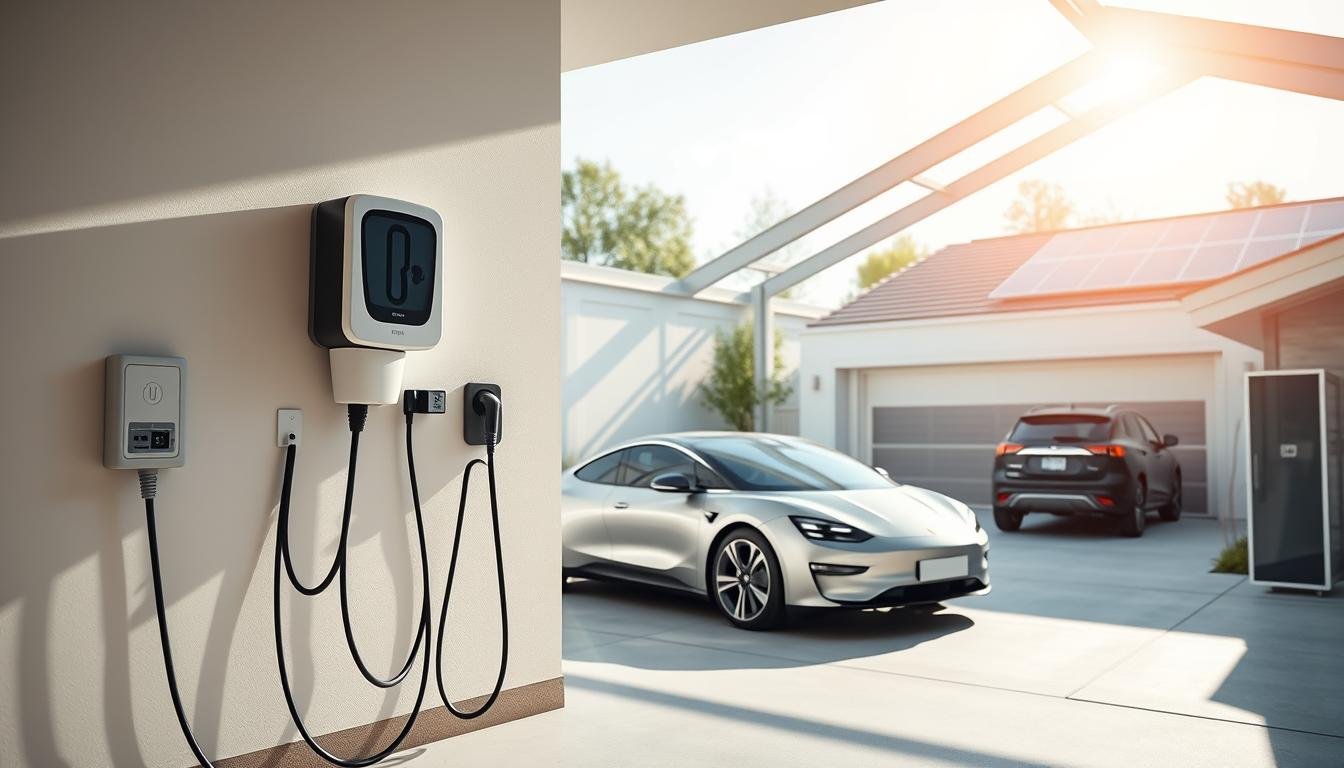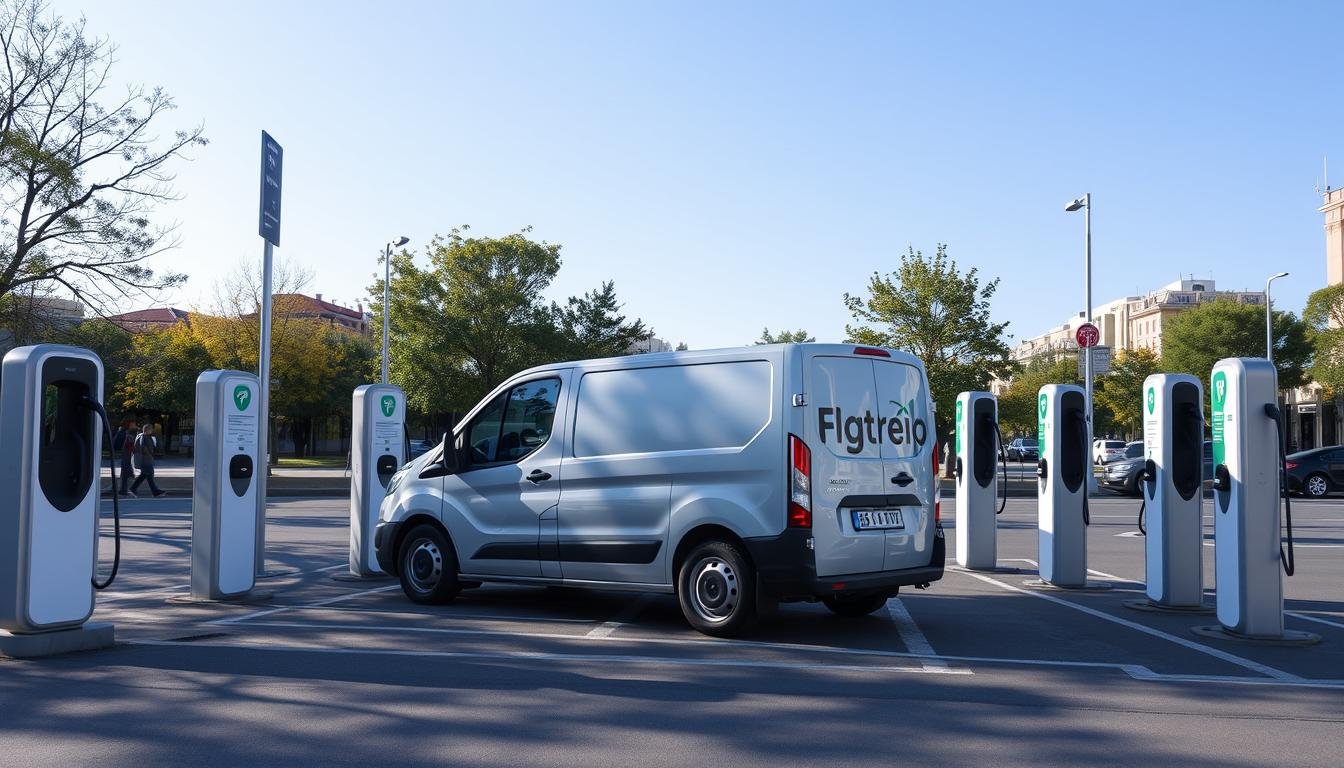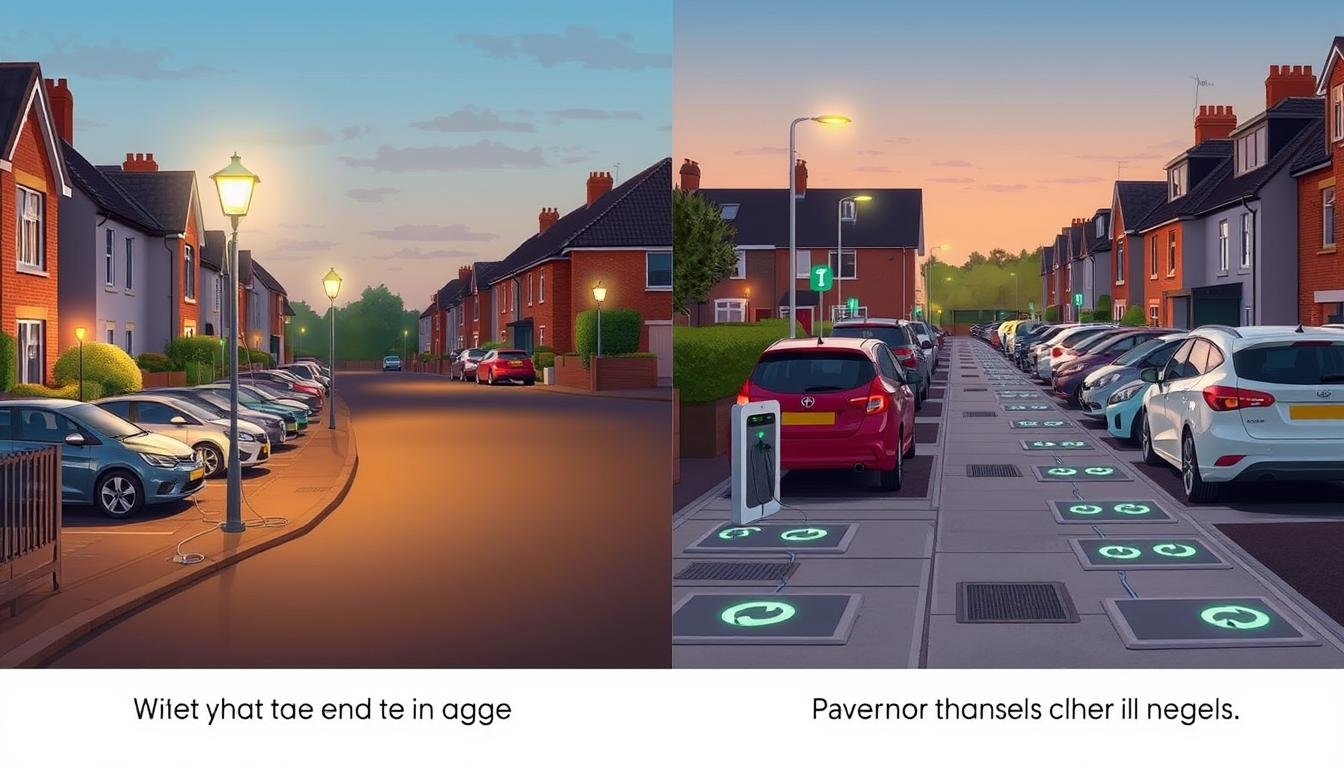
By the end of January 2025, the United Kingdom's public charging network had grown to encompass over 115,000 individual points. This massive figure highlights a quiet revolution in how we power our transport.
For millions of households without a private driveway, this expansion is not just interesting—it's essential. Local authorities across England now face the critical task of developing clear policies for cross-pavement refuelling options.
This guide offers vital information for every council and resident navigating this new landscape. We cut through the complexity of installation rules and available technologies.
From innovative lamp post conversions to dedicated kerbside bays, we explore the practical solutions making electric motoring accessible to all. Understanding these options is the first step towards a seamless transition.
Key Takeaways
- The rapid growth of the public charging network is crucial for residents lacking off-street parking at home.
- Local authorities have a central role in planning and implementing kerbside charging policies.
- Comprehensive guidance is available to help navigate installation requirements and available technologies.
- The shift towards electric vehicles requires new approaches to managing public highway space safely.
- Understanding the different charging solutions is key for any driver without access to a private driveway.
- The UK's infrastructure has seen significant investment, with over 115,000 charge points now operational.
Introduction to On-Street EV Charging in the UK
A new layer of infrastructure is quietly appearing along residential streets across the nation. This development directly tackles a major hurdle for cleaner transport: providing power to cars where private driveways are absent.
Companies like Connected Kerb and char.gy are at the forefront of this rollout. Their work is expanding the vital public charging network for all residents.
Background and Evolution
The market for kerbside power has grown rapidly. Key operators have deployed thousands of units to meet rising demand.
Innovation has been crucial. For example, Urban Fox has created technology that lets a charge point retract into the pavement. This keeps footpaths clear and safe.
By early 2025, the national infrastructure surpassed 115,000 points. This growth provides a reliable foundation for the future.
Benefits for Residents Without Driveways
For those without off-street parking, this infrastructure is a game-changer. It offers a practical charging solution right outside their home.
This access makes owning an electric vehicle a realistic choice. Drivers can easily find available points using apps like Zapmap.
It supports a seamless shift to sustainable transport in dense urban areas. Local authorities play a key role in enabling this vital solution.
Understanding Lamp Post Chargers and Kerbside Solutions
Residential areas are adopting discreet technologies that repurpose existing assets to deliver energy. This approach minimises street clutter while expanding essential infrastructure for electric vehicles.
Design and Aesthetic Integration
The char.gy backpack is a clever example. It converts a standard lamppost into a functional charge point. This saves valuable pavement space.
Such designs help councils maintain the visual character of neighbourhoods. One official noted,
"Our priority is to integrate new utilities without compromising the streetscape."
Operational Advantages and Use Cases
These solutions are built for real-world conditions. Shell Recharge ubitricity bollards, for instance, are engineered to self-right after a vehicle impact.
This durability makes them ideal for narrow roads. Most kerbside points operate at 3kW, 5kW, or 7kW.
This power level is perfect for overnight charging. Drivers typically provide their own connecting cable.
| Solution Type | Key Feature | Typical Power | Best For |
|---|---|---|---|
| Lamp Post Charger | Uses existing street furniture | 3kW - 5kW | Areas with limited new installation space |
| Dedicated Bollard | Self-righting after impact | 5kW - 7kW | Narrow roads needing robust design |
| Retractable Unit | Flush with pavement when not in use | 7kW | High-footfall locations |
This variety ensures a suitable public charging option for most residential parking situations. The right choice depends on local needs and space.
Step-by-Step Installation: on-street EV charging UK
A successful cross-pavement installation depends on thorough preparation and strict adherence to safety standards. This methodical process ensures a reliable power supply for vehicles while protecting public accessibility.
Preparation and Site Assessment
Initial work requires a detailed site assessment by the local authority. This review confirms sufficient pavement width and construction to support a cable channel.
These gullies are proprietary systems designed to house the connecting cable temporarily. Planners must carefully route the channel to avoid surface utility access covers and tree roots.
Identifying buried services like telecoms cabling or water piping is equally crucial. Careful planning at this stage prevents costly delays and damage to existing infrastructure.
Installation Process and Best Practices
Following approval, a qualified contractor performs the physical installation. They must follow the strict safety and technical standards set by the council.
Residents should understand this solution does not grant exclusive rights to the parking space. The area remains part of the public highway for all users.
Best practices ensure the installed channel sits completely flush with the pavement surface. This eliminates trip hazards and maintains clear access for pedestrians.
Navigating Policy, Permits and Permissions
The legal groundwork for installing charge points on public highways is defined by specific acts of parliament. Councils act as the responsible authority, ensuring all work complies with national legislation.
Local Authority Requirements and Planning Permission
Formal planning permission can be a key hurdle for new infrastructure. However, a local development order can remove this barrier for eligible schemes. This allows for faster rollout of essential solutions for residents.
The local authority must also confirm that any proposed solution aligns with the Traffic Management Act 2004. This act sets the conditions for managing works on the highway network.
Section 50 Licences and Traffic Regulation Orders
A Section 50 licence from the New Roads and Street Works Act 1991 is mandatory. It authorises the placement of any apparatus within the street. Contractors cannot begin physical installation without this formal approval.
During the work phase, a temporary traffic regulation order (TTRO) may be necessary. This order manages vehicle flow and protects workforce safety. It is a common requirement for projects in busy residential areas.
Finally, the council maintains a record of all installations. This log details ownership and ongoing maintenance responsibilities for each point.
Technical and Safety Standards for Charging Solutions
Ensuring the safety and durability of kerbside power infrastructure requires adherence to established technical benchmarks. These rules protect both pedestrians and motorists.
Local authorities use a framework of British and international standards to assess new apparatus. This guarantees long-term reliability on the public highway.
Minimum Standards for Installation and Apparatus
While no single British standard covers cross-pavement systems, councils often refer to BS EN 124-2015. This specifies the strength of gully tops used in pedestrian areas.
For any permanent under-pavement cable, the BS EN IEC 61851-1:2019 standard applies. It sets general requirements for conductive power systems.
"Our primary duty is to ensure any street furniture is fit for purpose and safe for decades," noted a council highways officer.
The table below summarises these key benchmarks.
| Standard Reference | Primary Scope | Critical Requirement |
|---|---|---|
| BS EN 124-2015 | Gully & manhole tops | Strength and skid resistance for vehicular/pedestrian areas |
| BS EN IEC 61851-1:2019 | Conductive power systems | General safety for electric vehicle supply equipment |
| Council Approval | Suitability for highway use | Final sign-off by the local authority before operation |
Ongoing Maintenance and Safety Considerations
Regular upkeep is vital for functionality. The cable channel must be kept clear of leaves and grit to prevent blockages.
Long-term responsibilities for repairing cracks or un-levelling must be defined in the terms and conditions of the installation agreement. This clarifies ownership and cost liabilities.
Safety remains paramount. The local authority must be fully satisfied the apparatus is suitable before granting final approval for public use.
Funding, Grants and Cost Considerations
Understanding the costs and available grants is essential for residents and councils planning new infrastructure. Financial support can make a significant difference.
Government Funding and LEVI Support
The government-backed Local Electric Vehicle Infrastructure (LEVI) Fund is a major initiative. It is designed to help local authorities deliver thousands of new charge points across the country.
For individual residents, the EV Chargepoint Grant offers direct help. Eligible applicants can claim up to £350 or 75% of the total cost for a domestic unit.
Cost Breakdown and Financial Tips
The total expense of an installation varies widely. It depends on the chosen hardware and the complexity of the site work required.
Typically, the homeowner covers their domestic charge point. LEVI funding often pays for the public highway cable channel.
A key financial tip is to check if your council has a list of pre-approved suppliers. This can lead to more cost-effective installation and maintenance arrangements.
Real World Case Studies and Local Implementations
Learning from early adopters provides a crucial blueprint for expanding residential infrastructure. Several local authorities have implemented distinct models, offering valuable insights for others.
Case Study: Milton Keynes City Council Model
Milton Keynes pioneered a specific ownership model. Their highways team retains maintenance liability for the cable channel for an initial three-year period.
This approach gives residents certainty after installation. The council manages early wear and tear directly.
Case Study: Trials in London and Oxfordshire
Other regions tested different schemes. Nottinghamshire County Council secured LEVI Pilot funding in early 2023.
This supported a trial of up to 300 cable channels for highway use. In London and Oxfordshire, trials used a contractual solution.
Residents signed a two-year agreement with a supplier. This covered maintenance and software access for the charge point.
These examples show a successful model needs clear communication. The authority, resident, and provider must understand their roles.
Sharing these learning points helps other local authorities plan effective, safe public charging for their communities.
| Lead Authority | Funding Source | Key Feature | Maintenance Model |
|---|---|---|---|
| Milton Keynes City Council | Council Budget | Council-led channel liability | Council covers first 3 years |
| Nottinghamshire County Council | LEVI Pilot Fund | Large-scale channel trial | Funding covers installation |
| London Borough of Brent & Oxfordshire | Mixed | Resident-supplier contract | Supplier via 2-year agreement |
Future Trends and Emerging Technologies
Technological advances are set to offer more permanent and discreet alternatives to temporary cable channels. The sector's evolution aims to enhance convenience for drivers and better integrate with the local streetscape.
Innovations in Cable Channel and Permanent Solutions
Future innovations focus on fixed under-pavement cables. This solution connects a domestic charge point directly to a removable bollard or lance at the kerbside.
It removes the need to lay a cable across the footway each time. Emerging ideas like charging bridges also exist.
Current government guidance for local authorities in England does not yet include this technology. Officials are monitoring its development.
Impact of Evolving Government Initiatives
Ongoing initiatives will likely standardise installation approaches for cable channels across regions. This creates consistency for residents and councils.
The maturing market may see more community-based services. Often called peer-to-peer charging, these models boost network efficiency.
Local authorities are encouraged to keep detailed records of all technology trials. This monitors long-term impacts on infrastructure and public space.
Conclusion
The journey towards widespread electric mobility hinges on accessible power sources for every household. For residents without off-street parking, innovative kerbside solutions are making this a practical reality.
Local authorities play a pivotal role. They manage the safe installation and upkeep of this vital infrastructure for the whole community.
Government funding programmes are crucial for expanding the public network of charge points. Homeowners should consult their council to understand specific permissions.
Future advancements in technology promise even greater convenience for drivers. This progress supports a seamless shift to sustainable transport for all.
FAQ
What are the main options for powering my car if I don't have a driveway?
For drivers without off-street parking, local authorities are increasingly deploying kerbside solutions. These include lamp post chargers and dedicated charge points installed in the public charging realm. Using existing street furniture helps keep costs lower and minimises street clutter.
How do I request a charge point near my home?
You should contact your local council directly. They manage the process, from assessing the area for suitability to applying for any necessary government funding. Expressing resident demand is a key first step for authorities when planning new infrastructure.
Who is responsible for maintaining on-street charging units?
The ownership model varies. Typically, the local authority or a contracted operator owns the apparatus and is responsible for its ongoing maintenance and safety. Always check the specific terms & conditions for the network you are using.
What is a Section 50 licence and why is it needed?
A Section 50 licence is a legal permission from the council to install apparatus under the public highway. It's a crucial part of the installation process for any permanent charging solution that involves digging a cable channel in the footway or road.
Are there grants available to help with the cost of installation?
Yes. The government's LEVI funding provides significant support to local authorities for expanding public charging infrastructure. This grant aims to reduce the upfront cost for councils, encouraging wider rollout in residential areas.
How are trip hazards from cables managed with these solutions?
Proper installation is key. For dedicated charge points, cables are routed through a protected channel. For some lamp post solutions, residents may use a cable gullie. Regulations require clear paths, and safety considerations are a top priority during the site assessment.
Can anyone use a lamp post charger installed on my street?
Usually, yes. Most on-street charge points are part of a public network. Their use is governed by the operator's terms & conditions, which include payment methods and parking conditions. They are a shared resource for the community.
What happens during the site assessment for a new charge point?
A: Council officers or contractors will examine the proposed location. They check electrical capacity, proximity to properties, pavement width, and any potential obstructions. This preparation ensures the solution is safe, practical, and complies with all minimum standards.