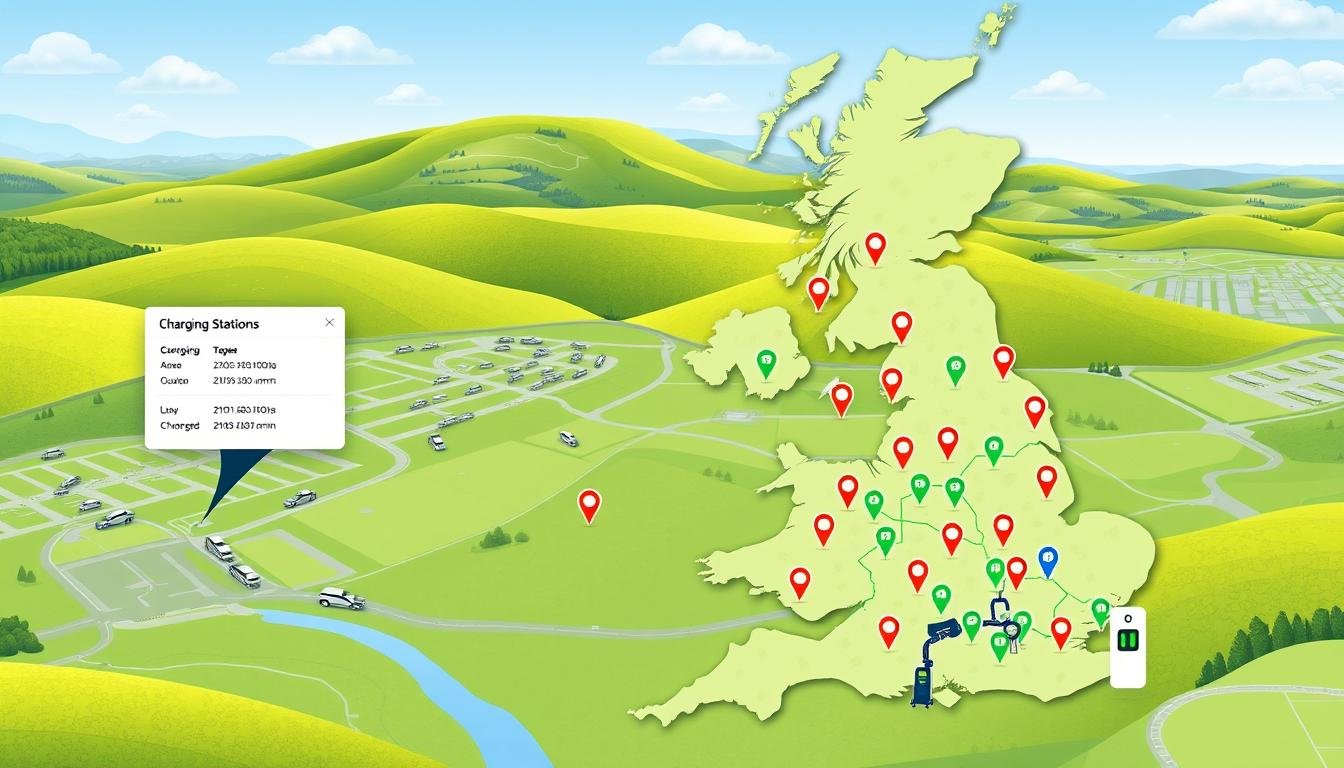
Back in 2011, fewer than 2,000 electric cars travelled British roads, yet the government had the foresight to launch a critical digital tool. This system aimed to map every public charging socket from Land's End to John o' Groats.
I am referring to the national chargepoint registry. It was a foundational database established to catalogue publicly accessible spots where drivers could power their electric vehicles.
For years, this hub served as the central source of information for every EV motorist. It provided the essential data that allowed navigation apps and journey planners to function effectively.
The registry's role was simple but vital: it helped users find a charge point quickly. This ensured journeys could be planned with confidence, reducing 'range anxiety' during the early days of electric motoring.
By creating this centralised resource, the government managed the charging network's growth. It provided a clear picture of infrastructure rollout, which was crucial for encouraging more drivers to switch to electric.
Although this specific system has now been decommissioned, understanding its function is key. It shows how the UK laid the groundwork for the extensive charging network we see today.
Key Takeaways
- The registry was a government-backed database launched in 2011 to catalogue all public electric vehicle charging locations.
- It acted as a central hub, providing essential data for drivers and third-party journey planning applications.
- This tool was fundamental for reducing range anxiety and supporting the early adoption of electric cars across the country.
- Its data helped to map the growth of the national infrastructure, informing both policy and investment.
- While now decommissioned, it represented a crucial first step in organising the UK's public charging network.
- Understanding this system offers valuable insight into how the charging landscape evolved.
The Evolution of the National Chargepoint Registry UK
The inception of a centralised electric vehicle charging database in 2011 marked a pivotal moment for British motorists. This system was designed to be the definitive source for locating public charging sockets.
I look back at how this resource evolved. It started as a basic list but quickly grew into a sophisticated tool.
Historical Milestones and Establishment
Officially established over a decade ago, the registry created a centralised hub. Its primary goal was tracking the expansion of the public charging network.
This was the first time drivers had a government-provided resource to find a charge point. It helped reduce uncertainty during longer journeys.
The database grew in complexity as more locations were added. Managing this increasing volume of data required more robust systems.
My research shows it became the primary source for early infrastructure projects. This was before the electric vehicle market matured significantly.
It supported various mapping and navigation applications. These apps relied on its accurate data to guide users effectively.
My Experience with Accessing and Personalising Chargepoint Data
Accessing detailed information on every public charging socket was simpler than I expected. The system provided multiple ways to get the data, catering to different user needs.
I found the process highly flexible. Whether I wanted a simple file or a live connection, the options were clear.
Navigating CSV, JSON, and XML Options
The full dataset was available as a direct download. You could choose from three common file formats.
This allowed me to pick the best one for my project. Each format has its own strengths for handling the information.
| Format | Best Used For | Key Characteristic |
|---|---|---|
| CSV | Spreadsheet analysis & bulk review | Simple, comma-separated values |
| JSON | Web applications & modern software | Hierarchical, key-value pair structure |
| XML | Legacy systems & structured data exchange | Tag-based, self-describing format |
Choosing the right format was crucial. It let me analyse the distribution of every charge point effectively.
Utilising the API Without Registration
For more dynamic needs, the ncr Retrieve API was incredibly useful. I could access specific live data without any sign-up process.
The API provided details like connector type, charging method, and operational status. This real-time access was perfect for third-party app integration.
My experience showed the database was designed as an open resource. Anyone could download or connect to it for personal or commercial use.
Insights into Data Management and Upload Processes
The behind-the-scenes work of maintaining a reliable charging database involved key organisations and clear rules. I found the system relied on a structured upload and management process.
Cenex’s Role and Stakeholder Engagement
Since 2017, Cenex played a vital role. They managed the central database and the upload portal for various operators.
This required constant engagement with stakeholders. It ensured every new charge point was correctly recorded.
The management process involved verifying details from each operator. This kept the public information accurate and trustworthy.
Understanding Department for Transport Guidelines
The Department for Transport set strict guidelines. Operators had to submit accurate data to the central hub.
This information supported official statistics. The department received regular feeds from the system.
Cenex's download portal efficiently distributed this data. Researchers and mapping application creators could access it easily.
My analysis shows the ncr portal functioned as a critical link. It connected private infrastructure with public need.
Understanding the Impact on UK EV Charging Infrastructure
November 2024 saw the closure of one system and the start of a new, legally-backed approach to sharing charging details. This transition marks a pivotal change for every electric vehicle driver seeking a reliable place to power up.
The decommissioning of the old central database and the introduction of strict new rules have reshaped the landscape. My analysis shows this shift ensures better transparency and accuracy for all users.
Decommissioning Timeline and Regulatory Changes
The national chargepoint registry was decommissioned on 28 November 2024. Just days before, on 24 November, the Public Chargepoint Regulations 2023 came into effect.
These regulations now legally require all public charge point operators to share open data. They must provide comprehensive information on location, availability, and pricing.
This mandate gives drivers a much clearer, real-time view of their options. It effectively replaces the old static database with a more dynamic and regulatory-compliant system.
The Shift to Zapmap and Emerging Data Alternatives
In this new environment, Zapmap has emerged as a leading alternative for information aggregation. It now provides crucial details to the Department for Transport for official statistics and reporting.
This offers an authoritative, up-to-date view of the entire charging infrastructure. Drivers can now find a public charge point with greater confidence, using apps that draw on this live feed.
The industry's move toward comprehensive, real-time information sharing fundamentally changes how journeys are planned. My guide explains how these improvements impact your daily driving experience.
Conclusion
I see the move from a static registry to live data feeds as a fundamental improvement for electric vehicle users. This transition to new regulatory frameworks marks a major step forward for the entire charging network.
The old system is gone, but its core mission continues. Now, operators must legally share open data, giving every driver a reliable view of where to charge.
This shift towards integrated platforms makes finding a charge point far simpler. The legacy of the original database lives on in the high standards of accuracy we now expect.
I hope this guide has clarified how our charging landscape evolved. You can now access vital information with greater confidence than ever before.
FAQ
What exactly is this database for electric vehicle charging?
I find it's a centralised, government-backed system that holds detailed information on publicly accessible electric vehicle charging points across the country. It serves as the definitive source of data for the Department for Transport and other organisations.
How can I personally access the information held within it?
You can freely download the entire dataset as open data. I appreciate that it’s offered in multiple formats, including CSV, JSON, and XML, to suit different technical needs. This makes it very versatile for my projects.
Do I need to create an account to use the application programming interface?
A> No, registration is not required for basic access to the API. I can query the live data feed directly, which is incredibly useful for developers and analysts who want to integrate this real-time information into their own applications or services.
Who is responsible for managing and updating this central database?
The management was overseen by Cenex, a specialist research centre, under contract from the Department for Transport. They worked closely with charge point operators to ensure the data was accurate and current.
What happens to this resource now that it's being decommissioned?
The official platform has been retired. However, the government's commitment to open data means the dataset itself is still maintained and published through new channels. I now look to the official statistics published by the Department for Transport for the most reliable figures.
Where should I go for live availability and mapping services now?
For real-time status and location-based searching, commercial services like Zapmap have become the primary tool for most drivers. These platforms use their own data collection methods and provide a more user-friendly experience for planning my journeys.