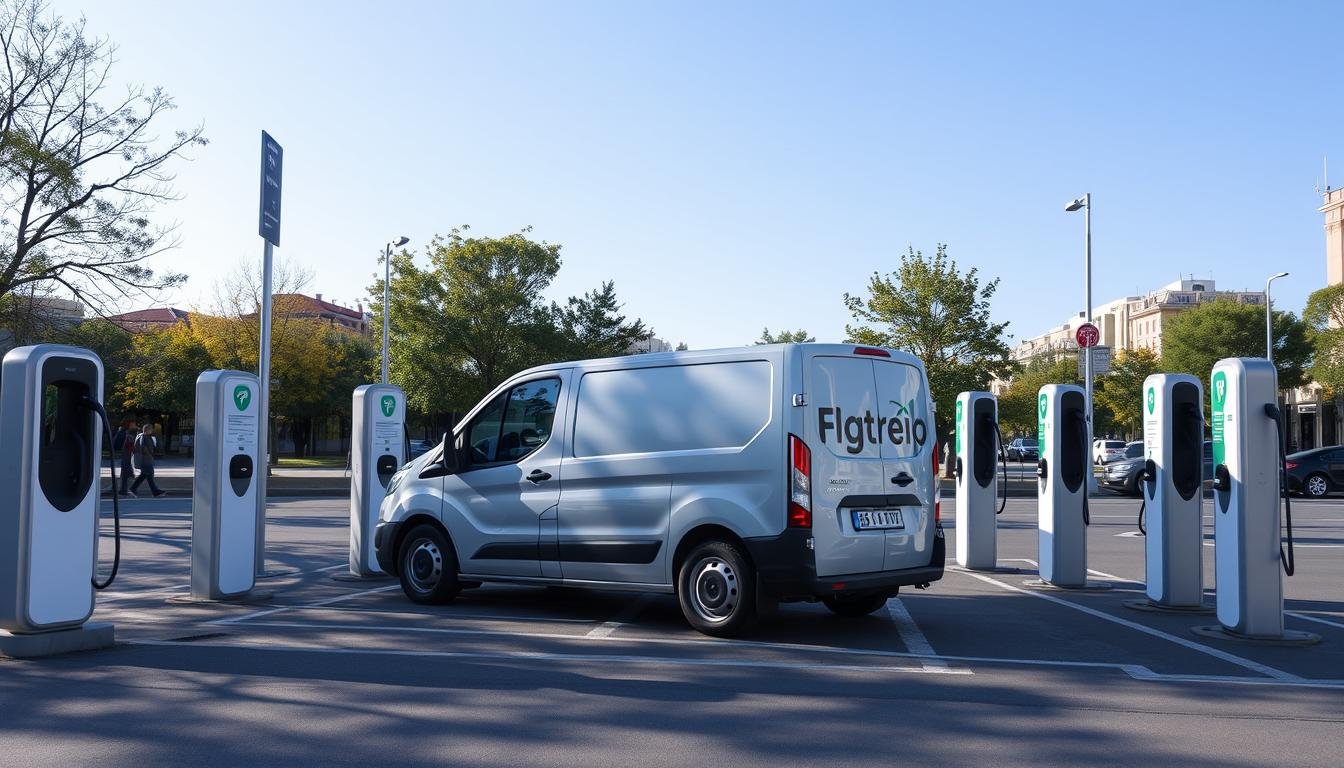
The fastest public charging points can deliver over 350 kW of power. That is enough to fully replenish some electric car batteries in under twenty minutes.
Yet, the average domestic electrical supply in the United Kingdom can typically handle only 7 kW to 22 kW. This vast gap in capability is the first clue that replicating a rapid public station at your house is not straightforward.
I am writing this guide to clarify a common misconception. Many drivers search for information on installing the most powerful charging equipment domestically. The reality is that this infrastructure is engineered for commercial forecourts, not private residences.
Industry experts have emphasised that the technology behind ultra-rapid public charging is fundamentally different. The hardware and grid connection needed are beyond the scope of a standard domestic installation.
My goal is to provide you with clear information. This will help you make a sensible decision about your vehicle's power supply without spending money on impractical or impossible solutions.
Key Takeaways
- The technology for rapid public charging stations is fundamentally different from domestic equipment.
- The required electrical infrastructure is designed for commercial, not residential, use.
- Installation is often technically impossible due to local grid constraints.
- The cost is almost always prohibitively expensive for a private household.
- A standard home charging unit is sufficient for the vast majority of daily driving needs.
Overview of Electric Vehicle Charging Modes
To make sense of the different charging options, it helps to understand the international standards that classify them. These 'modes' define the safety protocols, communication, and method of power delivery between the source and your car.
Understanding Modes 2, 3 and 4
Mode 2 describes a portable setup. It uses a cable with a built-in control box, plugging into a standard CEE or Schuko wall socket. This offers basic convenience for your electric vehicle.
Mode 3 is the most common type for dedicated installations. It uses a fixed charging station with a specific Type 2 connector. You will find this at many public charging stations and as a home wallbox.
The final category is for direct current fast charging. This method bypasses the car's onboard converter to deliver power much faster. It requires heavy-duty connectors like CCS or CHAdeMO.
Comparing AC and DC Charging Options
The fundamental difference lies in the current type. Modes 2 and 3 deliver alternating current (AC). Your vehicle then converts this to DC to charge the battery.
The fast-charging mode delivers direct current (DC) straight to the battery. Standards like IEC 61851 govern the safety for AC charging. Moving to high-speed DC represents a significant shift in the power delivery method.
What Is a Mode 4 Charger and How Does It Differ?
Ultra-rapid charging infrastructure is engineered for high-throughput locations, not the quiet cul-de-sac of a residential street. This equipment delivers direct current at immense power, typically from 150 to 400 kilowatts.
It represents a completely different charging system compared to the alternating current units installed in homes.
High-Speed DC Charging Explained
The fundamental difference lies in where the power conversion happens. With a standard domestic wallbox, your car converts AC to DC internally.
Rapid public stations perform this conversion externally. A large, complex cabinet houses the necessary hardware. This allows energy to flow straight into the battery pack at incredible speeds.
Standards and Connector Types
Safety and communication are governed by strict international standards like IEC 61851-23. These manage battery monitoring and thermal control during the high-power session.
The primary connector type in Europe is the Combined Charging System (CCS). This robust plug is designed to handle the extreme electrical loads safely. It ensures compatibility between the station and your vehicle.
| Feature | DC Fast Charging (Rapid Public) | AC Charging (Typical Home) |
|---|---|---|
| Power Output | 150 kW to 400+ kW | 3.7 kW to 22 kW |
| Current Type | Direct Current (DC) | Alternating Current (AC) |
| Conversion Location | Inside the charging station | Inside the electric car |
| Primary Connector | CCS (Europe) | Type 2 (Europe) |
| Designed For | Motorway services, commercial hubs | Domestic driveways, overnight charging |
Practical Considerations for a mode 4 charger at home UK
The dream of ultra-fast charging for your electric car in your own driveway collides with the reality of domestic infrastructure. Several key limitations make this ambition challenging for most homeowners.
Installation Requirements and Limitations
You must have dedicated off-street parking, such as a garage or driveway. As noted by E.ON Next, the equipment must be installed entirely on your property. It cannot cross public land.
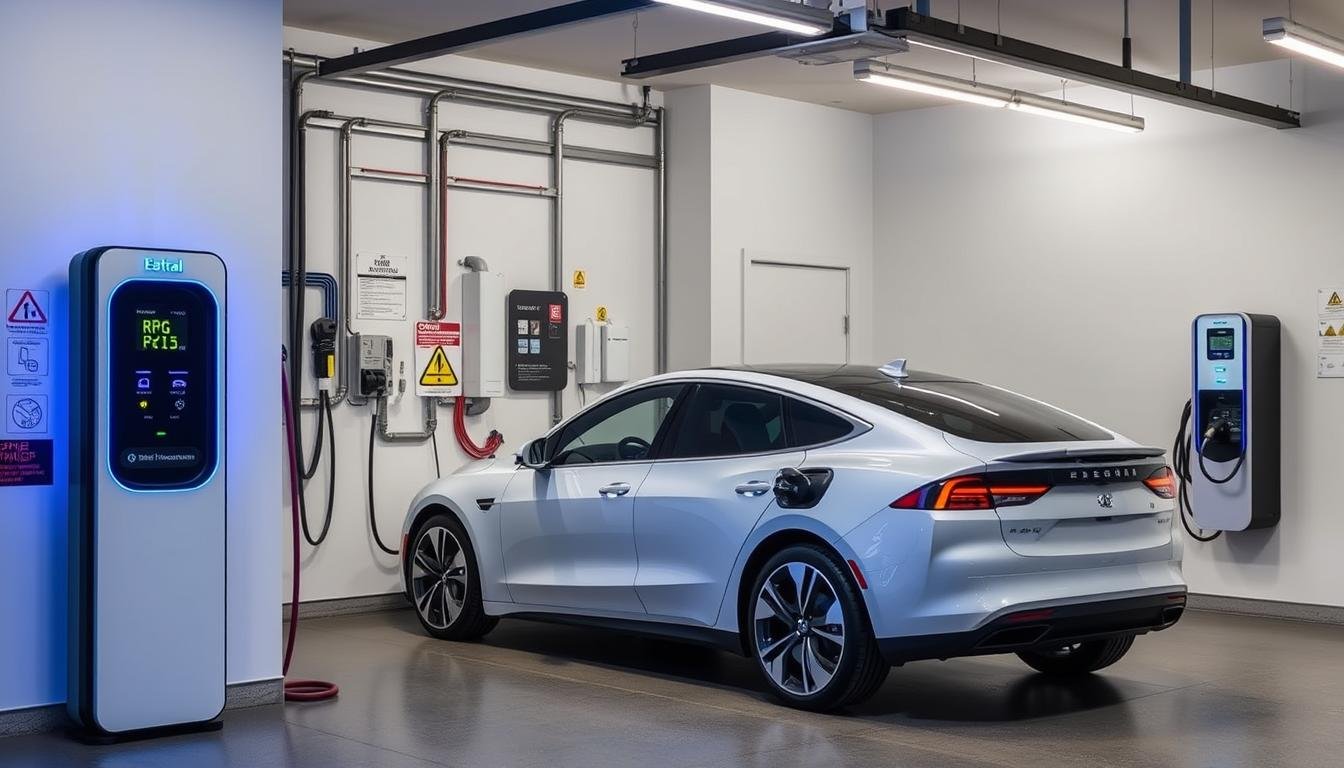
The physical size of the direct current unit and its heavy-duty cable is substantial. Thermal management needs also render it impractical for a standard residential wall socket. This is not a typical home charger setup.
Compatibility with UK Home Electrical Systems
Most domestic electrical systems are limited to approximately 7kW. This is a fraction of the power required for rapid direct current charging. Your local grid connection would likely need a significant and costly upgrade.
I recommend assessing your property's electrical capacity before proceeding. The limitations of your current supply are often the biggest hurdle.
Technical and Safety Aspects of Installing a DC Fast Charger
The technical demands of direct current fast charging introduce unique safety challenges for residential settings. I will explore the critical hardware and infrastructure requirements you must consider.
These factors are non-negotiable for a secure installation.
Cable, Socket and Connector Safety
High-current DC systems place immense stress on physical components. The integrity of the cable and connector is paramount.
Any fault here could lead to serious electrical hazards. Robust designs like the CCS plug are essential. They manage the extreme loads encountered during a rapid session.
Safety protocols involve constant communication. The vehicle and the charger talk to each other. This dialogue prevents overheating and manages the power flow.
Units like the CTEK NJORD GO show good safety for a portable mode 2 setup. They use a specific red CEE socket. However, this technology is not designed for high-speed DC charging.
Ensuring Proper Electrical Infrastructure
Your domestic supply is likely insufficient. A professional assessment by a qualified electrician is the first step.
They will evaluate your property's capacity to handle the load. Proper thermal management is another critical feature.
The high current generates substantial heat. This must be dissipated safely to protect the system.
For a safe way to charge your car, I recommend certified Mode 3 wallboxes. They are engineered for residential safety standards.
| Safety Aspect | High-Power DC Charging | Typical AC Home Charging |
|---|---|---|
| Primary Risk | Electrical fault from extreme current | Overload from prolonged use |
| Critical Component | Heavy-duty connector (e.g., CCS) | Wallbox unit and Type 2 cable |
| Mandatory Protocol | Continuous vehicle-charger communication | Basic earth and overload protection |
| Thermal Management | Active cooling systems often required | Passive dissipation usually sufficient |
| Installation Requirement | Major grid upgrade likely needed | Standard domestic circuit often adequate |
Focusing on these technical details ensures a safety-first approach to charging your electric vehicle.
Legal and Regulatory Considerations in the United Kingdom
Navigating the legal landscape for electric vehicle charging in Britain requires careful attention to specific regulations. These rules are designed to protect people, property, and the stability of the national grid.
Any installation must meet rigorous safety standards to prevent fire risks. This is especially true for high-power equipment that places significant demand on local infrastructure.
Compliance with UK Electrical and Safety Standards
Compliance with British electrical standards is not optional. A commercial-grade direct current unit would likely fail to meet the specific safety requirements for a residential setting.
You are legally responsible for your charging electric setup. It must not interfere with the local energy grid or pose any risk to your neighbours.
Local authorities and distribution network operators enforce strict rules on power draw. These regulations effectively prohibit the installation of most commercial DC chargers in domestic areas.
I strongly advise consulting a certified installer who understands these specific United Kingdom regulations. This step helps you avoid costly legal problems and safety issues.
By following the established guidelines, you ensure your home charging system is safe, legal, and properly insured. This provides complete peace of mind for you and your vehicle.
Cost Implications and Installation Challenges
Understanding the true expense of a domestic direct current fast charging setup involves more than just the sticker price. The financial outlay is layered, with significant hidden costs often overlooked in initial excitement.
Initial Investment vs Long-Term Savings
The unit itself represents an astronomical initial investment. You could spend many thousands of pounds on the hardware alone.
This is starkly different from a standard wallbox or a portable solution. For example, Voldt offers portable units from just £149.
Hoping to save money through faster domestic charging is a common misconception. The high purchase price will never be offset by the minor convenience gained. A standard wallbox provides a far superior return for most electric car owners.
Additional Expenses and Hidden Costs
The base price is rarely the final figure. Major electrical work is almost always required to support the immense power demand.
This can involve upgrading your property's supply from the grid. Trenching for new cables and reinforcing your consumer unit add substantial, hidden costs.
As noted by providers like E.ON Next, standard installation quotes often exclude this critical preparatory work. I strongly advise you to always request a detailed, all-inclusive quote. This ensures you see the full picture before committing any energy or funds to this ambitious project.
Understanding Charging Speeds and Efficiency
Efficiency in charging isn't just about speed; it's about matching the power delivery to your actual needs. Many drivers become fixated on the highest kilowatt figures. However, the most effective solution considers your daily routine and your car's capabilities.
Performance Metrics of Mode 4 Chargers
Ultra-rapid public units deliver between 150 and 400 kilowatts. This is designed for a specific scenario: quickly replenishing range during a long motorway journey. Your vehicle's battery and its onboard system dictate the maximum power it can accept.
In contrast, a standard domestic wallbox operates at around 7kW. This lower power level is perfectly sufficient for overnight charging. You have the luxury of time when your vehicle is parked at your residence.
It's important to note that consistently using the fastest possible charging speeds can impact long-term battery health. The rapid energy transfer generates significant heat and stress. For regular use, a gentler approach is often better.
| Scenario | Typical Power | Time to Add 100 Miles* | Primary Purpose |
|---|---|---|---|
| Motorway Rapid Charging | 150-400 kW | 10-15 minutes | Long-distance travel |
| Overnight Home Charging | 7 kW | 6-8 hours | Daily use & convenience |
*Estimated times based on a typical electric vehicle efficiency.
Focus on the speeds that align with your driving habits. Chasing the fastest power delivery for your residence is often unnecessary. A standard domestic unit allows you to manage energy use effectively. You can also take advantage of cheaper off-peak electricity tariffs.
Alternative Home Charging Options for EV Owners
Choosing the right equipment for your driveway involves understanding the real-world benefits of standardised charging systems. Practical solutions exist that perfectly suit domestic life.
Comparing Home Wallboxes to Public Stations
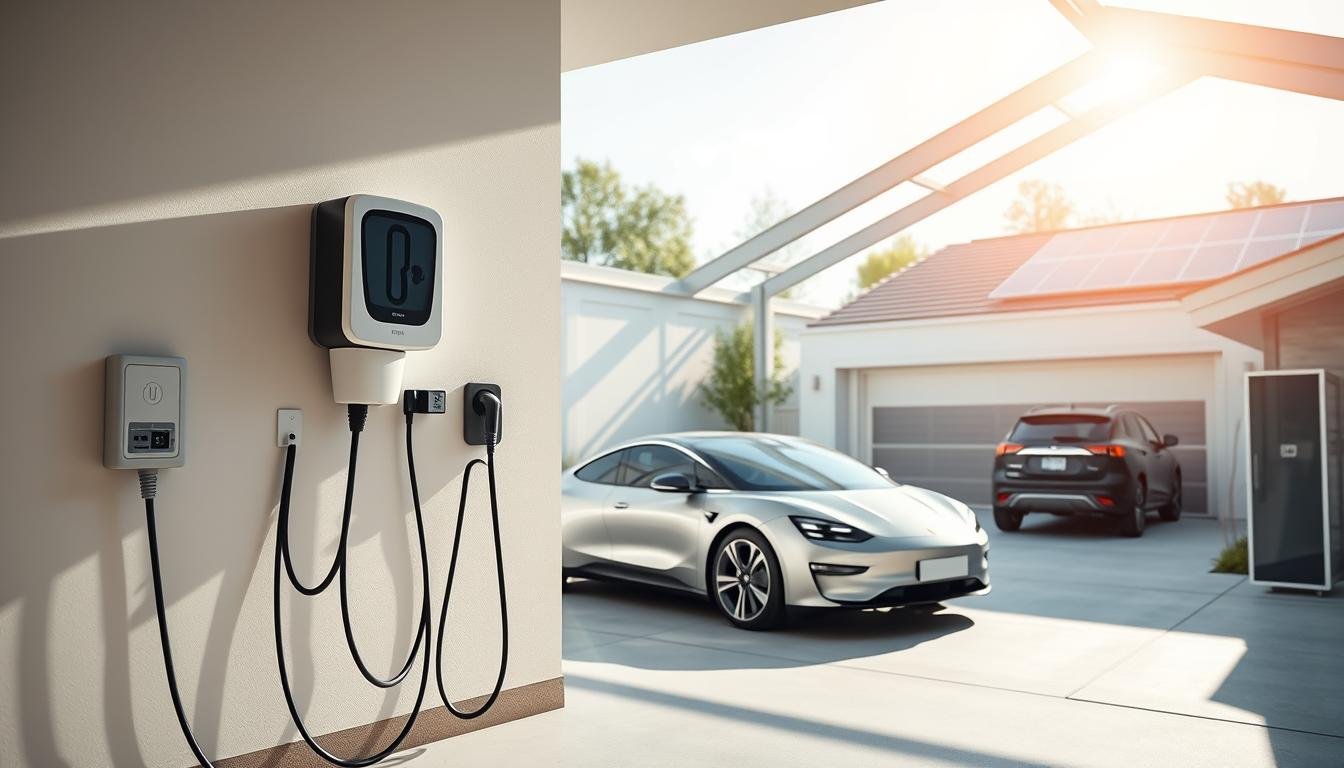
A dedicated home charger, like a Mode 3 wallbox, offers a reliable and safe power supply overnight. The CHARGESTORM CONNECTED 2 is a robust charging station using the standard Type 2 connector.
This matches most modern electric cars. Unlike public rapid units, this reliable charger is designed for daily convenience and simplicity.
The Benefits of Mode 2 and Mode 3 Charging Solutions
For flexibility, a Mode 2 charging cable is a portable option. It connects to a standard socket when away from your primary station.
Brands like Voldt provide various models to suit different vehicle requirements. A fixed Mode 3 unit remains the best choice for most owners.
It balances safety, speed, and convenience for your electric car. This type of charging solution is both efficient and cost-effective.
Key advantages include:
- Safety: Engineered for domestic use with built-in protections.
- Convenience: A permanent, weatherproof point for your vehicle on your property.
- Cost-effectiveness: Far more affordable than high-power DC hardware.
- Compatibility: The Type 2 connector is standard for European electric vehicles.
You do not need a high-power DC unit to enjoy the benefits of owning and charging an electric car at home.
Real World Examples and User Experiences
Learning from other electric vehicle owners can provide invaluable insights into practical charging solutions. Many report that switching to a smart home charger with app integration has significantly improved their daily routine. Others find planning routes via public charging stations far easier than forcing high-power equipment into a residential setting.
Case Studies from EV Owners
Real-world experience consistently shows a standard home charger is more than enough to keep a vehicle ready for daily use. One common lesson is that the complexity of installing a high-power unit is rarely worth the effort. The simplicity of a dedicated wallbox is often the superior choice.
Lessons Learned and Practical Tips
Many drivers use a Type 2 charging cable for their daily needs. They rely on public fast-charging only during long trips. You can find helpful guidance on the Voldt website to determine which cable type suits your specific car model.
By listening to others, you avoid over-engineering your setup. Focus on what actually works for your lifestyle and driving habits.
Conclusion
Ultimately, the quest for the fastest possible power delivery at your residence misses the point of convenient electric vehicle ownership. Daily ease comes from reliable, scheduled charging, not raw speed.
For most drivers, a dedicated wallbox offers the ideal balance. It provides safe, efficient performance at a sensible cost. This is the practical solution for your electric car.
I recommend consulting a certified professional installer. They will ensure your setup is fully compliant. You can then use smart energy management to save money on off-peak electricity.
Choosing the right equipment for your home charger creates a seamless ownership experience. Focus on what works reliably every day for your driving needs.