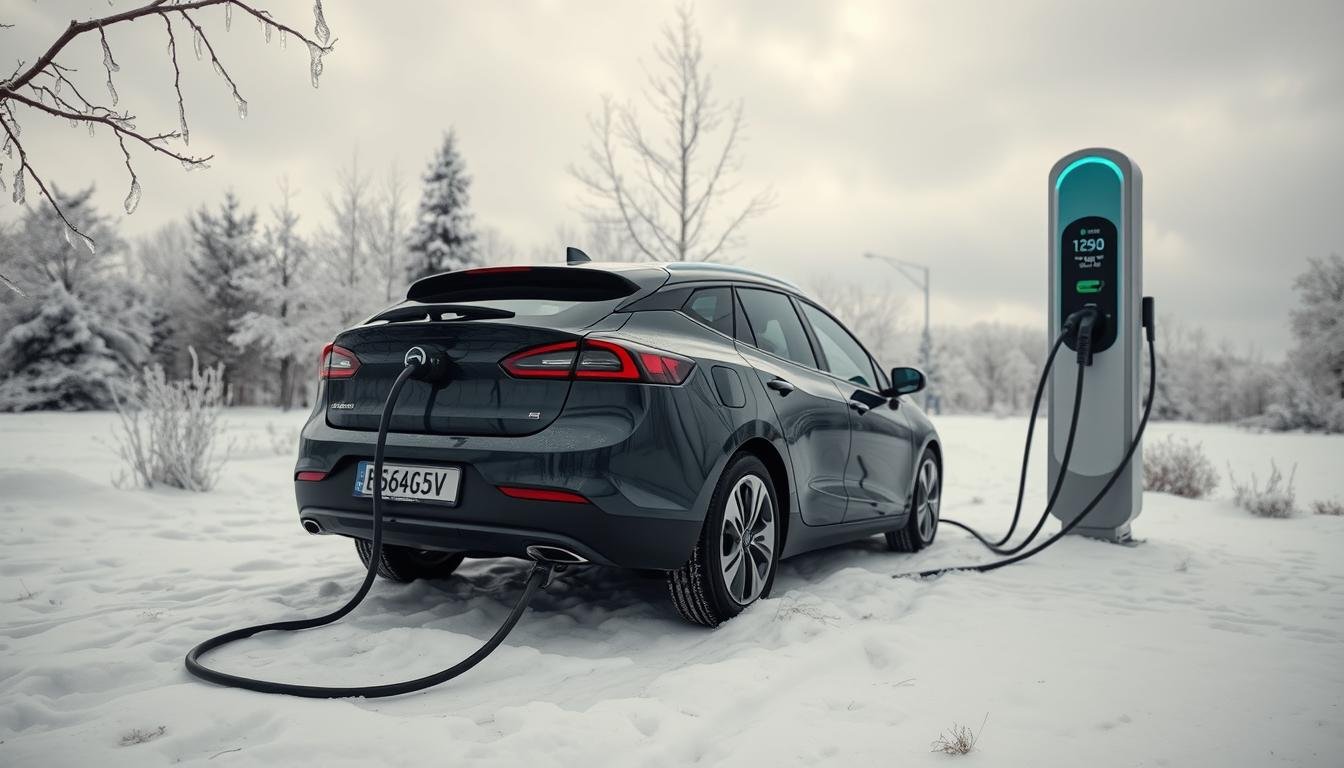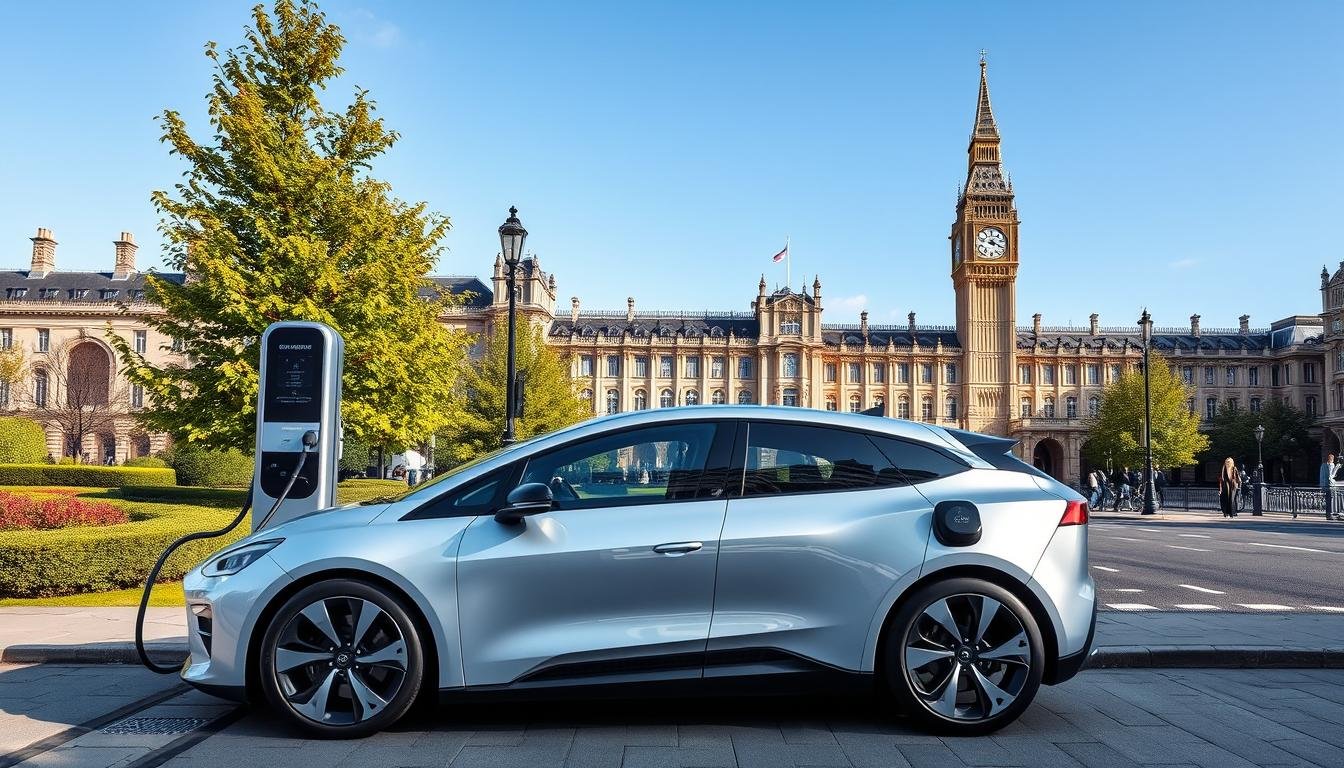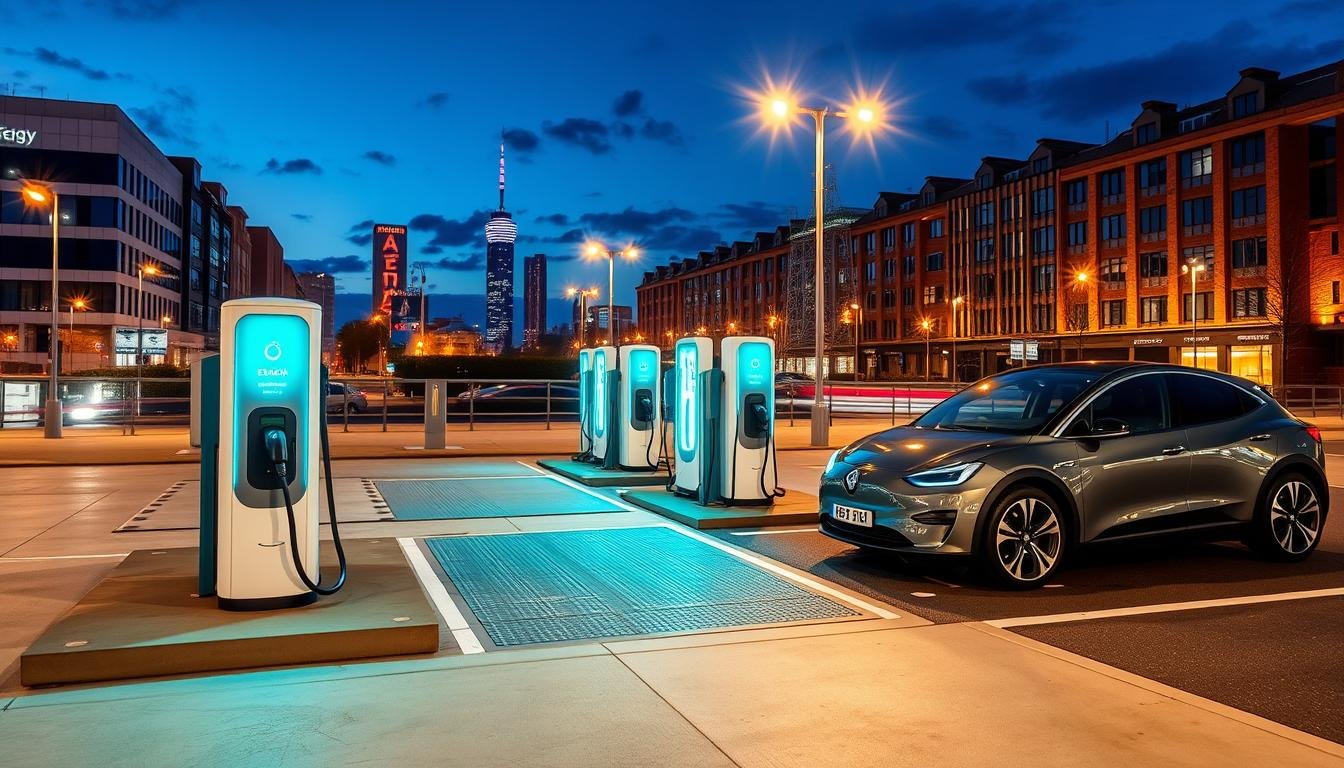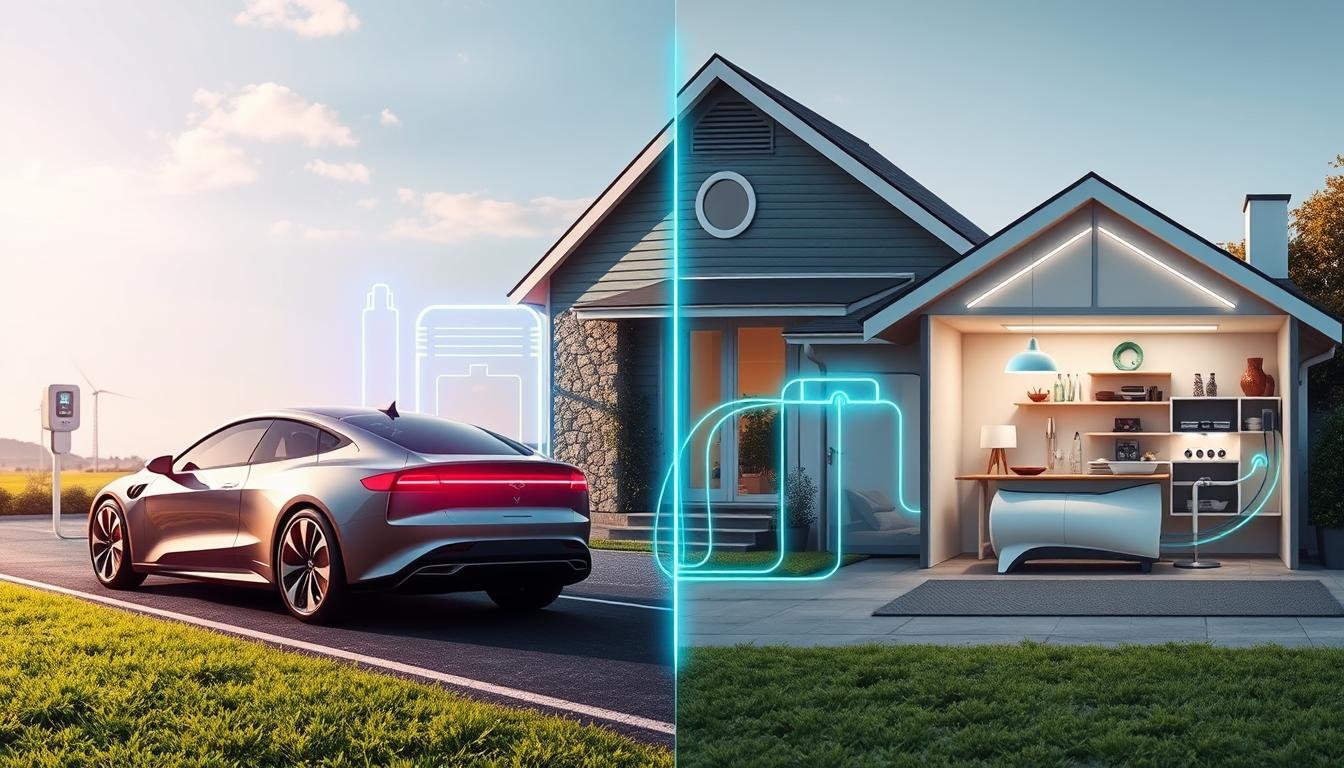
As of mid-2025, more than 1.5 million battery electric vehicles are travelling on roads across the United Kingdom. That's a colossal number of mobile energy storage units sitting on our driveways.
I've come to realise my electric car is far more than just transport. It's essentially a large battery on wheels. This lets me store cheap, off-peak electricity or surplus solar energy generated at home.
The real game-changer is a technology called bidirectional charging. It allows my automobile to send stored energy back out. This isn't just for running appliances; it can feed electricity into the national grid during peak times.
This shift is transforming how we travel and interact with our entire energy system. I'm exploring how to use my personal vehicle as a giant reserve power bank. The goal is to reduce household costs and increase my energy independence.
This guide will break down the two key technologies that make this possible. I'll explain how they work and the practical benefits they offer for managing home energy.
Key Takeaways
- The UK's electric vehicle fleet represents a vast, distributed energy storage resource.
- Modern electric cars function as large, mobile batteries capable of storing energy for later use.
- Bidirectional charging technology enables energy to flow from the vehicle back to a home or the electricity network.
- Utilising this capability can significantly help in managing domestic energy costs.
- These systems provide a valuable backup power source during outages, increasing household resilience.
- Adopting this technology supports a more flexible and stable national grid.
- Understanding the different systems available is the first step towards leveraging this innovative feature.
Introduction to V2G and V2L Technologies
To truly harness my automobile's potential, I first needed to decode the specific technologies available. They transform a simple battery into a versatile energy asset.
Defining V2G, V2H, and V2L
Vehicle-to-grid, or V2G, lets my car export stored electricity to support the national network during peak hours. This is crucial for overall grid stability.
Vehicle-to-home (V2H) turns my personal transport into a backup source for my house. It functions much like a dedicated home battery system during a cut.
The third option is vehicle-to-load (V2L). This simpler technology powers appliances directly. I find it perfect for trips away or outdoor events.
Why These Technologies Matter in the UK
These systems are vital for balancing our electricity grid. They help manage periods of high demand, reducing reliance on fossil fuel plants.
Regulators like Ofgem are prioritising smart charging solutions. I believe adopting them is key for a sustainable, resilient energy future across the country.
Understanding the Basics of Bidirectional Charging
At its core, this technology allows my vehicle's battery to both receive and send electricity. This two-way flow is the foundation for using my car as a flexible energy asset. It turns a simple storage unit into an active participant in my home's energy management.
Grasping how this works starts with the special equipment involved. Unlike a standard plug, a bidirectional charger is a sophisticated piece of technology.
How Bidirectional Chargers Work
I've learned these units function much like an inverter. When charging my car, they convert alternating current (AC) from the grid into direct current (DC) for the battery.
The real magic happens in reverse. To send stored energy back to my house, the charger converts DC to AC. This complex power conversion requires advanced electronics inside the bidirectional chargers.
A critical safety feature is 'islanding'. During a cut, the charger must instantly disconnect my home from the main network. This isolation protects engineers and ensures stable backup power.
Key Differences from Traditional EV Chargers
The main contrast is capability. A traditional charger only pushes electricity one way—into the vehicle. A bidirectional model manages a dynamic two-way street.
This added complexity impacts costs and function. The equipment is more expensive but turns my car into a genuine home energy solution.
The principle isn't brand new. It's similar to inverters used with home battery systems for years.
| Feature | Bidirectional Charger | Traditional EV Charger |
|---|---|---|
| Power Flow | Two-way (AC to DC & DC to AC) | One-way only (AC to DC) |
| Core Technology | Advanced bi-directional inverter | Simple rectifier |
| Safety Requirement | Must perform 'islanding' during outages | No islanding capability |
| Primary Use | Charging vehicle & powering home/appliances | Solely for charging the vehicle |
| Impact on Energy Management | Enables full home energy integration and backup | No integration with home energy systems |
This table highlights why bidirectional charging is a game-changer. It provides a clear, functional upgrade over standard charging setups for modern EVs.
Comparing V2G vs V2L EV power bank UK Systems
I learned that tapping into my automobile's battery capacity involves choosing between grid interaction and direct appliance use. These two approaches serve very different needs in my energy management strategy.
Overview of Each System
Vehicle-to-grid technology requires specialised hardware. A bidirectional DC charger and compatible automobile are essential to export stored electricity back to the network.
This setup allows participation in utility programmes. I can receive credits on my bill for supporting grid stability during peak demand times.
In contrast, vehicle-to-load capability is much simpler. It typically uses a basic adapter or built-in outlet to run devices directly.
The broader term V2X encompasses all these energy transfer methods. It's helpful when discussing the future of integrated energy solutions.
I've noted unique hardware approaches too. The Ford F-150 Lightning uses a CCS connector for its bidirectional charging capability, unlike older models.
| Feature | Vehicle-to-Grid (V2G) | Vehicle-to-Load (V2L) |
|---|---|---|
| Primary Equipment | Bidirectional DC charger & compatible vehicle | Simple adapter or internal power outlet |
| Main Purpose | Export energy to support the electricity grid | Power appliances and devices directly |
| Complexity & Cost | Higher - requires advanced charging equipment | Lower - often uses existing vehicle features |
| Financial Incentives | Available through utility participation schemes | Typically none - personal convenience only |
| Common Connector | CHAdeMO (legacy) or CCS (newer models) | Standard domestic or specialised adapter |
Exploring Vehicle-to-Home (V2H) for Personal Energy
Imagine your car not just taking you places, but also keeping the lights on at home during an outage. This is the promise of Vehicle-to-Home technology. It creates a direct link between your automobile's battery and your household circuits.
This approach is more personal than feeding the wider network. It turns your transport into a dedicated home energy solution.
Using Your EV as a Backup Power Source
The scale of this backup is impressive. My car's 65kWh battery holds nearly five times the energy of a typical home unit like the Tesla Powerwall.
During a blackout, the system performs a critical safety step called 'islanding'. It instantly isolates my home from the main grid. My vehicle then becomes the sole, reliable source of power.
Integration with Home Solar and Energy Management
For daily energy management, a CT meter is installed at the grid connection point. This clever device monitors all electricity flow in real-time.
When my house draws from the network, the system signals my bidirectional charger. It discharges an equal amount from my vehicle's battery to offset the cost.
Pairing this with rooftop solar is a game-changer. Excess energy I generate can charge my car. I then use that stored power to run my home in the evening.
Models like the Nissan Leaf have shown this technology works well. It proves many modern cars are ready to be true home energy partners.
Vehicle-to-Load (V2L): Powering Appliances On-the-Go
For pure, on-the-spot convenience, nothing beats the ability to run gadgets straight from my car. This technology lets me use my automobile's stored energy to operate tools, appliances, and electronics wherever I am.
It's perfect for camping trips, outdoor work, or simply boiling a kettle in a car park. I've powered laptops, small fridges, and lighting with ease.
Simple Adapter Solutions for V2L
The beauty of this system is its simplicity. I don't need a costly, permanent bidirectional charger installed at home. Instead, I use a dedicated adapter that plugs into my vehicle's charging port.
This accessory contains a small inverter. It safely converts the battery's direct current into standard alternating current for my devices.
Many modern models now support this capability. The Hyundai IONIQ 5 and Kia EV6, for example, offer a robust 3.6kW output. Tests by Clean Energy Reviews also confirmed the reliable load capability of the BYD Atto 3.
In an emergency, I can even run an extension cord from the car into my house. This provides a vital backup for essential appliances during a cut.
| Adapter Type | Key Features | Best For |
|---|---|---|
| Built-in Socket | Integrated AC outlet inside the cabin or boot; often provides up to 3.6kW. | Spontaneous use for personal electronics and small appliances. |
| Dedicated V2L Adapter | Plugs into vehicle's DC charge port; includes inverter and standard plug sockets. | Owners of compatible vehicles seeking a versatile, official solution. |
| Third-Party Adapter | Aftermarket device; must be checked for compatibility with specific vehicle models. | Cost-conscious users where an official accessory is not available. |
EV Hardware and Charging Infrastructure in the UK
Setting up a bidirectional system at home requires more than just a compatible car. It demands specific, often costly, hardware. The infrastructure for these advanced functions is still developing across the country.
I found the centrepiece is a specialist bidirectional charger. This equipment typically costs between £4,000 and £6,000. Most homes need this unit to manage the two-way flow of electricity effectively.
Requirements for Bidirectional Charging
Compatibility is a major factor. My vehicle and charger must be fully compatible to work. For example, using the Ford F-150 Lightning for home backup requires its specific Ford Charge Station Pro and a Home Integration System.
The current landscape presents challenges. Technical and regulatory standards for charger interoperability are under revision. I hope this will simplify adoption for owners in the future.
This specialist equipment is the key. It turns my car's large battery into a reliable home energy solution. Careful planning around these costs and specs is essential for my energy management strategy.
Insight into Current EV Models and Their Capabilities
The market for electric vehicles now offers a diverse range of models with distinct energy export functions. I've examined several popular cars to understand their specific strengths. This helps me match a vehicle's capability to my personal energy management needs.
Some automobiles are true pioneers, while others focus on convenient appliance power. The built-in technology varies significantly between brands and model years.
Notable Models Supporting V2G, V2H and V2L
The Nissan Leaf (ZE1) remains a standout for its early adoption of two-way charging. It uses the CHAdeMO connector for grid and home export.
For direct device power, the Hyundai IONIQ 5 and Kia EV6 are impressive. They offer a robust 3.6kW output through a simple adapter. This is perfect for running tools or camping gear.
The MG ZS EV provides a more accessible option. Its 2.2kW capability is sufficient for many daily appliances.
| Model | Primary Energy Function | Key Specification | Ideal Use Case |
|---|---|---|---|
| Nissan Leaf (ZE1) | Grid & Home Export (V2G/V2H) | CHAdeMO Connector | Participating in utility energy schemes |
| Hyundai IONIQ 5 / Kia EV6 | Appliance Power (V2L) | 3.6kW Output via Adapter | Outdoor events, emergency home backup |
| Volkswagen ID Series | Bidirectional Charging (Announced) | CCS Standard | Future home energy integration |
| Tesla Model 3 / Model Y | Bidirectional Charging (Tested) | Successful 2024 Trials | Pending wider software enablement |
| MG ZS EV (2022) | Appliance Power (V2L) | 2.2kW Output | Powering small devices and electronics |
Latest Innovations from Nissan, Ford, Hyundai and Kia
Manufacturers continue to push boundaries. Volkswagen has committed to enabling bidirectional flow across its ID range. This uses the universal CCS standard, which could simplify future setups.
In July 2024, independent tests proved the Tesla Model 3 and Model Y are technically capable. Widespread rollout depends on software updates from the manufacturer.
Ford's approach with the F-150 Lightning integrates a dedicated home charging station. This showcases a complete system rather than just a car feature for owners.
Financial and Regulatory Implications
Adopting these advanced energy systems involves navigating both upfront investment and evolving policy landscapes. The initial outlay for the necessary hardware is significant. I must balance this against potential long-term savings and earnings.
Understanding the rules and support available is just as crucial. Government initiatives are shaping the market for all vehicle owners.
Cost Considerations for Bi-directional Chargers
The specialist charger required for two-way charging represents the largest expense. This equipment typically costs several thousand pounds. Installation adds more to the final bill.
However, these costs can be offset. Participating in energy supplier programmes can generate credits. I can earn money by supplying stored electricity back during peak demand times.
| Financial Aspect | Typical Range/Detail | Potential Offset |
|---|---|---|
| Bidirectional Charger Unit | £4,000 - £6,000 | Possible bill credits from supplier schemes |
| Professional Installation | Additional £500 - £1,500 | Long-term reduction in home energy costs |
| Ongoing Service Value | Grid balancing worth millions annually | Payments for supporting network stability |
Government Initiatives and Policy Challenges
Major suppliers like Octopus Energy run pilot V2G programmes. These trials help refine the technology and its market role. OVO Energy also offers similar schemes for selected owners.
National policy prioritises smart grid investments. This focus aims to balance the electricity network efficiently. It should help reduce my household energy costs over time.
Key challenges remain, though. A lack of uniform standards for bidirectional charging protocols complicates adoption. Regulatory hurdles must be cleared for a widespread, user-friendly future.
Overcoming Challenges and Future Trends
For this technology to become commonplace, manufacturers and regulators must agree on a common language for their equipment. I see a clear path forward, but a few important hurdles need clearing first.
The industry's adoption is projected to grow strongly over the next five years. This growth is crucial for making these systems more affordable and user-friendly.
Addressing Compatibility and Standardisation Issues
The main challenge I face is a lack of uniform standards. My vehicle, charger, and home system all need to communicate seamlessly.
Thankfully, new protocols like ISO 15118-20 are being adopted. These will standardise how my car talks to the charging station, enabling reliable home and appliance power.
The National Energy System Operator identifies bidirectional charging as a key tool. It supports grid stability and helps reduce carbon emissions across the network.
Market analysts forecast a surge in new cars from brands like Nissan and Volkswagen. These models will support bidirectional energy transfer as a standard capability.
| Standardisation Focus | Key Development | Expected Impact for Owners |
|---|---|---|
| Communication Protocol | Adoption of ISO 15118-20 | Enables reliable V2H & V2L via Type 2 ports |
| Connector Hardware | Move towards CCS as a common standard | Reduces complexity and equipment costs |
| Grid Integration Policy | NESO backing for grid stability | Drives supportive regulations and energy management schemes |
Standardisation of connectors is the ultimate key. It will unlock the full future potential of vehicle-to-everything applications. I believe this will make the technology accessible to everyone.
Once these standards are in place, using my car's battery will become a simple, integrated solution for home energy management.
User Experience: Real-World Application and Savings
Using my vehicle as an energy asset has not only cut costs but also provided peace of mind during outages. This hands-on approach reveals the true value of bidirectional charging beyond mere theory.
My Personal Journey with EV Power Bank Systems
My journey involves storing surplus solar energy in my car's battery. This has significantly reduced my reliance on the national grid.
I manage the depth of discharge between 20% and 80%. This practice is crucial for long-term battery health.
During unexpected cuts, this system offers vital security. It has already supported my home through two disruptions.
Practical Insights and Energy Saving Benefits
Financially, I've saved up to 30% on my electricity bills. Shifting usage to cheaper off-peak times through vehicle-to-home technology makes a difference.
The vehicle-to-load capability is transformative for mobility. It acts as a portable generator for tools and appliances during camping trips.
I encourage other owners to explore these systems. The benefits extend far beyond just driving.
| Benefit Type | Description | Personal Impact |
|---|---|---|
| Cost Savings | Bill reduction via off-peak energy use | Up to 30% lower electricity costs |
| Energy Independence | Reduced grid reliance through solar storage | Increased self-sufficiency |
| Backup Power | Home energy resilience during outages | Security and continuity |
| Portable Power | On-the-go appliance operation with V2L | Convenience for outdoor activities |
Conclusion
My exploration of bidirectional charging systems has fundamentally changed how I view my vehicle's role. It is no longer just for travel but a core part of my home energy management, using its large battery strategically.
Understanding the differences between these systems lets me choose the right technology for my needs. I can support the electricity grid or run appliances directly. This flexibility is a genuine game-changer.
Challenges like high costs remain, but the future is bright. As standards improve, these capabilities will become common in new models. This will help balance energy demand and increase grid stability.
Embracing this innovation offers clear rewards. I enjoy lower electricity bills and contribute to a greener, more resilient energy network for all owners.