Did you know that nearly one in three electric vehicle drivers already has solar panels installed at their home? This surprising statistic highlights a growing trend towards a fully integrated, sustainable household.
With over 1.5 million electric vehicles now on the roads across the United Kingdom, the way we power our personal transport is changing rapidly. More drivers are looking for smart ways to manage their motoring expenses.
A typical 4kW photovoltaic system can save a household over £400 a year on its electricity bills. These savings can help offset the initial outlay for the technology.
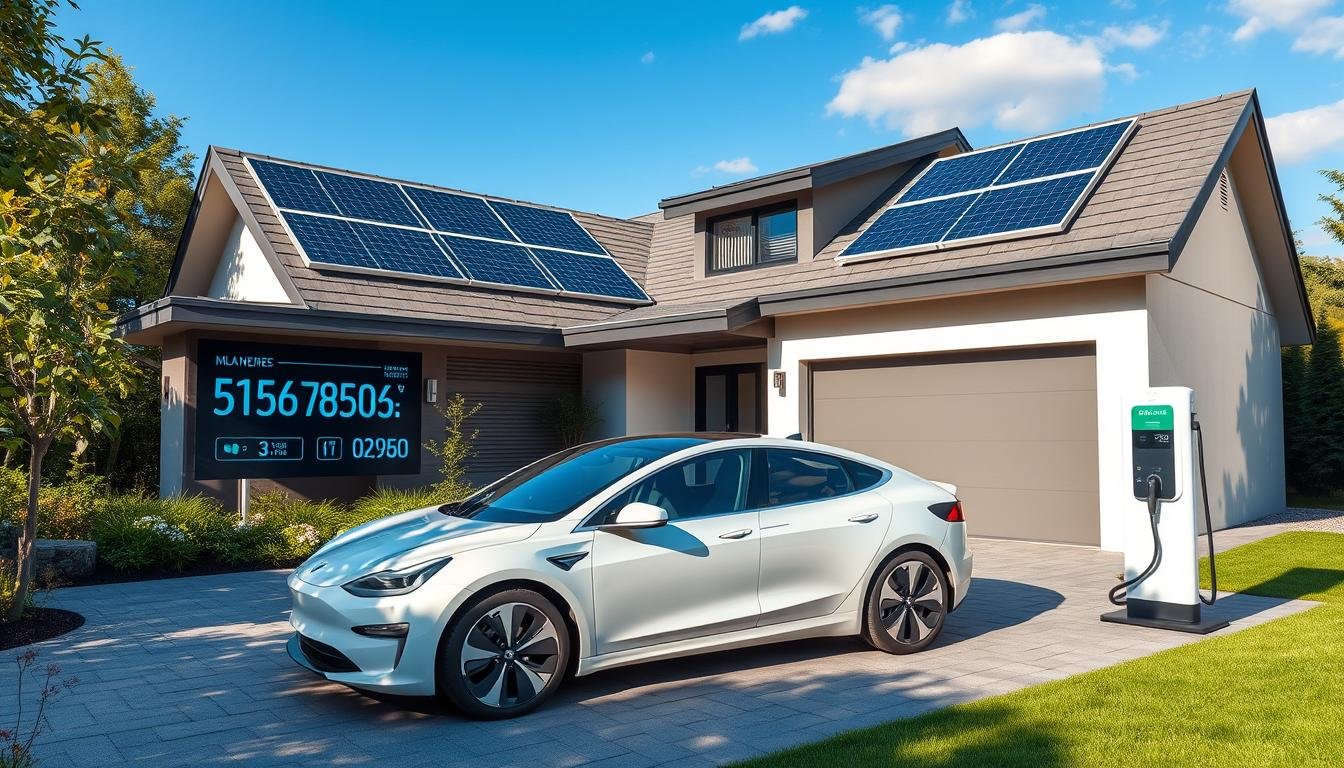
By linking a home charger to your panels, you can fuel your electric car directly with clean power from your roof. This popular method significantly reduces your carbon footprint while giving you greater control over your home energy costs.
This ultimate guide explores whether combining these two technologies represents a sound financial and environmental decision for your specific circumstances. We analyse the numbers, the benefits, and the practicalities.
Key Takeaways
- Nearly one-third of electric vehicle owners already use solar panels at home.
- A standard 4kW solar setup can cut household electricity bills by over £400 annually.
- Pairing a home charger with panels lets you power your car with clean, self-generated energy.
- With over 1.5 million electric cars on UK roads, understanding your driving habits is key.
- This guide helps you assess if investing in both technologies makes financial and environmental sense.
Introduction to Solar Panels and EV Charging
Transforming sunlight into fuel for your vehicle is no longer science fiction, but a practical reality for a growing number of households. This integration represents a major step in personal energy management.
It allows drivers to cut ties with fossil fuels in a direct and meaningful way.
Overview of the technology and benefits
Photovoltaic cells on your roof capture daylight. They convert it into usable electricity for your household.
This power can then operate appliances, lights, and a dedicated point for your automobile. The process is clean and remarkably efficient.
Choosing to charge your electric car this way offers significant advantages. You gain greater independence from the grid and lock in a portion of your motoring budget.
The environmental benefit is clear: you drive using 100% renewable power generated at your home.
| Aspect | Traditional Fuelling | Solar-Powered Fuelling |
|---|---|---|
| Energy Source | National Grid (Mix of fuels) | Direct Sunlight |
| Carbon Footprint | Variable & Indirect | Minimal & Direct |
| Price Stability | Subject to Market Tariffs | Fixed after Installation |
| Energy Independence | Low | High |
Why the nation is embracing green energy solutions
A significant rise in green energy adoption is underway. Homeowners are increasingly seeking sustainable solutions.
Installing photovoltaic panels is a popular choice. It reduces a household's carbon footprint effectively.
This move towards self-sufficiency provides a buffer against external price changes. It also future-proofs a property.
Our guide explores this synergy further. It shows how merging these technologies creates a robust, clean energy system for modern living.
How Solar Panels Work for EV Charging
The journey from sunshine to motion begins with photovoltaic cells on your rooftop. These cells capture daylight and generate direct current electricity. This DC power must be converted for household use.
Photovoltaic cells and energy conversion
An inverter flips the current to alternating current. Your home appliances and your vehicle's fuelling point require AC. This conversion is essential for compatibility.
A typical 4kWp setup generates between 3,000 and 3,400 kWh each year. This output can provide a significant portion of the energy required to power your automobile.
Integration with home power systems
Most dedicated fuelling points for automobiles can work with this renewable source. The system needs that inverter to function correctly.
Adding a storage unit allows you to keep surplus energy generated during daylight hours. You can then use it to fuel your vehicle after sunset. This is ideal for drivers who cover around 7,000 miles annually.
Understanding this integration is the best way to reduce your carbon footprint and manage your electricity use effectively.
Understanding solar EV charging cost UK
Breaking down the financial outlay for a combined renewable energy system reveals a layered investment. The final figure is more than just the price of photovoltaic panels for your roof.
Key factors affecting the cost
A complete setup for your home typically includes three main parts:
- A 6.75kWp panel array, averaging £12,460.
- A 5kWh storage battery, adding around £3,000.
- A dedicated vehicle fuelling unit, approximately £1,200.
This brings the total estimated project cost to roughly £16,660. Remember, this is a guide. Your final invoice depends heavily on three variables.
The quality of the kit, your specific location, and the installer you choose all play a major role. A complex roof or a remote property can increase labour and material expenses.
Financial mechanisms also influence your net spend. Export tariffs let you sell surplus electricity back, creating an income stream.
Conversely, smart tariffs like Intelligent Octopus Go offer very low off-peak rates per kWh. It is wise to compare this grid rate with your potential solar export income.
While the upfront investment is significant, the long-term reduction in your home energy bills makes this a viable proposition for many.
Estimating Your Solar Panel Requirements for EV Charging
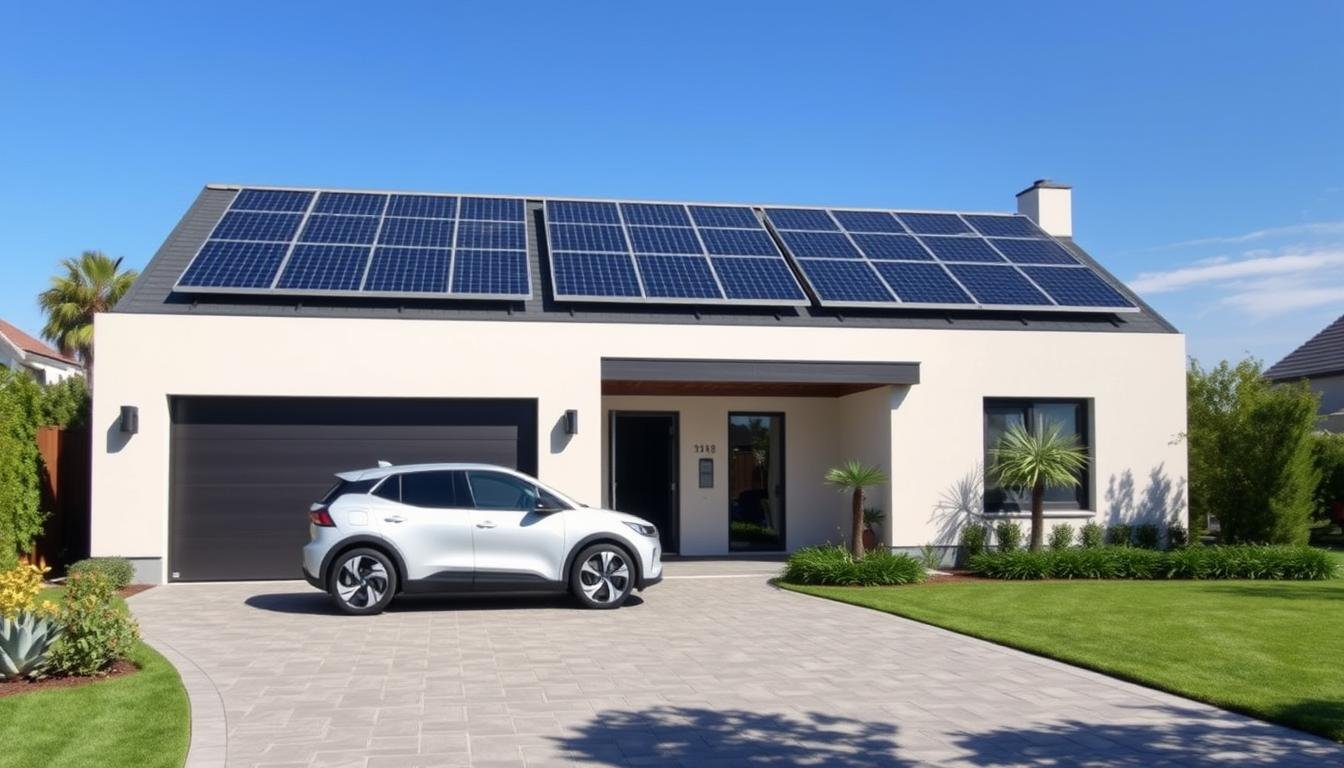
A typical three-bedroom property requires a specific system size to cover both household and transport needs. This section helps you calculate the right number of photovoltaic panels for your setup.
Calculating panel numbers and output
Your annual mileage is the starting point. The average automobile needs 2,118 kWh to travel 7,000 miles each year.
This translates to a specific system size. A three-bedroom home typically requires a 6.75kWp array.
That's about fifteen 450W panels. Six of these are often dedicated just to fuelling your car.
Considering seasonal variations
Daylight hours change throughout the year. Your rooftop array will produce much less electricity in winter.
For example, a 6kWp setup in Essex generates nearly 25 kWh per day in July. In December, it may only produce 4.9 kWh.
This means you'll import more power from the grid during colder months. Planning for this variation is key to meeting your annual energy needs.
| Season | Daily Output (6kWp System) | Impact on Electric Car Charging |
|---|---|---|
| Summer (July) | ~25 kWh | Can fully cover most daily driving needs. |
| Winter (December) | ~4.9 kWh | Significant grid import required for full charge. |
| Spring/Autumn | ~12-15 kWh | Provides a substantial portion of charging needs. |
Selecting the Right EV Charger and Smart Charging Options
Not all home chargers are created equal, especially when you aim to harness your own generated power. The correct device transforms how you manage your household energy and power your automobile.
Standard chargers versus solar-compatible models
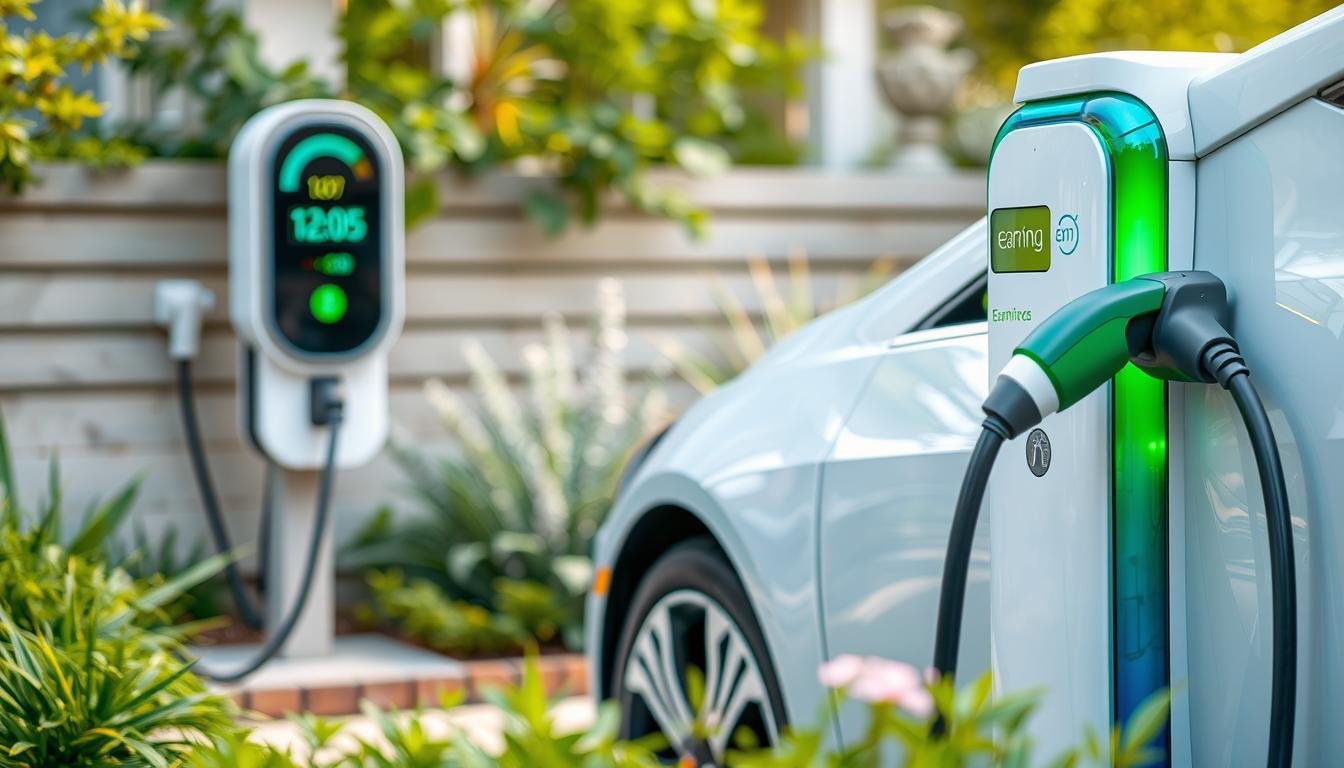
A basic model simply draws electricity from the grid. A solar-compatible option, like the Myenergi Zappi v2, Ohme Home Pro, or Pod Point Solo 3S, uses a CT clamp.
This clamp tracks your photovoltaic panel generation. It allows the unit to prioritise using your own electricity before importing from the network.
Benefits of smart chargers and inverter roles
Intelligent chargers offer scheduling features. You can set sessions to match peak daylight hours or utilise cheap off-peak tariffs.
An inverter plays a vital role in your home system. It converts DC power from your rooftop array into AC for your electric car.
Choosing a smart, compatible charger means you maximise using solar energy. This reduces reliance on petrol and lowers your carbon output effectively.
Comparing Solar and Grid Energy for Charging Your EV
The decision on how to charge your electric car—using rooftop generation or off-peak grid power—hinges on two key rates.
You must weigh the price you get for exporting surplus energy against the price you pay to import electricity.
Advantages of daytime solar generation
Using your own photovoltaic power directly is satisfying and clean. Grid electricity emits around 125g of CO₂ per kWh.
Your own panels produce virtually zero emissions during operation. This significantly reduces your carbon footprint.
However, exporting surplus daytime generation can be more profitable. Schemes like Outgoing Octopus pay roughly 15p per kWh.
Optimising off-peak grid tariffs
Smart tariffs offer a compelling alternative for overnight fuelling. Intelligent Octopus Go provides rates as low as 7p per kWh from 2026.
This is often cheaper than the value of the electricity you could sell back. It makes financial sense to export your daytime surplus and import cheap night-time power.
The optimal strategy involves comparing your specific export rate against your import rate. This ensures you maximise both environmental and economic benefits for your home.
Financial Analysis: Installation Costs, Tariffs and Savings
Understanding the initial outlay and ongoing savings is crucial for any homeowner considering this dual technology investment.
Upfront investment estimates and payback period
A complete setup for your home typically involves three components. The photovoltaic panels themselves, a storage battery, and a dedicated charger.
The combined cost for a 6.75kWp system, a 5kWh battery, and a charger is approximately £16,660.
Your payback period depends on how you use the electricity. Maximising self-consumption and exporting surplus power are key.
Export tariffs, smart tariffs and long-term savings
Schemes like Outgoing Octopus pay you for excess energy you send back to the grid. This can earn hundreds of pounds each year.
Using a smart tariff with a cheap off-peak rate is also recommended. You can charge your electric car for as little as 7p per kwh overnight.
Over 25 years, modern panels provide a reliable source of power. This long-term view turns the upfront expense into significant financial savings.
Integrating Solar, Battery Storage and EV Charging
The final piece of a modern, sustainable household puzzle is the seamless integration of generation, storage, and consumption. A well-designed system manages energy flow intelligently.
It maximises self-use of renewable power and minimises grid dependence.
How home batteries complement solar systems
A storage unit is the crucial link. It captures surplus electricity generated by your panels during the day.
More importantly, it can be programmed via an app to fill up using cheap, off-peak grid electricity overnight. This stored power then runs your household appliances.
Using this battery to directly fuel your car is possible but often less efficient. It is better to use that stored energy for your home.
Challenges in synchronising charging schedules
Syncing your charger with daytime generation sounds ideal. A smart charger like a Pod Point can do this.
However, financial reality often makes off-peak tariffs the smarter option. Exporting your sunny-day surplus can earn more.
You then import cheaper night-time electricity for your vehicle. The average driver needs only six hours of charging per week on a 7kW unit.
| Strategy | How It Works | Best For | Key Consideration |
|---|---|---|---|
| Direct Solar Charging | Fuelling the car instantly with daytime panel output. | Reducing carbon footprint immediately. | Limited by weather and daylight hours. |
| Battery-Buffered Charging | Using stored battery power, set via an app. | Home energy resilience and backup. | Can be less efficient for the car. |
| Off-Peak Grid Charging | Importing cheap electricity overnight on a smart tariff. | Maximising long-term financial savings. | Requires a compatible energy contract. |
Using an app to control your battery behaviour is key. It helps optimise your entire system.
This integrated approach creates a sustainable setup for your car and home, reducing reliance on petrol.
Future Trends: Tariffs, Technology and Incentives
Looking ahead, the way we manage domestic energy is set to become more intelligent and interconnected. Suppliers are rolling out innovative time-of-use contracts.
These allow you to sell your self-generated power to the grid at a high rate. You can then charge your electric car using cheaper, imported electricity overnight.
Emerging smart energy solutions
New technology is simplifying control for drivers. Integrated mobile applications let you manage your home battery and charger seamlessly.
This makes optimising your entire system much easier. The goal is to maximise the value of every kilowatt-hour (kwh) you produce or consume.
Government incentives and future market shifts
Support schemes and market evolution continue to shape this landscape. The number of homes with photovoltaic panels has grown by roughly a third since 2022.
This trend suggests integrated energy systems will become standard. Future shifts indicate export tariff rates will stay high.
It may often be more profitable to sell your electricity than to use solar power directly for fuelling.
| Aspect | Current Focus | Future Trend |
|---|---|---|
| Tariff Strategy | Basic off-peak import for charging. | Dynamic export & import, optimised by smart tariffs. |
| Technology | Standalone charger and battery. | Fully app-integrated home energy management. |
| Financial Driver | Reducing household cost. | Maximising income from exported electricity. |
Conclusion
Making an informed choice about integrating these technologies hinges on understanding your own driving and electricity usage patterns. This guide has explored the key considerations to help you decide.
While using your own generated power is a clean way to fuel your automobile, leveraging off-peak grid tariffs often yields greater financial savings. Selecting the right chargers and a compatible battery system is crucial for optimising your home energy use.
By accurately estimating your annual kWh requirements, you can manage your fuelling needs effectively across the seasons. Ultimately, this powerful combination significantly reduces both your carbon footprint and your household expenses.
FAQ
How do photovoltaic panels charge my electric car?
The panels on your roof convert sunlight into direct current (DC) electricity. An inverter then changes this to alternating current (AC) for your home's use. This clean power can directly supply your dedicated home charger, fuelling your vehicle's battery with renewable energy.
What are the main factors that determine the expense of charging with solar?
Key elements include your car's efficiency (miles per kWh), your daily mileage, the size and output of your panel array, and your household's general electricity consumption. Local weather patterns and the season also significantly impact how much energy you can generate and use.
How many panels would I need to power my electric vehicle?
This depends heavily on your driving habits. A typical calculation might involve your annual mileage, your car's efficiency rate, and the average production of a modern panel in the UK. A specialist installer can provide a precise assessment for your specific needs and roof space.
Do I need a special model of charger for my panels?
While any dedicated home unit will work, a smart, solar-compatible charger like those from Pod Point or Myenergi is highly beneficial. These devices can intelligently divert surplus energy from your array directly to your car, maximising your use of free, self-generated power.
Is it cheaper to use my panels or an off-peak grid tariff?
Using your own generated electricity is always the most cost-effective method, as it's essentially free after installation. For times when solar isn't available, pairing your system with a competitive smart tariff from providers like Octopus Energy or British Gas can minimise grid electricity costs.
What is the typical payback period for the combined installation?
The payback time varies but typically ranges from 8 to 15 years. This considers the upfront cost against savings on both petrol and grid electricity, as well as potential income from the Smart Export Guarantee (SEG). Rising traditional energy prices can shorten this period significantly.
How does adding a home battery help with electric car charging?
A domestic storage battery, such as a Tesla Powerwall, stores excess energy produced during the day. You can then use this stored power to charge your vehicle overnight, reducing reliance on the grid and greatly increasing your consumption of self-generated renewable power.
What future trends might affect this setup?
Emerging trends include more dynamic time-of-use tariffs, better vehicle-to-grid (V2G) technology allowing cars to power homes, and potential new government incentives. The market is rapidly evolving towards integrated smart energy systems that optimise consumption and cost automatically.