Imagine adding 100 miles of range to your electric car in less time than it takes to drink a coffee. This is now a reality on Britain's trunk roads, thanks to the latest ultra-rapid charging technology.
I have analysed the latest developments, where operators like Moto are adding two dozen new high-power points across the country in partnership with Gridserve. This represents a significant leap forward for our national network.
These advancements mean a traditional service area is no longer just a pit stop. It is transforming into a critical centre for powering modern vehicles. For any driver, understanding this shift is essential for planning longer journeys with confidence.
My report focuses on the specific locations leading this charge. I will show you how these sites function and why they are changing the way we travel. The evolution is happening now, and it is vital news for every motorist.
Key Takeaways
- New 350kW chargers can deliver up to 100 miles of range in under ten minutes.
- Major service station operators are rapidly expanding their high-power networks nationwide.
- Strategic locations, such as Moto Rugby, now host extensive charging facilities from multiple providers.
- This infrastructure is crucial for reducing anxiety and enabling efficient long-distance electric car travel.
- The traditional motorway service is evolving into a comprehensive energy and convenience hub.
Exploring the motorway 350kW EV charging hub UK
A decade ago, the fastest way to power an electric car on a long journey was a fraction of what's possible today. Dale Vince, founder of the Electric Highway, noted that top-tier capability was just 7kW. The jump to new ultra-rapid systems represents a fundamental shift in our national network.
This evolution aims for one clear goal. It is designed to make the driver's experience behind the wheel identical to using a fossil-fuelled vehicle.
Overview of Ultra-Rapid Charging Technology
This technology is about removing wait times and range anxiety. It's a complete rethink of what a pit stop means. Key to this progress are strategic partnerships focused on sustainable energy.
The collaboration between Gridserve and Ecotricity, for example, aims to deliver clean power directly to the motorway network. This ensures a greener future for all drivers.
Defining the 350kW Advantage
The core advantage here is sheer speed. This level of power can replenish a battery for a long drive in minutes, not hours. It's a transformative step for any vehicle.
By the end of the year, significant upgrades across the charging network will make this high-power access more common. I believe this news shows how our infrastructure is finally catching up to the needs of modern electric vehicles on the road.
Innovative Motorway Services and Charging Infrastructure
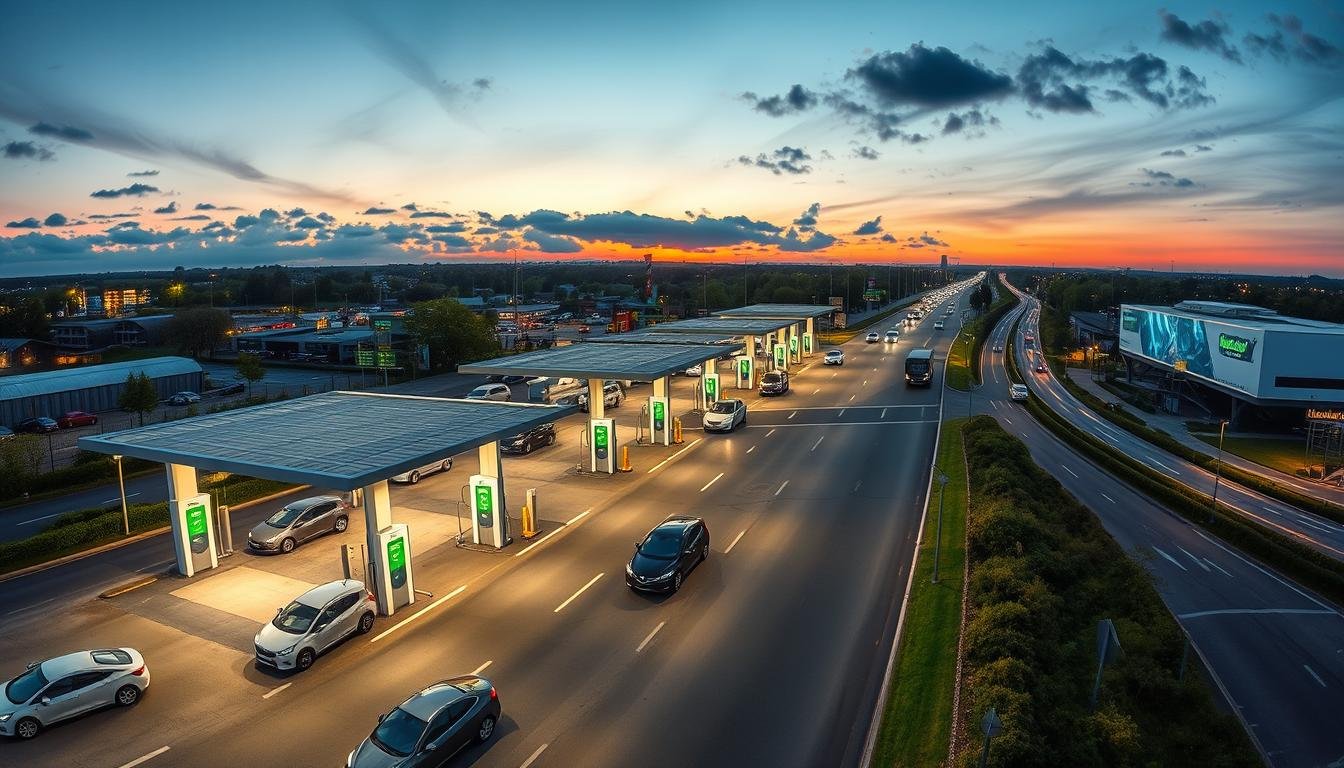
A strategic push to upgrade our national refuelling points is now delivering unprecedented speed for modern automobiles. This shift turns traditional rest areas into sophisticated energy and service centres. I see this as a fundamental change in how we support long-distance travel.
New Deployments with Moto and Gridserve
Moto's chief executive, Ken McMeikan, has confirmed a major rollout. The plan is to install ultra-rapid chargers at all their service areas. This is a huge step forward for the nation's infrastructure.
Key locations in this wave include Exeter, Swansea, and Burton in Kendal. These sites will host 12, 6, and 6 new high-power points respectively. The capability here is remarkable, offering up to 200 miles of range in just ten minutes.
This partnership with Gridserve ensures the energy supplied is 100% net zero carbon. It provides real confidence for every driver planning a long journey.
Optimised Charging Networks on the Motorway
The goal is to create a seamless, optimised power network along major travel corridors. By the end of the year, the Electric Highway will have significantly expanded its reach.
This expansion means availability is no longer a major barrier for any electric vehicle. The investment is transforming the driver's experience. It supports the growing number of electric vehicles on our roads.
I am impressed by how this infrastructure development is removing old anxieties. It makes owning and operating a modern car simpler for everyone.
Partnerships and Future Developments on the Motorway Network
Collaboration between major industry players is now setting the pace for the next generation of travel infrastructure. This joint effort is crucial for building a reliable system that supports every driver.
I see these alliances as the foundation for all future progress. They ensure that investment flows to the right places at the right time.
Expanding the Electric Highway and Investment Trends
Toddington Harper, the chief executive of Gridserve, has a clear mission. He is committed to a massive investment programme.
The goal is to make power anxiety a thing of the past. His vision ensures that essential infrastructure reaches every motorway service area.
This financial commitment is transforming the Electric Highway. It is creating a new experience for all modern automobiles.
Upcoming Site Upgrades and Geographic Expansion
With 28 Moto sites scheduled for upgrades by year's end, the scale of change is significant. These locations will receive the latest high-power technology.
Further geographic expansion is already planned. New points are coming to Reading, Thurrock, and Exeter.
This growth supports the increasing number of electric vehicles on our roads. It gives every motorist the confidence to travel longer distances.
The partnership between Gridserve and Moto is a key part of this national upgrade. It delivers the power network that modern vehicles need.
Conclusion
This transformation of our roadside infrastructure marks a decisive shift away from the anxieties of the past. The rapid expansion of the Electric Highway across Britain's major travel corridors is a genuine game-changer for every driver.
With high-power chargers appearing at key locations, the experience of charging an electric car is becoming as straightforward as refuelling. I am confident these investments will deliver the reliability that modern vehicles require.
The ongoing partnership between industry leaders ensures our national network evolves sustainably. This reliable charging access supports the transition away from fossil fuels. Looking ahead, this progress will make long-distance travel in an electric vehicle truly seamless for all.