Did you know that by 2026, confusion over electric vehicle power protocols could cost British motorists millions in wasted energy and time? This startling projection highlights why understanding these technical standards is no longer a niche concern.
Since the publication of foundational educational data in July 2023, the landscape for powering your car has evolved rapidly. I have designed this guide to cut through the complexity.
My goal is to help you navigate the world of mode charging with confidence. We will explore the critical differences between the primary methods. This knowledge ensures your vehicle remains powered efficiently, whether for daily commutes or long adventures.
By analysing each standard in detail, I aim to show how distinct technologies shape your overall ownership experience. This includes long-term maintenance and cost considerations. This comprehensive overview provides the clarity you need to make informed decisions for your future on the road.
Key Takeaways
- Grasping the nuances of various charging methods is essential for every modern electric vehicle owner.
- Selecting the correct equipment is crucial for efficient energy utilisation and vehicle care.
- The differences between core standards directly impact your daily travel and journey planning.
- Understanding this technology influences long-term ownership costs and maintenance schedules.
- This guide provides a clear framework to distinguish between the primary powering protocols.
- Informed choices now will future-proof your motoring experience as infrastructure develops.
Introduction to EV Charging Standards
Your vehicle's battery health and your personal safety during powering are governed by a single, pivotal document. The IEC 61851 standard establishes the safety and communication protocols for modern systems. This framework is the unseen foundation for every connection you make.
Why EV Charging Matters for Modern Drivers
I believe selecting the correct home socket or public point is crucial. It directly impacts your battery's longevity over years of use. Modern powering has evolved far beyond simple plug-in routines.
Today's stations represent intelligent energy delivery networks. Safety remains the paramount concern in any mode selection. Integrated protection devices prevent hazards like overheating during the process.
Trends in the UK Charging Infrastructure
The national network is undergoing rapid expansion and technological integration. We are moving from basic connections to sophisticated, smart systems. This evolution transforms our daily approach to mobility.
Smart technology enables more reliable energy management for every motorist. As I have observed, this progress ensures efficient power utilisation across the country. The infrastructure growth supports both current needs and future demands.
Understanding Mode 2 Charging in the UK
Many drivers overlook the versatile powering method that bridges the gap between a standard domestic plug and a dedicated wallbox. This approach, often facilitated by portable units like the CTEK NJORD GO, delivers energy through a familiar red CEE socket. Output can range from a modest 1.4kW up to a more robust 22kW, depending on your electrical supply.
Benefits and Limitations at Home and Industrial Settings
I frequently suggest this portable solution for home use. Its key advantage is flexibility. The integrated charging cable contains a vital safety device that monitors temperature and prevents overloads.
This mode of operation lets you connect to an industrial socket or a regular domestic outlet. For sites with a three-phase supply, a specific connector allows for higher current, making it a sturdy, on-the-go station.
However, the power is capped. Even at its maximum, replenishing your battery will take considerably longer than at a rapid public point. It's a convenient charger for planned stops, not for a quick top-up.
Exploring Mode 3 EV Charging Solutions
The backbone of Britain's public network relies on a specific, communication-rich protocol. This system forms the standard for fixed AC points. I see it as the reliable workhorse for daily top-ups.
Technical Specifications and Safety Features
Units like the CHARGESTORM CONNECTED 2 employ a dedicated Type 2 connector. This enables efficient energy transfer at levels from 11kW to 22kW. A three-phase electrical supply is typically required for these faster speeds.
Full communication between your automobile and the grid is a key advantage. Advanced protocols manage the flow dynamically. Safety features include automatic power cut-off to prevent overloads.
Practical Applications and Public Charging Stations
You will find this solution at most public car parks and retail locations. It is designed for convenience during shorter stops. The robust cable is built to withstand frequent use at these stations.
This approach significantly reduces waiting time compared to basic domestic options. For the driver, it offers a consistent and secure experience. It represents the balanced choice for regular urban mobility.
Mode 4 EV Charging: High-Speed Performance
Imagine replenishing your car's energy reserves in the time it takes to enjoy a coffee at a motorway services. This is the promise of high-performance DC fast charging. It delivers direct current at formidable rates, from 150kW to an astonishing 400kW.
The widely adopted Combined Charging System (CCS) standard ensures compatibility across Europe. This makes the technology accessible for most modern electric vehicles.
Advantages of Rapid DC Charging
Sheer speed is the primary benefit. This method is the ultimate solution for long-distance travel. It uses direct electricity to replenish your battery in mere minutes.
The high-speed charging system requires constant communication. This dialogue between the vehicle and the unit manages thermal levels. It ensures maximum safety during the high-power transfer.
| Power Output | Approx. Range Added (10 mins) | Typical Use Case |
|---|---|---|
| 150 kW | 60 miles | Motorway service area top-up |
| 250 kW | 100 miles | Rapid mid-journey stop |
| 400 kW | 160 miles | Ultra-rapid charging hub |
Impact on Battery Life and User Experience
I advise against relying on this for every single charge. Frequent use may impact the long-term health of lithium-ion cells. The rapid delivery of power is perfect for occasional, time-sensitive stops.
This technology turns a potential hour-long wait into a brief pause, fundamentally changing how we plan long journeys.
My personal experience confirms it significantly improves the driver's experience. It minimises waiting time at public locations. This convenience makes electric vehicles more practical for everyone.
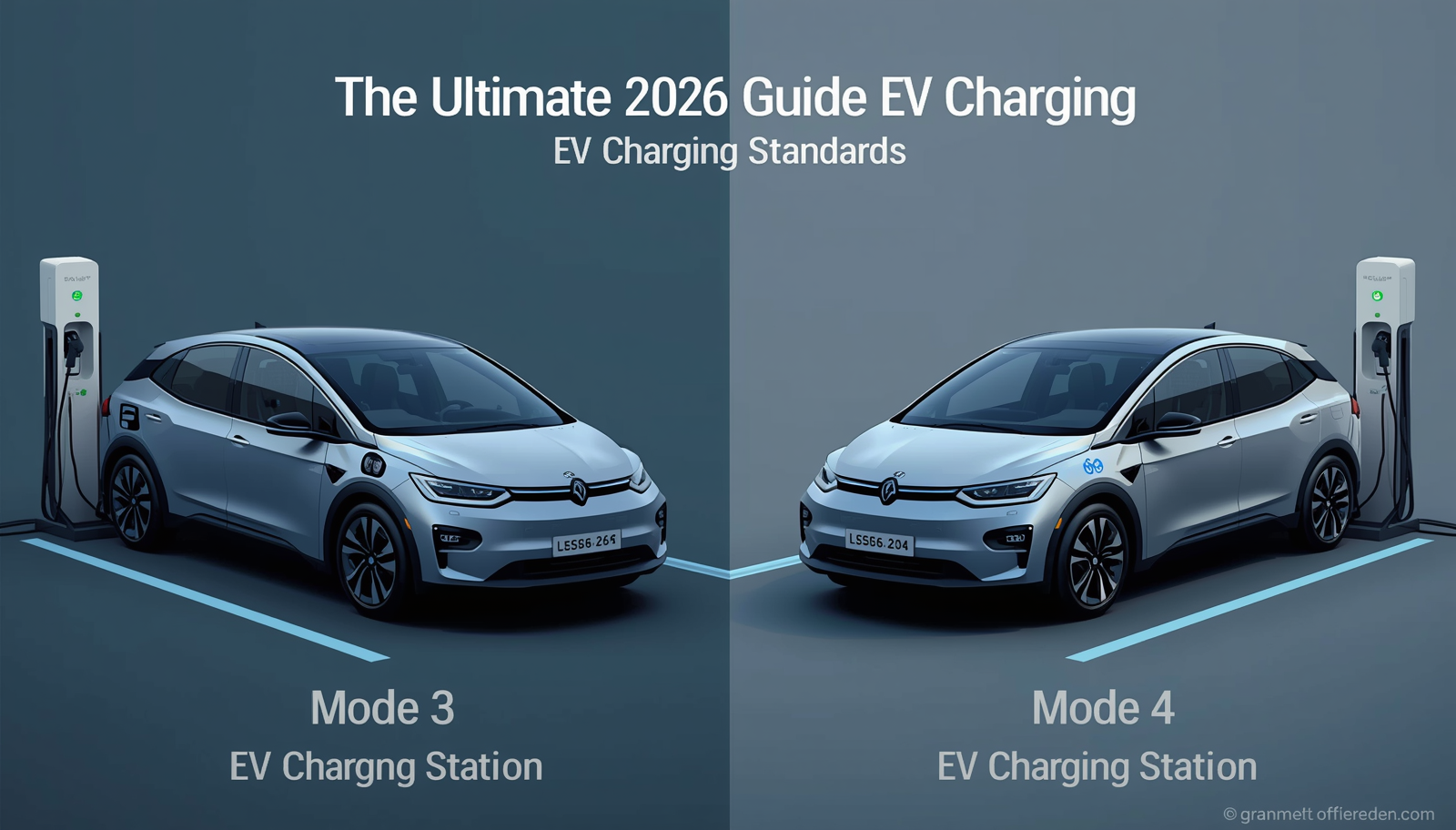
Comparing mode 3 vs mode 4 EV charging UK
The core distinction in modern energy replenishment lies between alternating and direct current systems. I find this fundamental difference dictates where and how you power your automobile.
Performance and Efficiency Comparison
For daily use, the AC method is remarkably efficient. It integrates seamlessly with the grid for steady top-ups.
The DC standard, however, is engineered solely for high velocity. It delivers a quick burst of energy, perfect for motorways. This charging system is the only one capable of ultra-fast delivery.
Connector Types and Infrastructure Requirements
The hardware reflects this divide. A Type 2 plug handles AC current. Robust units like CCS manage the intense heat of DC.
This demands more complex infrastructure with advanced cooling. Standards like IEC 61851-23 govern these high-power sessions for safety.
| Connector Type | Current Type | Typical Power | Primary Use Case |
|---|---|---|---|
| Type 2 (Mennekes) | Alternating (AC) | 11kW - 22kW | Home, workplace, public car parks |
| CCS (Combo 2) | Direct (DC) | 50kW - 400kW | Motorway services, rapid hubs |
| CHAdeMO | Direct (DC) | 50kW - 200kW | Rapid public stations |
The three-phase capability of AC stations offers balanced distribution. This contrasts with the high-voltage output from a DC charger. Your choice depends on needing a reliable charge or maximum speeds.
Selecting the Ideal EV Charging Option
Your choice of how to replenish your vehicle's energy directly influences both your weekly routine and your motoring budget. I find the best solution aligns with your specific travel patterns.
This decision balances immediate convenience with the long-term health of your car battery. Let's explore how to match the technology to your life.
Driving Scenarios, Cost Considerations, and Safety
First, assess your daily habits. Do you mainly drive short urban distances? A domestic charging point is often the most cost-effective power source.
For city dwellers, this mode avoids the need for expensive public infrastructure. It keeps your running costs low and your vehicle ready each morning.
Planning a long journey? I suggest mapping your route around rapid stations. This ensures access to high-speed electricity when time is critical.
Safety must remain your priority. Regularly inspect your charging cable for damage. Check your domestic socket for any wear to prevent hazards.
Understanding each charging system optimises your ownership experience. It reduces the time spent planning stops. This knowledge also helps preserve your batteries.
Whether at home or using a public charger, the right mode supports the longevity of modern EVs. The table below summarises key scenarios.
| Driving Scenario | Recommended Method | Typical Location | Primary Consideration |
|---|---|---|---|
| Daily City Commute | AC Home Charging | Home Garage | Cost & Convenience |
| Weekly Mixed Use | Public AC Station | Supermarket Car Park | Availability & Speed |
| Long-Distance Travel | DC Rapid Charging | Motorway Service Station | Time Efficiency |
Conclusion
Mastering the art of powering your electric car is less about technical jargon and more about practical, daily confidence. I have shown how each charging standard serves a distinct role in your life. From convenient home top-ups to rapid motorway stops, the right choice supports your routine.
Understanding these protocols lets you balance cost, time, and battery care. This knowledge is crucial for long-term vehicle health and your budget. It turns a complex decision into a straightforward part of ownership.
Always prioritise safety by using certified equipment. Follow your manufacturer's guidelines for every connection. As infrastructure grows, staying informed ensures you travel with assurance.
Your journey with electric mobility should be smooth and assured. By selecting the appropriate mode, you future-proof your experience on the road.