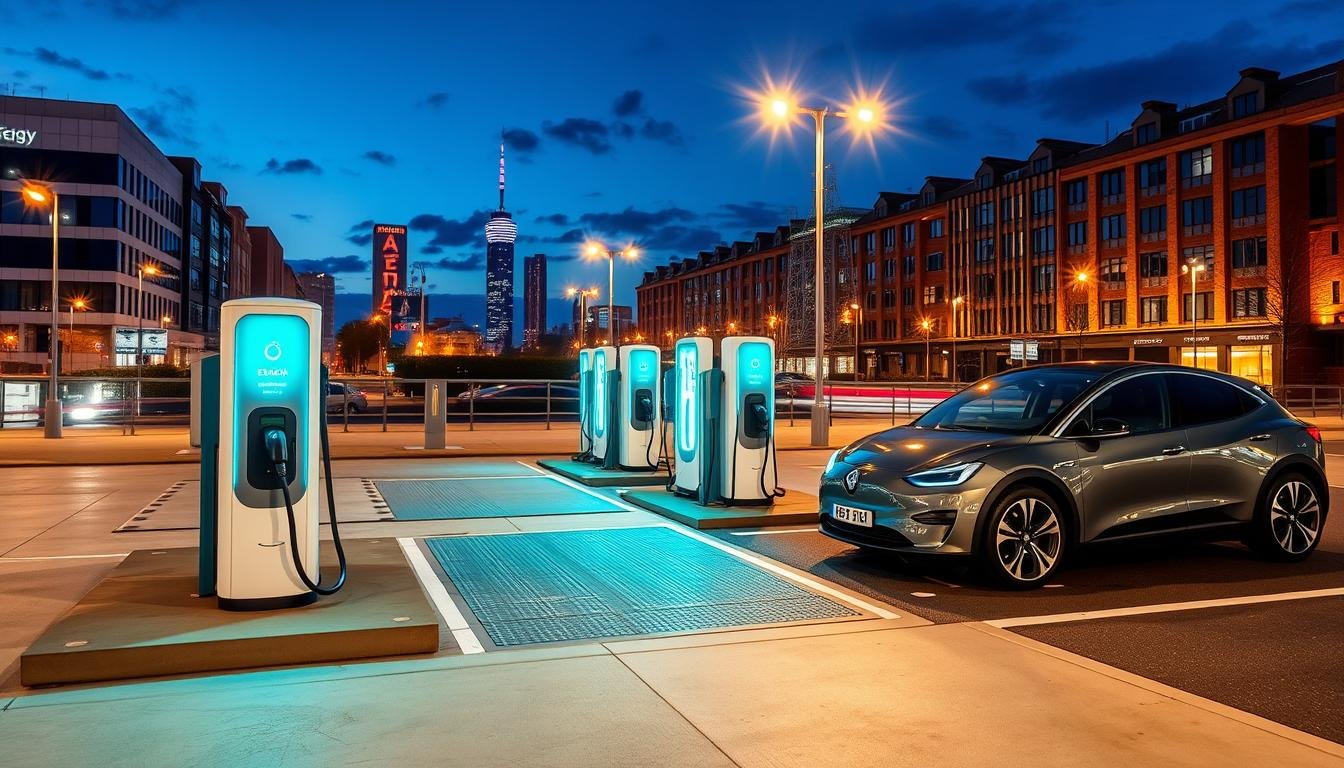
As of 1 January 2026, the UK's public charging network has grown to include over 116,000 chargers. This figure, reported by the Department for Transport, represents a massive expansion in a very short time.
I am examining why this rapid growth in our national infrastructure demands an urgent focus on robust digital security. Every new connection point, including the one in your garage, increases the potential target area for malicious actors.
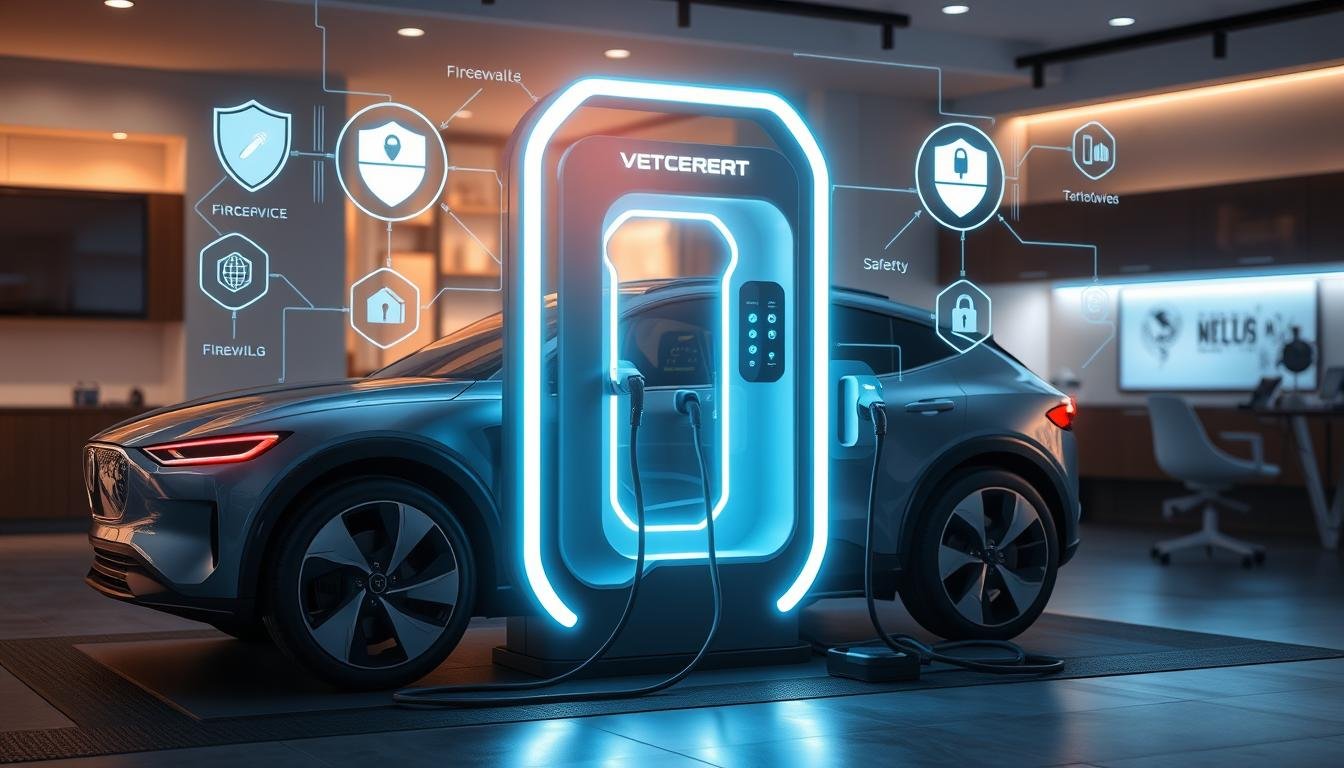
The integration of smart charging features and grid connectivity turns a simple wallbox into a sophisticated data hub. Without proper safeguards, this equipment can become a gateway for unauthorised access into your home network.
I believe understanding this evolving threat landscape is essential. Protecting your personal data and your home's energy system is no longer optional. Mandatory protection is a critical requirement for the integrity of our entire national system.
Key Takeaways
- The public electric vehicle charging network has expanded dramatically, creating a larger digital attack surface.
- Home wallboxes with smart features are connected devices vulnerable to cyber threats.
- Inadequate security can compromise personal data and home energy systems.
- Proactive digital defence is shifting from a recommendation to a necessary standard.
- Homeowners have a direct role in maintaining the security of the wider national infrastructure.
- The technology in our homes requires the same level of security scrutiny as other critical systems.
Introduction to the 2026 EV Charging Landscape
A quiet revolution is taking place on our streets and in our driveways. The Department for Transport confirmed that at the start of January 2026, there were 116,052 electric vehicle chargers and 87,796 charging devices across the United Kingdom. This massive network forms the backbone of our modern transport system.
Setting the scene for evolving technology and regulation
I am observing a fundamental shift in the industry. The focus is moving from simple hardware deployment to managing a complex, software-defined charging infrastructure. This new landscape requires constant digital monitoring and updates.
Zapmap provided key estimates to facilitate this transition in government reporting. Their data underscores how the technology itself is evolving faster than the rules that govern it.
"The metrics have changed to reflect reality. We now count 'EV chargers' to give a truer picture of the public network's scale," explains a Department for Transport spokesperson.
Overview of cybersecurity concerns in EV charging
My review shows this rapid growth has a critical side-effect. The rollout of new charging devices has outpaced the implementation of standardised digital security protocols. Every new connection point, if not properly secured, becomes a potential entry point for malicious actors.
The industry faces a tough balance. It must meet the urgent demand for more charging points while ensuring each one is a fortified digital asset. This is the central challenge for our national infrastructure.
| Metric | Count (as of 1 Jan 2026) | Description |
|---|---|---|
| Total EV Chargers | 116,052 | Public charging points available nationwide. |
| Total Charging Devices | 87,796 | Individual physical hardware units installed. |
| Data Coordination | Zapmap | Provided industry estimates to the Department for Transport. |
Understanding the Mandatory Protection for Your Wallbox
The engineering consultancy Versinetic stresses that threats to the charging market can no longer be dismissed. I see this as a clear signal. The security of your home charging point is paramount.
This applies to all chargers, whether public or private. The domestic wallbox has evolved into a complex piece of connected equipment.
Its role extends beyond simply powering a vehicle. It is a data exchange point within your home network and the wider energy infrastructure.
Why cybersecurity has become a non‐negotiable requirement
My analysis shows that the industry's approach must change. Security can no longer be an optional extra. It must be a foundational standard built into every device from the outset.
Hardware manufacturers are now compelled to verify their supply chain thoroughly. They must also document all communication protocols. This creates a verifiable baseline for safe equipment.
I believe this shift protects users from remote manipulation. It also secures the broader system from cascading failures.
| Security Aspect | Legacy Approach | Mandatory Protection Standard |
|---|---|---|
| Design Philosophy | Security as an add-on feature | Security as a core design principle |
| Supply Chain | Limited verification | Full transparency and component validation |
| Communication | Proprietary, closed protocols | Open, documented standards (e.g., OCPP) |
| User Information | Basic operational data | Clear data usage and protection policies |
This table highlights the necessary evolution. Adhering to new regulations is not just about compliance. It is the only way to ensure your home energy system remains resilient.
The necessary information for users is now clearer. Understanding how your wallbox interacts with the grid is vital for personal safety and national security.
EV Charger Cybersecurity UK 2026: Regulatory Reforms
Compliance has shifted from a best practice to a legally enforced necessity for all rapid charging units. I am examining how this new legal reality directly affects every organisation running public points.
The rules now create a binding performance standard. This fundamentally alters the risk calculation for infrastructure owners.
Key changes in UK Public Charge Point Regulations 2023
The UK Public Charge Point Regulations 2023 introduce a strict 99% uptime mandate. This applies specifically to rapid chargers across the public network.
Enforcement is handled by the Office for Product Safety and Standards. They can levy a fine of £10,000 for each non-compliant unit.
My analysis shows this is a game-changer. Operators must now guarantee their charging infrastructure is almost always operational.
Failure is not just a service issue. It carries a significant financial penalty.
Implications for rapid chargers and compliance standards
I believe this legal pressure will reshape the market. Smaller operators face a tough choice.
They must invest heavily in superior monitoring and maintenance systems. Alternatively, they risk acquisition by larger, more resilient networks.
These point regulations 2023 make compliance a primary selection criterion. Professional organisations managing public charge points are judged by this new bar.
The regulations are reshaping the charging industry. They set high standards for both performance and underlying security.
| Aspect | Pre-2023 Practice | 2023 Regulations |
|---|---|---|
| Uptime Commitment | Voluntary or service-level agreement | Mandatory 99% for rapid chargers |
| Enforcement Mechanism | Limited commercial recourse | £10,000 fine per unit by OPSS |
| Operator Focus | Expansion and availability | Reliability and compliance assurance |
| Security Integration | Often secondary to functionality | Integral to maintaining operational status |
The Evolution of Charging Infrastructure and Emerging Cyber Threats
Marketing hype often promises electric vehicle charging speeds that our national grid cannot sustainably support. I am investigating this disconnect between advertised performance and practical delivery.
Comparing headline-charging speeds with actual market needs
My analysis reveals that ultra-fast charging, demanding 756kW per unit, is economically unviable for widespread deployment. Such power requirements strain local networks and increase costs dramatically.
The industry is wisely shifting focus. Rather than chasing impractical speeds, manufacturers now prioritise reliable, secure devices. These meet genuine market needs for consistent performance.
This year's focus must be on sustainable infrastructure that supports long-term growth. Short-term marketing claims about speed distract from building resilient systems.
I believe setting realistic standards is crucial. This approach helps avoid expensive missteps common in new technology rollouts. Practical benchmarks protect both consumers and the broader energy network.
Supply Chain Transparency and Component Verification
A recent discovery by US energy officials has cast a stark light on the hidden dangers within global supply chains. In May 2025, undocumented communication devices were found inside Chinese-made solar inverters.
This incident reveals a critical vulnerability. It shows how hidden components can bypass security firewalls in connected energy devices.
I am examining the urgent need for complete supply chain transparency. Every piece of hardware must be fully documented from factory to final installation.
Verifying communication protocols and firmware updates
My research shows manufacturers must now provide exhaustive documentation. This includes all communication protocols and schedules for software updates.
Without this, operators cannot guarantee the security of their products. A hidden chip could allow remote interference with our national infrastructure.
I argue the industry must implement rigorous verification processes. These processes must inspect every component before assembly.
Operators should audit their suppliers thoroughly. They must ensure every piece of equipment meets the highest security standards.
| Verification Aspect | Traditional Practice | Mandatory Standard | Impact on Security |
|---|---|---|---|
| Component Sourcing | Limited supplier checks | Full origin traceability for all parts | Prevents insertion of unauthorised hardware |
| Protocol Documentation | Proprietary, closed systems | Open, auditable communication standards | Allows for external security validation |
| Firmware Management | Ad-hoc, irregular updates | Scheduled, signed software updates with changelogs | Ensures only authentic code runs on devices |
| Supplier Audits | Periodic, often superficial | Continuous, deep technical assessment | Builds long-term trust in the supply chain |
I believe verifying the origin of every component is the only reliable method. It protects our connected energy systems from potential remote manipulation.
This level of scrutiny must become the new baseline for the entire industry.
Impact of OCPP and ISO 15118-20 on Charger Security
Technical specifications once touted as premium are now the essential foundation for safe operation. I am discussing how the Open Charge Point Protocol (OCPP) and ISO 15118-20 are transitioning from competitive advantages to absolute baseline requirements.
This shift marks a maturation of the entire industry. Security is no longer a marketing feature but a fundamental design criterion.
Transition from competitive advantage to baseline requirements
My analysis confirms that ISO 15118-20 provides essential security. Its use of PKI authentication and encrypted communications is vital for protecting modern charging sessions.
These mechanisms verify the identity of both the vehicle and the equipment. They ensure data integrity throughout the power transfer process.
I note that professional operators now specify OCPP 1.6 as the minimum standard. There is a clear roadmap toward more advanced versions like OCPP 2.0.1.
Adopting these standards is the most effective way to future-proof our infrastructure. It builds a resilient and interoperable network.
This approach is central to robust cybersecurity. It ensures all chargers speak a secure, common language, protecting the entire EV ecosystem.
Vehicle-to-Grid (V2G) Technology: A 2026 Turning Point
The long-promised vision of vehicles stabilising the electricity grid is set to become a commercial reality in the coming months. I am forecasting that this year marks the pivotal moment for this technology's commercial viability.
Commercial viability and revenue potential through demand response
My research shows the economic case is now compelling. Bidirectional chargers can generate over £320 per vehicle each year through demand response programmes like the Octopus Power Pack.
The global V2G market is projected to reach £129.8 billion by 2034. This forecast signals tremendous market growth and investor confidence.
Major manufacturers including Tesla, General Motors, and BMW are scaling their V2G-ready vehicles. This supports the necessary growth for a robust ecosystem.
The automotive industry is fully embracing this shift. This integration, supported by the ISO 15118-20 standard, turns charging infrastructure into a flexible grid asset.
I believe the VIGIL project has provided the expertise to move from experimental to commercial deployment.
Learning from Other Industries: Cyber Risks in Solar and Buses
The remote disabling of a fleet of buses in Oslo serves as a sobering case study for all connected technologies. This October 2025 incident saw Chinese-made electric vehicles rendered inoperable by their manufacturer.
I am reviewing this alarming event. It demonstrates how remote access can be weaponised against essential public devices.
Incidents involving Chinese-made products and their implications
My analysis shows similar vulnerabilities exist within our charging industry. The same remote diagnostic systems and software updates used in buses are features of modern chargers.
These products can become tools for disruption if not properly secured. The potential for external control poses a direct threat to our national critical infrastructure.
| Sector | Incident Type | Primary Vulnerability | Implication for Infrastructure |
|---|---|---|---|
| Solar Energy | Undocumented hardware in inverters | Supply chain opacity | Hidden backdoors in grid-connected devices |
| Public Transport (Buses) | Remote fleet disablement | Manufacturer-controlled software | Loss of operational control over essential services |
| Charging Infrastructure | Potential remote manipulation | Unsecured update channels & data links | Disruption of energy distribution and transport networks |
I argue we must treat these risks as a stark warning. Proactive cybersecurity measures are essential to keep our energy and transport systems under local control.
Meeting the 99% Uptime Challenge for Rapid Chargers
A mere 87.6 hours of annual downtime separates compliant operations from significant penalties. I am examining this formidable challenge for all network providers.
The strict point regulations mandate 99% availability for rapid chargers. This leaves little room for unexpected faults or maintenance windows.
My research indicates smaller CPOs face a severe financial risk. A £10,000 fine per non-compliant unit can cripple a regional business.
I note that regional operators with 10 to 30 chargers face the harshest economics. The cost of advanced monitoring systems is often prohibitive at this scale.
For many, survival may depend on partnering with larger, more resilient networks. This consolidation is a direct result of the new compliance landscape.
Operational strategies for avoiding hefty fines
Proactive management is the only reliable path forward. I believe investing in predictive maintenance is essential.
This approach uses data analytics to foresee component failures. It allows for repairs during scheduled downtime, protecting precious uptime hours.
Keeping this critical infrastructure running smoothly is a complex task. It requires constant remote monitoring and rapid response teams.
The ability to maintain high availability will be the defining factor for success. Operators who master this will lead the competitive charging market.
Regional Disparities: Kerbside Versus Urban Charging
A critical challenge for our national infrastructure lies not in technology, but in its uneven distribution. I am highlighting the stark regional disparities in our charging network.
My analysis starts with a fundamental barrier. Approximately 9.3 million households across the United Kingdom lack access to off-street parking. This creates a significant hurdle for adopting cleaner transport.
Data from January 2026 reveals a pronounced concentration. A full 43% of all public chargers are located in London and the South East. This leaves many other areas with sparse coverage.
I argue that without major policy intervention, this gap will continue to widen. It limits equitable access to electric vehicles and undermines national transport goals.
Local authorities are now piloting innovative solutions. They are using funding from schemes like the Local Electric Vehicle Infrastructure (LEVI) fund to trial kerbside charging points. These pilots aim to serve dense urban streets.
I believe solving the kerbside challenge represents the most significant opportunity for growth in the public charging sector. It is essential for building a truly inclusive network.
Technical Standards and Future-Proofing Charging Equipment
Investing in modular hardware design is the smartest defence against technological obsolescence. I am discussing how this approach safeguards your capital as technical standards evolve.
Professional operators now demand forward-compatible equipment. This ensures their networks remain functional and secure for years.
Adapting to evolving OCPP versions and cybersecurity protocols
My research shows adoption of OCPP 2.0.1 is accelerating. This open charge point protocol supports advanced smart charging features.
Professional CPOs specify minimum versions in their tender documents. They seek long-term compatibility and reduced upgrade costs.
Integration of ISO 15118-20 is becoming a baseline requirement. Any hardware without it risks rapid irrelevance in the modern market.
Manufacturers must build modular systems. These allow for easy software and component upgrades as new standards are published.
| Design Aspect | Legacy Hardware | Future-Proof Equipment | Benefit to Operator |
|---|---|---|---|
| Protocol Support | Fixed at manufacture | Field-upgradable via software | Adapts to new OCPP versions without replacement |
| Authentication | Basic plug-and-charge | Supports ISO 15118-20 PKI | Enables secure, automated billing and grid services |
| Hardware Architecture | Monolithic, sealed unit | Modular components with standard interfaces | Allows cost-effective repairs and feature additions |
| Manufacturer Commitment | Limited update roadmap | Published software lifecycle guarantee | Provides clear investment security and planning |
I believe selecting compliant, upgradeable chargers is essential. It protects your investment from the fast pace of change in energy technology.
Remote Monitoring and Predictive Maintenance Strategies
Operational resilience in the charging sector hinges on the ability to anticipate failures before they occur. I am exploring how this proactive mindset is now essential for all network operators.
As of 1 January 2026, remote monitoring systems provide the critical information needed. They offer a real-time view of each unit's health across the entire public charging network.
My analysis shows that predictive maintenance can catch problems long before they cause downtime. Sophisticated algorithms analyse performance data to forecast component wear. This allows for repairs during planned service windows.
I argue that organisations failing to implement these strategies will struggle. They risk missing the strict 99% uptime mandate and facing heavy fines. Reactive servicing is no longer viable for modern infrastructure.
This real-time data optimises performance across thousands of dispersed chargers. I believe proactive maintenance is the definitive key to building a network resilient enough for future transport needs.
Government Policies and Local Authority Initiatives
Government funding is catalysing a new wave of innovative projects aimed at residents without driveways. I am examining how policies like the Local Electric Vehicle Infrastructure (LEVI) fund empower councils. This support is crucial for piloting new models for on-street power points.
Funding, pilots and innovative models for on-street charging
My research shows the Department for Transport actively collaborates with town halls. They work to expand access in underserved areas. This partnership is vital for monitoring infrastructure growth through data from charge point operators.
These early movers establish templates other regions will follow. Their goal is to ensure equitable access for all citizens. I note these initiatives tackle complex approval processes that often delay kerbside unit deployment.
Strong government support is essential for a cohesive national network. It must serve both urban and rural populations effectively. I believe such coordinated action is the only way to build a truly inclusive system.
Market Trends and Economic Impact on Smaller CPOs
A wave of consolidation is sweeping across the public network, driven by stringent new regulations. I am analysing the economic impact of these 2026 market trends on smaller CPOs. They are increasingly becoming acquisition targets for larger, more resilient networks.
My research indicates the high cost of maintaining reliable chargers puts significant strain on operators with limited scale. Expenses for remote monitoring, predictive maintenance, and compliance reporting are substantial. For a regional business with ten units, these costs can be prohibitive.
I note that as of 1 January 2026, the industry is seeing this wave of consolidation accelerate. Smaller players struggle to meet the new regulatory demands for 99% uptime. The financial risk of non-compliance fines forces difficult choices.
This market shift affects overall access to public charging for drivers. While consolidation may improve operational efficiency, we must ensure it does not lead to reduced competition or higher prices for end-users.
| Challenge for Small CPOs | Advantage for Large Networks | Impact on Market Structure |
|---|---|---|
| High per-unit maintenance cost | Economies of scale in servicing | Pressure to sell or partner |
| Limited capital for technology upgrades | Investment capacity for future-proof hardware | Technology gap widens |
| Vulnerability to £10,000 compliance fines | Financial resilience to absorb penalties | Accelerated acquisition activity |
I believe the industry must monitor this trend closely. Protecting consumer choice and fair pricing is vital for a healthy, accessible charging ecosystem.
Strategies for Hardware Suppliers: Emphasising Built-In Cybersecurity
Documentation of the supply chain is no longer a paperwork exercise but a commercial imperative. I am outlining the critical strategies suppliers must adopt to remain viable in the professional charging industry.
Security must be embedded from the initial design phase of all products, not added as an afterthought. This fundamental shift protects the entire ecosystem from the ground up.
My analysis shows suppliers who cannot provide comprehensive component documentation will lose market access. Charge point operators now demand full transparency to mitigate their own risk.
I argue that verifying the origin of every piece of equipment is essential. It prevents hidden vulnerabilities that could allow remote interference with energy systems.
This approach provides a clear roadmap for building trust with operators. Demonstrating a commitment to security and transparency is the new baseline.
| Strategy Aspect | Traditional Supplier Approach | Mandatory 2026 Standard |
|---|---|---|
| Design Philosophy | Security as a late-stage add-on | Security by design from first concept |
| Component Verification | Basic supplier checks | Full origin traceability for all parts |
| Technical Documentation | Minimal specification sheets | Comprehensive supply chain audit trail |
| Software Management | Ad-hoc, irregular releases | Scheduled, cryptographically signed updates |
I believe those who prioritise these built-in cybersecurity measures will gain a significant competitive advantage. The maturing market of this year decisively rewards robust, transparent chargers.
Emerging Opportunities in the EV Charging Market
The next phase of market growth hinges not on sheer volume, but on intelligent, adaptable hardware solutions. I am identifying a clear commercial shift. Businesses that solve practical installation and grid problems will lead.
This new frontier rewards advanced diagnostics and flexible design. Providing clear information on these capabilities is essential for attracting investment.
Investment in diagnostics and modular design for future upgrades
My research shows modular hardware protects operator investment. It allows for future upgrades without replacing entire units. This is vital as standards from the Department for Transport evolve.
Smart devices with self-diagnostic features are now a major opportunity. They reduce maintenance costs and prevent downtime. This solves real-world grid capacity constraints.
| Aspect | Legacy Product Focus | Emerging Opportunity Focus |
|---|---|---|
| Design Philosophy | Fixed-function hardware | Modular, field-upgradable systems |
| Upgrade Path & Cost | Complete unit replacement | Component-level updates |
| Data & Diagnostics | Basic status reporting | Predictive analytics and remote healing |
| Grid Integration | Simple power delivery | Dynamic load management and revenue services |
I believe companies focusing on these solutions will define our national infrastructure. The industry needs this innovation to support the growing charging network. Practical upgrades make new chargers more valuable.
Government policy will continue to shape this landscape. Smart investment today builds a resilient system for tomorrow.
Conclusion
The landscape for home charging has reached a decisive moment where digital safeguards are fundamental. I have demonstrated that as of 1 January 2026, the industry stands at a critical juncture.
Data from January 2026 confirms the rapid expansion of connected devices and chargers. This growth necessitates enforced protection and rigorous adherence to updated technical standards.
By prioritising robust infrastructure and transparent supply chains, we can construct a secure and accessible network. This report delivers the essential information to navigate the complex regulatory environment.
I conclude that the future of our national charging system hinges on balancing innovation with urgent digital protection. This equilibrium will define a resilient ecosystem for everyone.