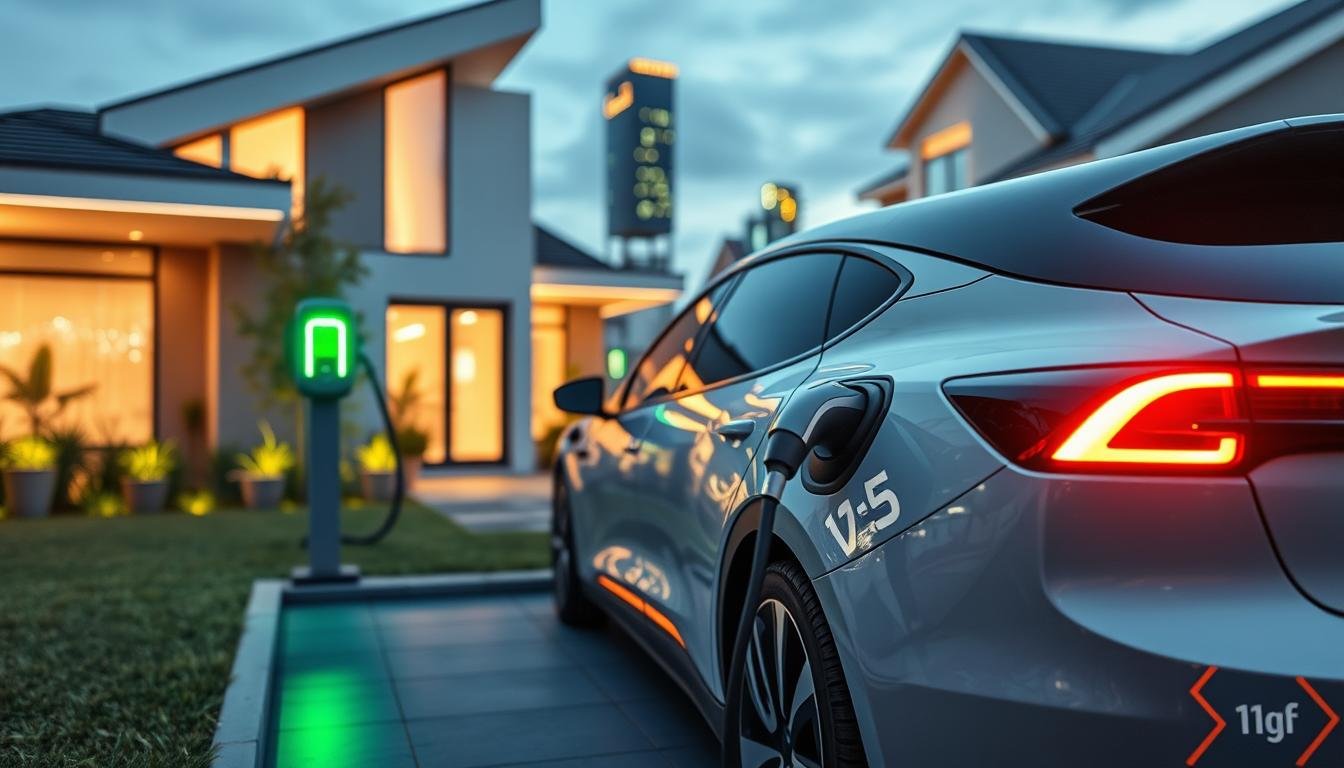
Imagine your car not just taking you to work, but also powering your home through the night. I've discovered that the average electric vehicle holds enough energy to energise a typical British home for two to three days.
From 2026, one major manufacturer is turning this idea into a reality. Nissan will launch this two-way power capability on selected models. They have achieved a critical milestone, becoming the first car maker to gain the vital G99 Grid code certification with an AC-based solution.
This certification is the essential licence. It allows your vehicle to safely supply electricity back into the national energy supply. The technology, known as vehicle-to-grid (V2G), lets you use the electricity stored in your car's battery to power your house.
Nissan's project is underpinned by extensive real-world experience. They have conducted around 40 pilot projects across the globe. This depth of testing gives me confidence that their system is robust and ready for homeowners to utilise.
Key Takeaways
- Selected electric vehicles from 2026 will be able to power your home using energy from their battery.
- Nissan is the first car company to achieve the necessary G99 certification for this in the UK.
- This vehicle-to-grid (V2G) technology allows for two-way energy flow between your car and your house.
- The G99 certification is legally required to feed electricity back into the national grid.
- Nissan's offering is backed by extensive real-world testing from dozens of global pilots.
- This innovation turns your car into a mobile energy storage unit, providing backup power.
- The AC-based solution from this manufacturer is now officially approved for use.
Latest Innovations in bidirectional charging EV UK 2026
A major breakthrough in automotive tech is turning vehicles into mobile power stations for your residence. The key to this lies in new hardware and software approvals.
I see the project underpinned by Nissan's extensive testing as a foundation. Their recent achievement is a game-changer for home energy.
Nissan’s AC-based Grid Certification
Nissan has become the first car company to gain the vital G99 grid code certification with an AC-based solution. This official approval is the legal licence needed for a vehicle to supply power back to the national supply.
This code certification for the AC-based solution is a critical milestone. It paves the way for safe, widespread use of two-way power flow from your car.
Lower Cost and Seamless User Experience
The innovation doesn't stop at certification. Nissan plans to offer its AC bi-directional charger at a cost similar to a standard one-way unit.
This approach uses an on-board bi-directional V2G unit to help deliver a lower cost of entry. The goal is making the technology accessible for people.
Control is via a dedicated app, promising a seamless user experience. You can manage energy flow to and from your home with a few taps.
The roll-out of V2G technology will expand across markets in Europe and beyond. This strategy ensures alignment with diverse local infrastructure and regulatory requirements.
Comparing V2G Technology Pathways
| Feature | AC-based V2G Solution | DC-based V2G Solutions |
|---|---|---|
| Primary Certification | G99 Grid Code (Achieved) | Varies by Region & Hardware |
| Cost of Entry | Comparable to standard charger | Often higher, needs external unit |
| User Control | Via dedicated smartphone app | Typically via separate systems |
| Market Strategy | Empowering consumers with an integrated, low-cost option | Focused on specific high-power use cases |
This comparison shows how the Nissan V2G system is designed for broad adoption. By empowering consumers with either AC or DC-based V2G solutions, they cater to different needs.
Government Support and Collaborative Trials in the UK
The development of vehicle-to-grid systems in Britain has been significantly accelerated by public funding. I discovered this v2g trial partly funded by the UK Government's Advanced Propulsion Centre (APC). This government advanced propulsion funding is a key driver for sustainable automotive tech.
This initiative highlights how partly funded government projects de-risk innovation. The Advanced Propulsion Centre supports the transition to net zero emissions.
Funding from the Advanced Propulsion Centre
The APC's backing was crucial. This government advanced propulsion investment helped turn research into a real-world test. The trial partly funded by this body involved a consortium of experts.
It's a prime example of funded government advanced research accelerating industry change.
Industry Partnerships and On-campus Research
Key partners made the trial work. Dreev, a venture edf nuvve, managed data and created charging discharging plans. Their team handled customer profiling setting by analysing information energy demand.
Enovates developed wall box hardware and oversaw the set-up test certification. The University of Nottingham provided its on-campus creative energy homes for base operations on-campus.
This operations on-campus creative environment was vital for robust testing. The wall box acts as a hub, sending receiving information to the cloud. This lets users discharge electricity set at specific times.
Such collaboration helps the roll-out v2g technology globally. This v2g trial partly funded model proves the value of partnership.
Benefits of V2G Technology and Energy Transition
The true value of this innovation extends far beyond the road, delivering tangible benefits for your wallet and the environment. I see it as a fundamental shift in how we view personal transport and energy.
According to Nissan Vice President Hugues Desmarchelier, this represents a "game-changer in how we view car ownership." Your vehicle transforms into a mobile energy asset.
Reducing CO2 Emissions and Lowering Energy Bills
The financial and environmental gains are compelling. By using the on-board bi-directional capability, owners can cut annual costs of running their vehicle by up to half.
Simultaneously, net carbon emissions from energy use can fall by 30% annually. This is a major step in bringing closer a carbon-free future for households.
Integrating Renewables and Enhancing Grid Stability
This technology plays a crucial role in our transition energy systems. EVs equipped with V2G help balance the grid by storing surplus wind or solar power.
They can then supply power during peak demand. This smooths out renewable energy's variability and reduces reliance on fossil fuel power stations.
Empowering Consumers with Mobile Energy
Ultimately, it puts you in control. You can choose to use electricity stored in your stored car battery to power your home during a blackout or a high-tariff period.
The Nissan V2G system is designed with accessibility in mind. The goal is widespread adoption, genuinely saving people money while supporting a cleaner grid.
Conclusion
Harnessing a car's battery for home use is no longer a concept but an impending reality for homeowners. From 2026, this two-way power flow will fundamentally change how we manage domestic energy.
Nissan's pioneering G99 certification has unlocked a path towards a more integrated and sustainable system for Britain. It proves the hardware and rules are in place for safe operation.
Collaborative trials between government, universities, and industry partners have demonstrated this vehicle-to-grid technology is both viable and beneficial. This foundation of real-world testing is crucial.
For consumers, the advantages are clear: substantial savings on household bills and a meaningful reduction in personal carbon footprint. Your vehicle becomes a smart, mobile energy asset.
As we move towards a greener future, the ability to use our cars for grid stability will be essential. This innovation turns personal transport into a pillar of a resilient energy ecosystem.